Santa Clara is a city where Cuba’s revolutionary past feels closer than anywhere else. At its heart stands the mausoleum of Che Guevara. Beneath the towering bronze bust of the comandante, the remains of Ernesto Guevara and his comrades rest in quiet dignity. Their final resting place draws those who still carry the ideals of the revolution, but even visitors who don’t share those convictions sense the gravity here—reverence, sorrow, and something like pride in the stillness.
The choice of Santa Clara for the mausoleum was deliberate. In December 1958, Che Guevara led a decisive battle here, capturing an armored train loaded with weapons and ammunition. That victory turned the tide of the revolution. Today, the wreckage of the locomotive and its cars marks the site of the battle. The mausoleum nearby extends that story, preserving the past in stone and bronze.
The architecture of the complex is simple but striking. A massive granite base supports Che’s bronze likeness, while behind it, the mausoleum itself is a modest structure with an eternal flame at its center. Inside, dim light falls on marble slabs inscribed with the names of the fallen. The adjacent museum holds personal items: a pair of glasses, a pipe, faded photographs, documents, and weapons that trace his life and the revolution he shaped.
For Cubans, the mausoleum is more than a tribute. It’s a reminder of the values that defined the revolution—justice, equality, independence. Schoolchildren visit on field trips. Political gatherings and ceremonies reinforce the site’s role as a place of national reflection. Foreign visitors often arrive with their own interpretations. Some see a symbol of resistance, others a chapter in a complicated history. Few leave without feeling something.
The atmosphere around the mausoleum is hard to describe. The Plaza de la Revolución is vast and open, yet it doesn’t feel empty. Trees line the edges, and benches offer a place to sit. Locals stroll past, children play, and tourists pause to take photos. Sometimes, the sound of a guitar drifts across the square. In the evening, when the streetlights flicker on, the bronze bust of Che seems to glow, as if the man himself is still watching.
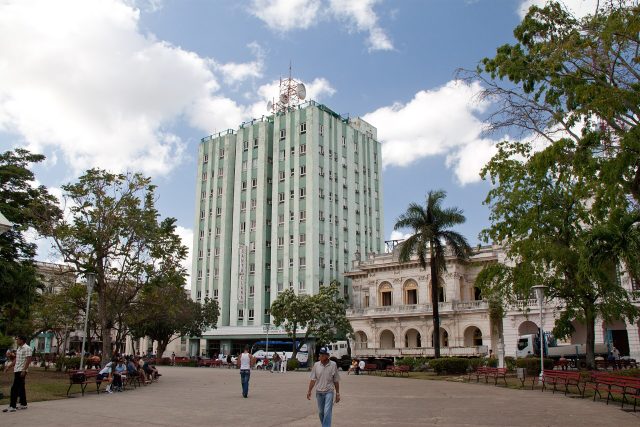
Santa Clara wears its revolutionary history openly, and the mausoleum is its most visible emblem. The city has other layers, too. The Teatro La Caridad, with its ornate early 20th-century design, stands apart from the revolution’s legacy. Parque Vidal offers colonial architecture and the slower rhythms of Cuban life. Walking through Santa Clara, you pass buildings that witnessed the upheavals of the 1950s, their walls holding stories.
This isn’t a place that demands reverence. There’s no forced solemnity, no scripted emotion. Instead, it invites you to sit with the past. The mausoleum doesn’t just commemorate Che Guevara—it preserves the questions he left behind. What does it mean to fight for an idea? How do the choices of one generation shape the next? The answers aren’t here, but the space to ask them is.
For some, the mausoleum is a pilgrimage. For others, it’s a detour. But whether you spend five minutes or an hour here, you leave feeling the quiet pull of history. The air is still, the light soft. The weight of what happened here lingers in the way people speak, in the way they pause before the bronze face of a man who became more than a man. Some stories refuse to fade.