
Santa Clara
Cuba · 4 places
Photo: Lezumbalaberenjena at English Wikipedia, Public domain
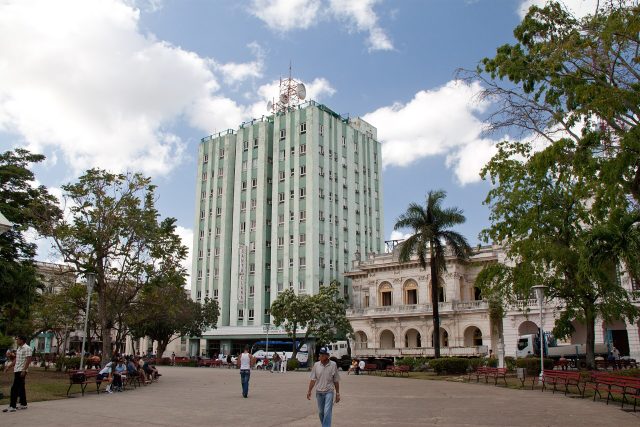
Santa Clara is one of those rare places that feels both timeless and alive, where history isn’t just preserved in museums but woven into the fabric of everyday life. The city moves to its own rhythm—unhurried, unpolished, and unapologetically itself. There are no skyscrapers or neon-lit boulevards here, just wide plazas lined with faded colonial buildings, their peeling facades softened by time and tropical light. The streets hum with the sound of old American cars, their engines growling as they navigate the cobblestones, while vendors sell mangoes and spices from wooden carts, their voices blending with the clatter of dominoes in the shade. This isn’t a place that tries to impress; it simply *is*, and that’s what makes it so compelling.
For many, Santa Clara is synonymous with revolution. It was here, in late 1958, that Che Guevara led a decisive battle that turned the tide of Cuba’s struggle against the Batista regime. Today, the city’s most striking landmark is the Che Guevara Mausoleum and Memorial, a vast complex dominated by a towering bronze statue of the revolutionary icon. The site draws visitors from around the world, but it’s just as much a pilgrimage for Cubans, who come to pay their respects to a man who remains a symbol of defiance and hope. Nearby, the armored train captured by Guevara’s forces in that same battle sits as a rusted monument to the power of persistence. The story of how a small group of rebels outmaneuvered a better-equipped army is still told with pride, not as distant history, but as something that shaped the city’s identity.
Yet Santa Clara is more than its revolutionary past. It’s a place where life unfolds in the open—on street corners, in parks, and across the grand expanse of Parque Vidal, the city’s beating heart. By day, the plaza is a meeting point for locals: old men arguing over chess, teenagers laughing over ice cream, musicians tuning their guitars under the shade of royal palms. As evening falls, the square transforms. The air fills with the scent of roasting plantains and the sharp, sweet tang of rum, while couples sway to the rhythms of son and salsa spilling from open doorways. There’s no grand stage, no choreographed performance—just the raw, unfiltered joy of music and movement, as natural as breathing.
The city also pulses with the energy of youth. Santa Clara is home to one of Cuba’s largest universities, and students give the place its restless, creative edge. They crowd into cafés with peeling paint and flickering lights, debate politics in sunlit courtyards, and fill the streets with laughter and music. The cultural scene here is vibrant but unpretentious, from the grand Teatro La Caridad—a 19th-century gem with near-perfect acoustics—to small galleries showcasing everything from avant-garde art to traditional Afro-Cuban crafts. Festivals pop up throughout the year, celebrating everything from jazz to poetry, and the city’s theaters host performances that range from classical concerts to experimental dance. It’s a reminder that while Santa Clara may be rooted in history, it’s far from stuck in the past.
What makes Santa Clara special, though, is its refusal to perform for visitors. There are no luxury resorts or tourist traps here, just the quiet authenticity of a city that lives for itself. Meals are simple but unforgettable—slow-cooked *ropa vieja* in a family-run *paladar*, or a plate of *tostones* eaten on a plastic chair outside a neighbor’s home. Accommodations are modest, often housed in crumbling but charming colonial buildings where the floors creak and the ceilings fan lazily overhead. The pace is deliberate, almost languid, inviting you to slow down and notice the details: the way sunlight slants through the slats of a wooden balcony, the sound of a neighbor’s radio playing a bolero, the taste of strong, sweet coffee served in a chipped cup. This isn’t a place you rush through; it’s one you sink into, letting its rhythms guide you. And that’s when you realize that Santa Clara’s greatest charm isn’t in its monuments or museums, but in the quiet, unshakable sense that here, life is lived fully—and on its own terms.
See & Do
All of them

Eat & Drink
All of them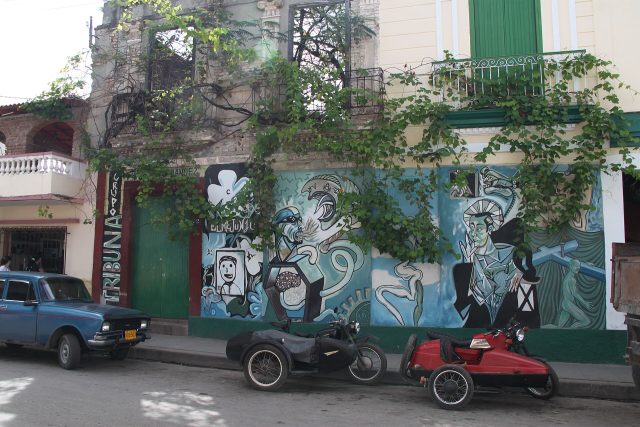
Places on the map
Marker colour follows the categoryClimate and weather
Detailed weather: Santa Clara- Average temperature
- 25 °C
- Precipitation per year
- 985 mm
- Average humidity
- 78 %
- Sunshine hours per day
- 10.6 h
- Time zone
- UTC-4 (GMT-4)
Average air temperature
°C
22
23
24
25
27
27
28
28
27
25
24
22
Jan
Feb
Mar
Apr
May
Jun
Jul
Aug
Sep
Oct
Nov
Dec


