Trim Town Bridge, often called the Wishing Bridge, is one of those quiet places that doesn’t demand attention at first glance. Spanning the slow-moving River Boyne, it connects the two sides of Trim, a town where history feels as present as the water flowing beneath its arches. The bridge itself is unassuming—just stone and mortar, worn smooth by time—but its significance runs deeper than its simple structure. Locals and visitors alike have long believed that a wish made here, if spoken with conviction, might just come true. Whether that’s true or not, the idea lingers, as enduring as the bridge itself.
Trim is one of Ireland’s oldest towns, and the River Boyne has shaped its story for centuries. In medieval times, the river was a vital artery, carrying merchants, pilgrims, and soldiers through a landscape already steeped in history. The bridge that stands today likely has roots in that era, though its current form is the result of later repairs and reconstructions. The stone arches, solid and unadorned, have weathered the years with the same quiet resilience as the town around them. There’s something reassuring in their permanence, a reminder that some things outlast the passing of time.
The bridge is best known for a legend tied to love and loss. In the 18th century, so the story goes, two young people from feuding families met in secret on its span. Their love was forbidden, and when their families discovered the affair, they were torn apart. Desperate to be together, the couple is said to have leapt from the bridge one night, choosing the river over a life apart. Since then, the bridge has become a place where people whisper wishes for love, happiness, or second chances. Some dismiss the tale as mere folklore, but the story endures, as do the wishes left behind—coins tossed into the water, quiet words spoken into the wind.
Today, the bridge is woven into the fabric of daily life in Trim. Locals cross it on their way to work or the market, children race across its stones, and visitors pause to take in the view. The River Boyne here is wide and calm, its banks lined with grass and trees that shift with the seasons. On clear days, the water mirrors the sky, while in the evenings, a soft mist often rises, blurring the line between land and water. The bridge isn’t just a crossing; it’s a place to stop, to breathe, to let the rhythm of the river slow the rush of thoughts.
The architecture of the bridge is straightforward, almost understated. There are no grand flourishes, just sturdy stone arches built to last. It doesn’t feel old or new—it simply exists, as much a part of the landscape as the river or the hills beyond. Over the years, it’s been repaired and maintained, but always with care to preserve its character. That restraint is part of its charm. There’s no need for embellishment when the setting speaks for itself: the steady flow of the Boyne, the weight of history in the stones, the way the light changes over the water.
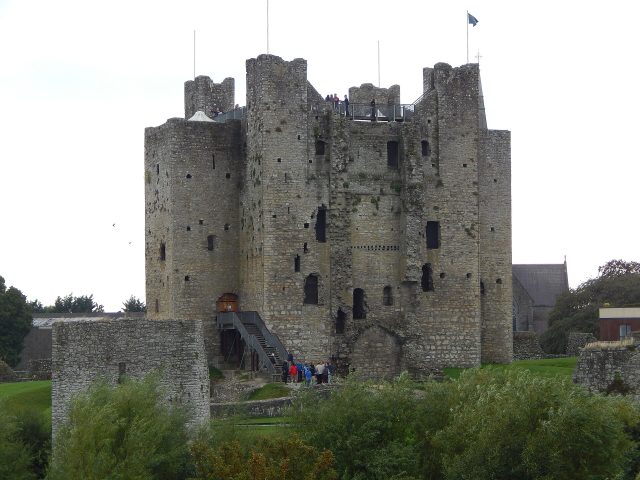
Trim is a town where the past is never far away. The ruins of the Norman castle loom over the skyline, the skeletal remains of St. Patrick’s Abbey stand as a testament to centuries of faith, and the narrow streets are lined with houses built from the same grey stone that has defined the town for generations. The Wishing Bridge is just one piece of this tapestry, but it’s often the place where people pause the longest. Maybe it’s the way the river moves, as unhurried now as it was hundreds of years ago, or the way the bridge’s arches frame the view, grounding the present in something timeless.
From the bridge, a short walk leads into the heart of Trim, where the old town hall stands on a small square. The streets beyond wind toward the castle and other landmarks, but many visitors find themselves drawn back to the bridge, as if pulled by the current of the river or the weight of the stories it holds. Some toss coins into the water, others murmur wishes under their breath, and a few simply stand in silence, watching the Boyne carry its secrets downstream. There’s no ceremony to it, no prescribed way to take part—just the quiet understanding that this is a place where people have always come to hope, to remember, to let go.
What makes the Wishing Bridge special isn’t any grand spectacle or tourist attraction. There are no tickets to buy, no guided tours, no pressure to perform. It’s just a bridge over a river, open to anyone who wants to cross it. That simplicity is its strength. In a world that often feels crowded and loud, the bridge offers a moment of stillness. The only sounds are the rustle of leaves, the murmur of the water, and the occasional footsteps of someone else who’s come to pause, to think, to wish.
The bridge changes with the seasons, just as the town does. In spring, the riverbanks burst with fresh green, and the air is filled with the scent of new growth. Summer brings long, golden evenings when the light lingers over the water, and the bridge becomes a gathering place for those who want to watch the sunset. Autumn turns the leaves to fire, and the river takes on a deeper, richer hue. Winter softens the landscape, wrapping the bridge in mist and making it feel like part of a storybook. Yet no matter the season, the bridge remains a constant—a place where the past and present meet, where wishes are made, and where the river flows on, indifferent to the passage of time.
Trim isn’t a town that tries to impress with grand gestures. Its beauty lies in its quiet persistence, in the way history seeps into every stone and street. The Wishing Bridge is just one thread in that story, but it’s one that resonates. Perhaps because it speaks to something universal: the hope that things might turn out differently, the belief that some places hold magic, and the comfort of knowing that some things—like a river, a bridge, a wish—endure. The Boyne still flows, the stones still stand, and the bridge is still there, waiting for the next person who needs to believe in something.