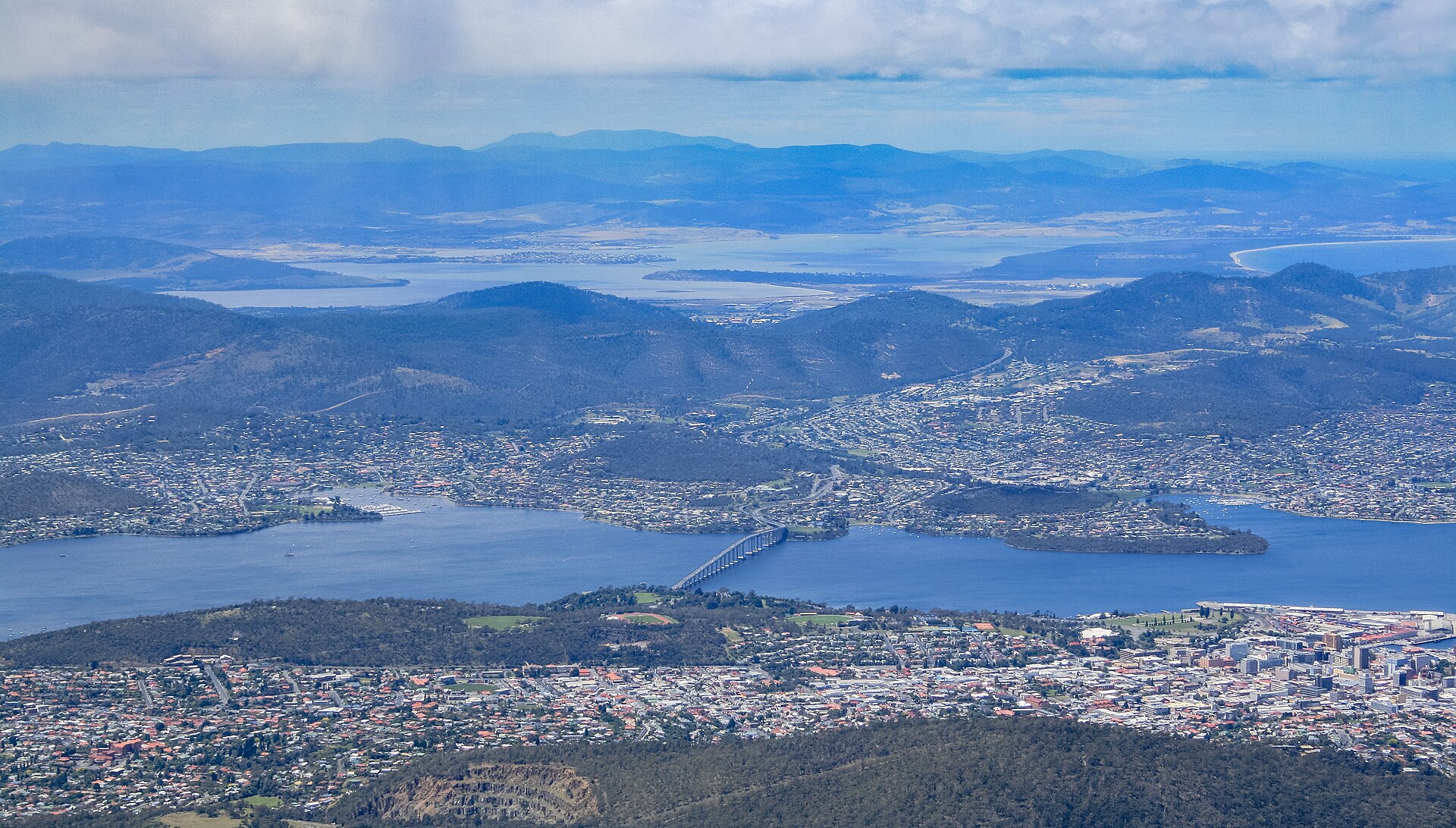
The Tasman Bridge is one of those places that feels unremarkable until you pause to consider what it really means to the city it serves. It doesn’t just span the Derwent River—it weaves together Hobart’s past, present, and future in a way few structures do. For locals, it’s more than steel and concrete; it’s part of daily life. Commuters cross it on their way to work, families drive over it to reach the other side of town, and some simply walk along its footpaths, taking in the river views. Over time, the bridge has become inseparable from Hobart’s identity, its silhouette against the water or the hills now as familiar as the city itself.
The need for a permanent crossing arose in the mid-20th century, when Hobart’s growth outpaced the old ferries and temporary bridges. The first Tasman Bridge opened in 1964, instantly becoming the city’s vital link. But its history took a dark turn in 1975, when a bulk carrier collided with one of its piers, causing a section to collapse and claiming twelve lives. The disaster shook Tasmania, and the bridge had to be rebuilt almost from scratch. What stands today is the result of that reconstruction—a structure that carries the weight of both progress and loss.
The current bridge is a study in mid-century engineering: functional, unadorned, and built to last. Its steel and concrete spans rest on massive piers anchored deep in the riverbed, stretching nearly a kilometer across the Derwent. The clearance is high enough for large ships to pass beneath, a necessity for Hobart’s busy port. Multiple lanes accommodate cars, while separate paths for cyclists and pedestrians make it accessible for all. It’s a bridge designed for utility, yet its clean lines and sturdy presence give it a quiet dignity.
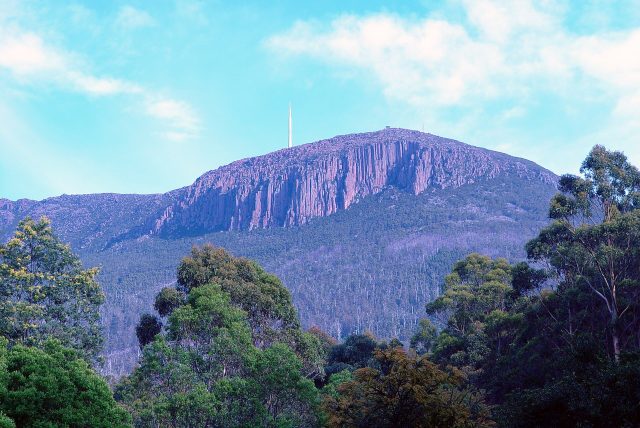
For visitors, the Tasman Bridge offers more than just a way to cross the river. It’s one of the best vantage points in Hobart, framing views of kunanyi / Mount Wellington looming over the city and the harbor bustling with activity. The light here changes constantly—soft and golden at dawn, sharp and clear in the afternoon, and shimmering with reflections at dusk. Many come just to walk along its length, feeling the river breeze and watching the water below. It’s a rare spot in the city where you can step away from the noise and simply observe.
The bridge’s role in Tasmania’s economy can’t be overstated. It carries the bulk of the island’s freight traffic to and from Hobart’s port, connecting Tasmania to mainland Australia and beyond. Without it, the flow of goods would slow to a trickle, and daily life would become far more complicated. In this sense, the Tasman Bridge is more than infrastructure—it’s a lifeline, the kind of unglamorous but essential link that keeps a city running.
Beyond its practical purpose, the bridge has also become part of Tasmania’s cultural fabric. It appears in photographs, postcards, and films, often serving as a visual shorthand for Hobart itself. Artists and photographers are drawn to its changing moods—the way fog softens its edges in the morning, or how the setting sun turns its concrete warm. For locals, it’s a place of personal memories: some recall its construction, others the tragedy of 1975, and many associate it with childhood trips or early drives across the river.
Walking or driving across the Tasman Bridge offers a different perspective on Hobart. From one side, you see the city center with its low-rise buildings and green spaces; from the other, the industrial waterfront and port facilities. The contrast is striking—here, the city feels alive with movement, while just beyond, the river and mountains ground it in something timeless. During the day, the bridge hums with traffic; at night, it glows with streetlights, quiet and almost empty, the sound of water the only reminder that the city never truly sleeps.
The Tasman Bridge is more than just a way to get from one side of the river to the other. It’s a piece of Hobart’s history, a witness to both tragedy and resilience. For visitors, it’s a place to pause and reflect on how something as ordinary as a bridge can hold so much meaning. For locals, it’s simply part of the rhythm of life—until, one day, they stop to look at it again and see it anew.