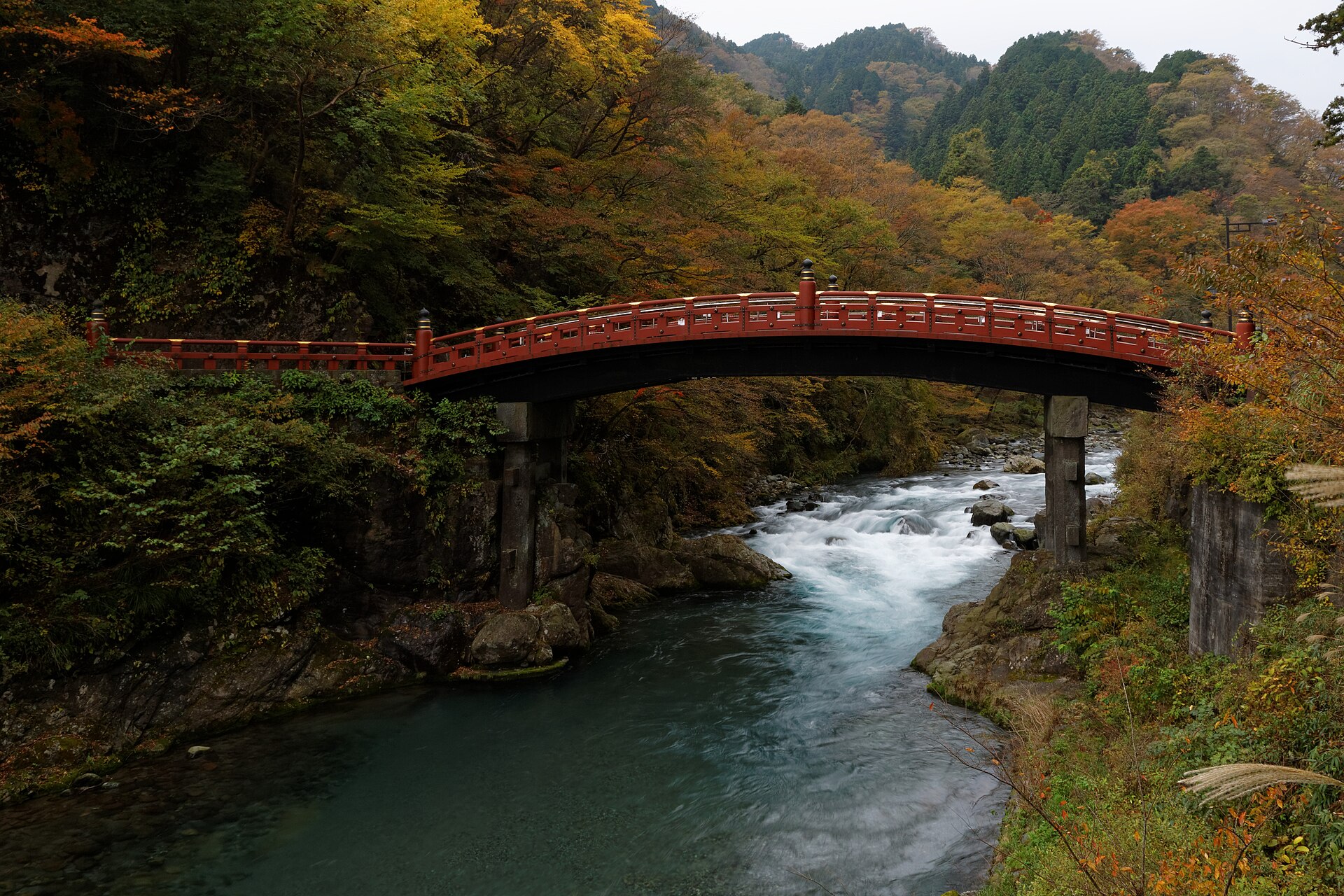
Shinkyo Bridge is one of those places in Nikko where history and nature meet. The wooden arch stretches over the Daiya River, its red hue bright against the forest and mountain slopes. It’s not just a bridge—it’s a structure that fits into the landscape without overpowering it. The locals call it sacred, and that’s more than just a name. The bridge carries a weight that stays with you after you cross it.
Built in the early 1600s as part of Nikko’s shrine complex, Shinkyo was commissioned under the rule of Tokugawa Ieyasu. It wasn’t just a way to cross the river—it was a ceremonial passage, reserved for priests and members of the imperial family. Ordinary people were forbidden from setting foot on it. Today, anyone can walk across, but the bridge hasn’t lost its spiritual significance. It remains part of the pilgrimage route to the Toshogu and Futarasan shrines, both UNESCO World Heritage sites, and crossing it still feels like stepping into something older.
The design of the bridge is simple. The wooden beams, joined without nails, rest on stone foundations that match the natural rock. The Daiya River beneath it runs fast, its waters crashing against the rocks. After heavy rains or during the spring thaw, the current grows stronger, and the bridge seems to hold steady above it.
Shinkyo hasn’t always stood as it does today. The river has destroyed earlier versions, forcing rebuilds. The current structure dates back to 1907, reconstructed to match the original. The wood is treated with traditional methods to resist rot, and every few years, the bridge is dismantled and reassembled to preserve its appearance. This cycle of renewal is part of its story.
For visitors, Shinkyo is a place where old Japan feels close. The best time to see it is early in the morning, when the air is cool and the scent of pine lingers. The seasons change it. In autumn, the maples turn red and gold, their reflections moving in the river below. In spring, cherry blossoms drift through the air. In winter, snow dusts the bridge and mountains, giving it a quiet beauty.
Walking across Shinkyo changes how you see Nikko. From the center, the river winds through the gorge, with mountains rising in the distance. On clear days, the forested peaks stretch far. Locals say that if you stand still and listen, you might hear more than just the water—perhaps the echoes of prayers offered here centuries ago. The bridge makes you pause, makes the past feel near.
You could cross it in a few minutes or linger, thinking about the people who have walked this path over the centuries. What brought them here? What did they carry with them? Shinkyo isn’t just a bridge—it’s a thread connecting generations, a small part of Japan’s story. It’s a place where the past isn’t just remembered; it’s still here.
Today, Shinkyo remains part of Nikko. It appears on postcards and souvenirs. For some, it’s a symbol of faith. For others, it’s a work of art. For many, it’s a place to stop and reflect. But no matter how people see it, Shinkyo is part of Nikko’s soul, a structure that has endured across centuries.