Queen Louise Bridge in Malbork is one of those places that feels suspended between eras, a quiet witness to history that still belongs to the living city around it. Stretching across the Nogat River, a branch of the Vistula, it connects two banks that were once divided by more than just water. The river itself has carried the weight of centuries—trade, conflict, and the slow passage of time—while the bridge stands as a reminder of the years when Malbork was the heart of the Teutonic Order’s power, and later, a key stronghold in Prussia.
The bridge takes its name from Queen Louise of Mecklenburg-Strelitz, wife of Frederick William III of Prussia. She was a figure of resilience during the Napoleonic Wars, her legacy woven into the region’s identity. Built in the early 19th century, when this part of Poland was under Prussian rule, the bridge was part of a broader effort to modernize the area. Malbork was shedding its medieval past, transforming into a town that looked toward the future while still carrying the echoes of its order-state origins.
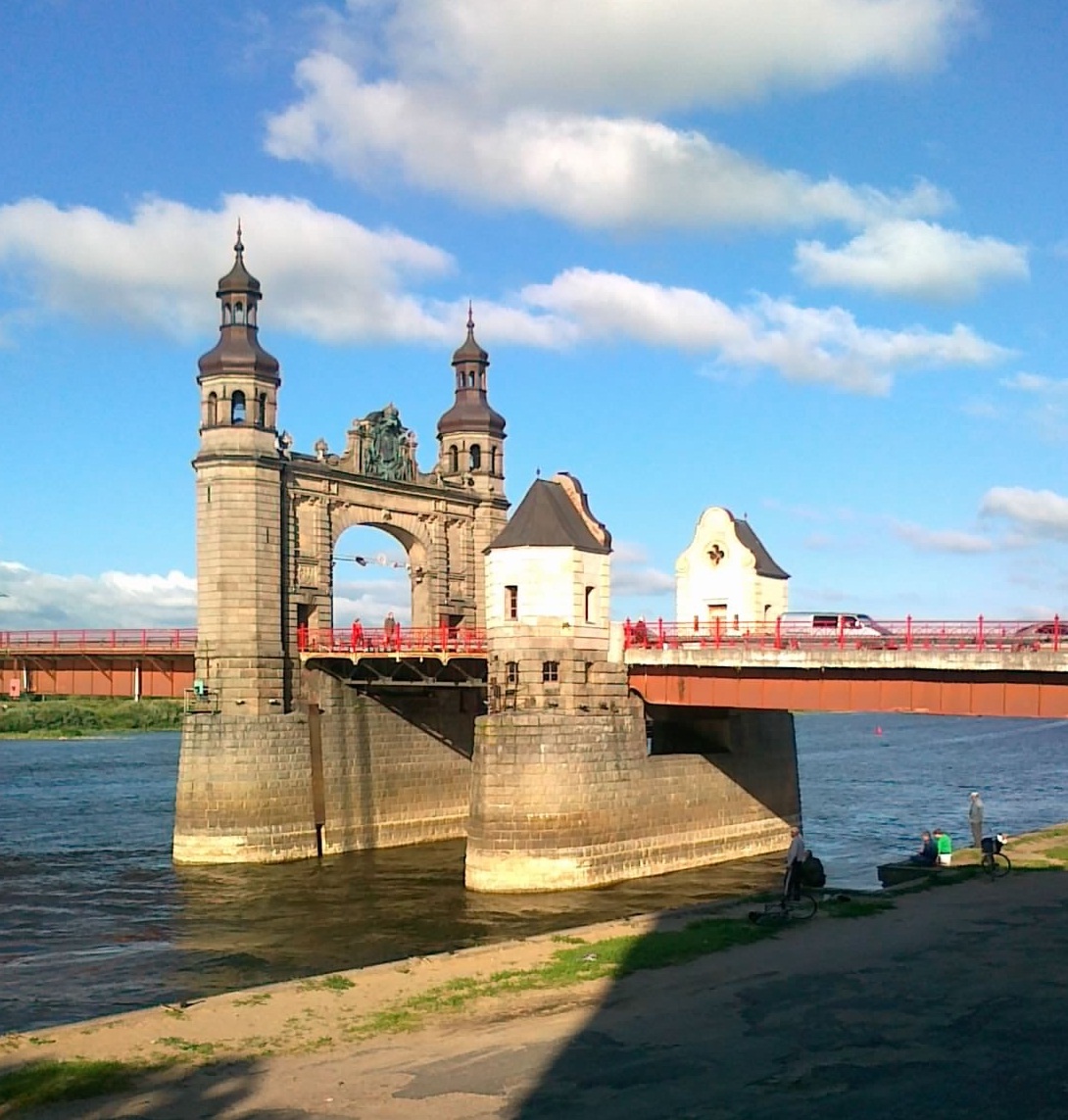
Its design is unassuming yet elegant, a classic example of early 19th-century engineering. The arched structure, built from brick and stone, rests on sturdy piers that rise from the river, its spans curving gracefully over the water. There’s a certain lightness to it, despite the solidity of its materials, a balance between function and form that was characteristic of the era. Bridges like this were more than just practical crossings—they were symbols of progress, proof of what could be achieved with skill and ambition. Today, it’s easy to imagine the clatter of horse-drawn carriages on its surface, or the first automobiles rumbling across, locals hurrying to market or returning home after a long day.
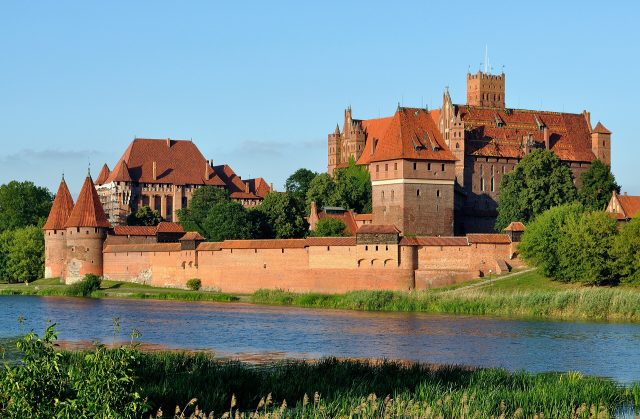
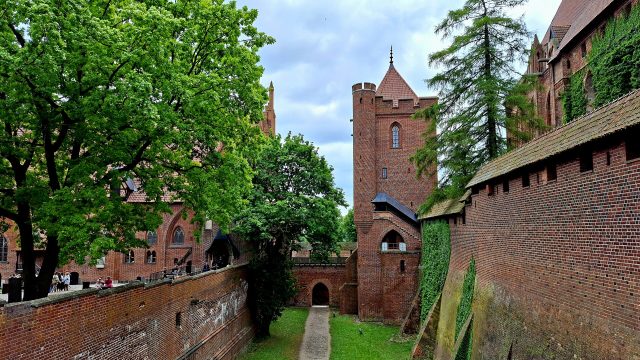
Malbork is a town steeped in history, and the Queen Louise Bridge adds another layer to its story. It stands near the famous Teutonic Castle, one of Poland’s most imposing medieval landmarks, and the two seem to exist in conversation with each other. The castle, with its towering walls and Gothic grandeur, speaks of the order’s military might and religious dominance, while the bridge represents a later chapter—when Malbork was no longer the center of a monastic state but still a place of significance. Walking along the Nogat’s embankment, you can see how the bridge fits into the town’s skyline, a subtle but essential part of its character.
For those who live in Malbork, the bridge is more than just a tourist attraction. It’s part of daily life—pedestrians cross it on their way to work, cyclists ride along its path, and the occasional car passes by. In the warmer months, the bridge is especially lively, filled with people pausing to watch the river or rushing to their next destination. When winter comes, the scene changes. Frost coats the stone, the Nogat freezes over, and the banks grow quiet, as if the town itself has taken a breath. The bridge, with its soft curves and muted colors, looks like something out of an old fairy tale, a silent guardian over the sleeping river.
The bridge hasn’t always looked as it does now. Over the years, it has undergone several restorations, particularly after World War II, when much of Malbork was damaged. Yet those who worked on it took care to preserve its original appearance, ensuring it remained recognizable. Today, it stands much as it did a century and a half ago, though modern engineering has made it sturdier, more resilient. The materials may have changed, but the spirit of the bridge hasn’t.
A walk across Queen Louise Bridge is a small but memorable part of any visit to Malbork. From its center, you can look out over the Nogat, its waters reflecting the town’s old houses and the distant towers of the castle. The view is especially striking in the evening, when the streetlights flicker to life and their glow dances on the river’s surface. It’s in moments like these that the bridge reveals its true nature—not just a crossing, but a symbol of the town itself, a place where history is always present, just beneath the surface.
There’s something about this bridge that goes beyond its architecture. It’s a place where the past feels tangible, where you can almost hear the echoes of the people who have crossed it over the years. Each one had their own story—merchants, soldiers, families, travelers—all moving through their lives with their own hopes and struggles. The bridge has seen them all, and in its quiet way, it carries their memories forward. That’s the magic of places like this. They don’t just stand still; they grow and change with the city, becoming part of its rhythm, its heartbeat. In Malbork, where every stone seems to have a story, the Queen Louise Bridge is no exception.