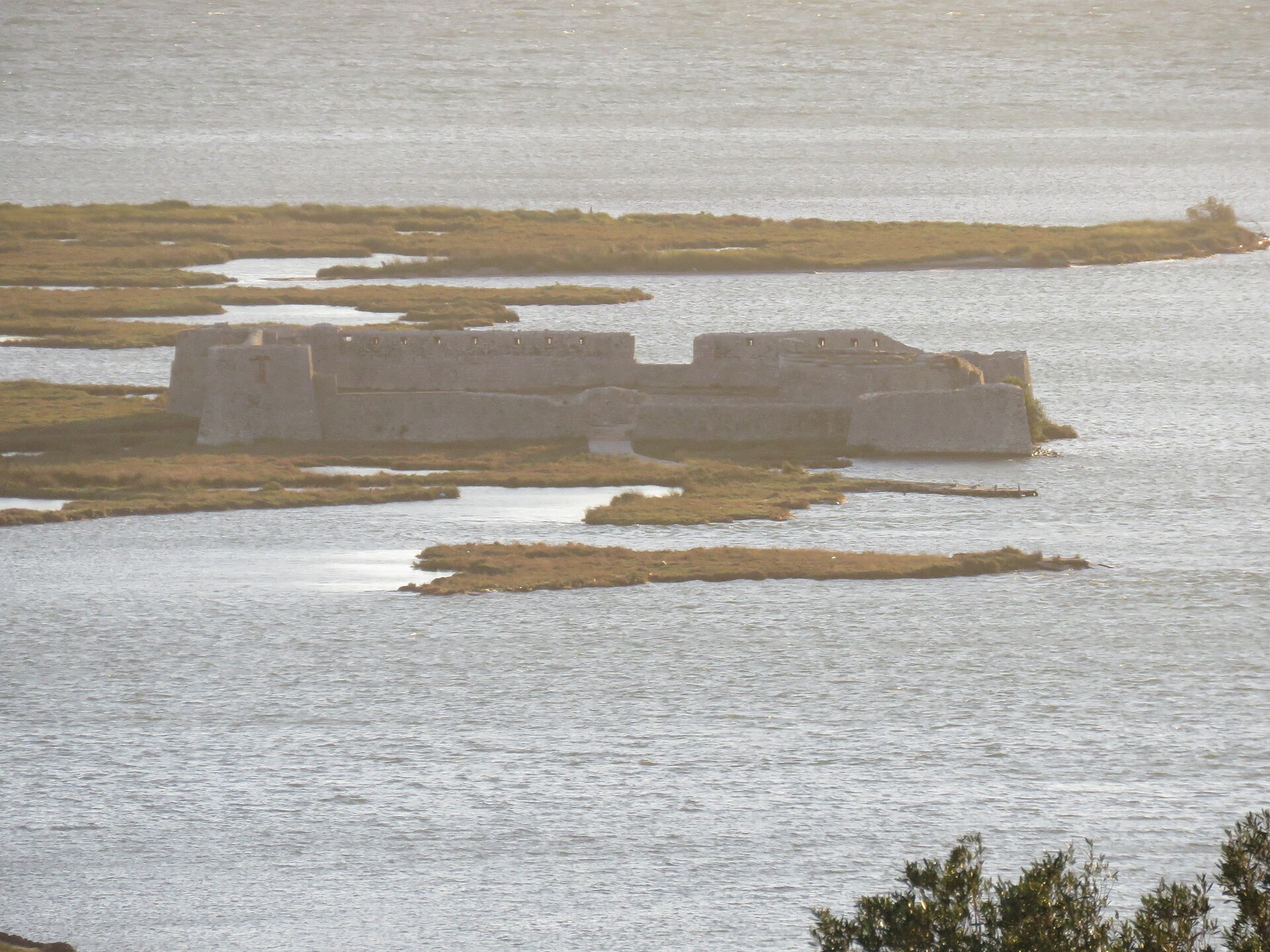
Perched on a low hill overlooking the Ionian Sea, Ali Pasha Fortress is one of those rare places where history feels almost tangible. From its weathered stones, you can see the modern town of Sarandë sprawling below, the waves lapping at its shores, and in the distance, the faint outline of the Greek island of Corfu. The fortress takes its name from Ali Pasha of Tepelenë, the formidable 19th-century Albanian ruler whose influence stretched across the region. Yet the site’s story begins much earlier—its first fortifications date back to the Byzantine era, later expanded by Venetians and Ottomans, each leaving their mark on its walls.
The architecture here is unmistakably defensive: thick stone ramparts, angular towers, and narrow arrow slits designed to repel invaders. Inside, the remains of barracks, water cisterns, and storage rooms hint at the daily life of the soldiers who once manned these walls. The central tower, now partially crumbled, was once the highest vantage point for miles, offering a clear view of approaching ships or armies. Today, it provides a quiet spot to take in the panorama—sea, sky, and the scattered rooftops of Sarandë below.
This wasn’t always a forgotten ruin. Over the centuries, the fortress served as a military outpost, a refuge, and even a prison. The Venetians used it to safeguard trade routes, while the Ottomans reinforced it as a strategic stronghold. Ali Pasha himself, known for his ruthlessness and political cunning, further strengthened its defenses to control the coastline and maritime traffic. After his death, the fortress gradually lost its military importance, but it remained a symbol of resilience for the people of Sarandë.
What makes Ali Pasha Fortress special today isn’t grand restorations or museum displays. There are no guided tours or informational plaques—just the quiet weight of history in the stones beneath your feet. Visitors are free to wander the grounds, climb the towers, and imagine the clatter of armor or the distant shouts of sentries. The best time to come is at sunset, when the light softens the rough edges of the ruins and the sea below turns from blue to gold.
Sarandë itself has always been tied to the fortress’s fate. Built on the site of the ancient Greek settlement of Onchesmos, the town’s fortunes rose and fell with the tides of trade and conflict. The fortress wasn’t just a military installation; it was part of everyday life. In medieval times, it shielded the town from pirates and raiders. Later, it became a landmark for fishermen and merchants, a silent guardian watching over the harbor.
Reaching the fortress is simple. A twenty-minute walk from Sarandë’s center takes you up winding streets and stone steps, past small cafés where locals sip coffee in the shade. The climb isn’t steep, but it’s enough to work up a light sweat before you emerge onto the open grounds. Many visitors come not just for the history, but for the view—on clear days, Corfu’s lights twinkle across the water at night, and in summer, the breeze up here is cooler than in the town below.
This isn’t a place that dazzles with opulence or size. It’s modest, even understated, but that’s part of its charm. There are no crowds, no souvenir stalls, no loudspeakers—just the sound of the wind and the occasional cry of a seagull. For history enthusiasts, it’s a must-visit, a tangible link to Albania’s layered past. For everyone else, it’s a quiet retreat, a place to pause and let the weight of centuries settle around you.
In recent years, the fortress has become a favorite spot for photographers. The contrast of crumbling stone against the sea and sky makes for striking images, especially in the soft light of early morning or late afternoon. Spring and autumn are particularly beautiful here, when wildflowers bloom among the ruins or the surrounding hills turn golden. Even in winter, when the crowds thin and the sea turns gray, there’s a quiet magic to the place—a sense of standing at the edge of something timeless.
Ali Pasha Fortress isn’t just a relic; it’s a living piece of Albania’s story. Its walls have witnessed the rise and fall of empires, the ebb and flow of trade, and the daily lives of countless people who called this coast home. To visit is to step into that story, if only for a little while. Whether you come for the history, the views, or simply the chance to be alone with your thoughts, the fortress offers something rare: a moment of connection to the past, unfiltered and unhurried.