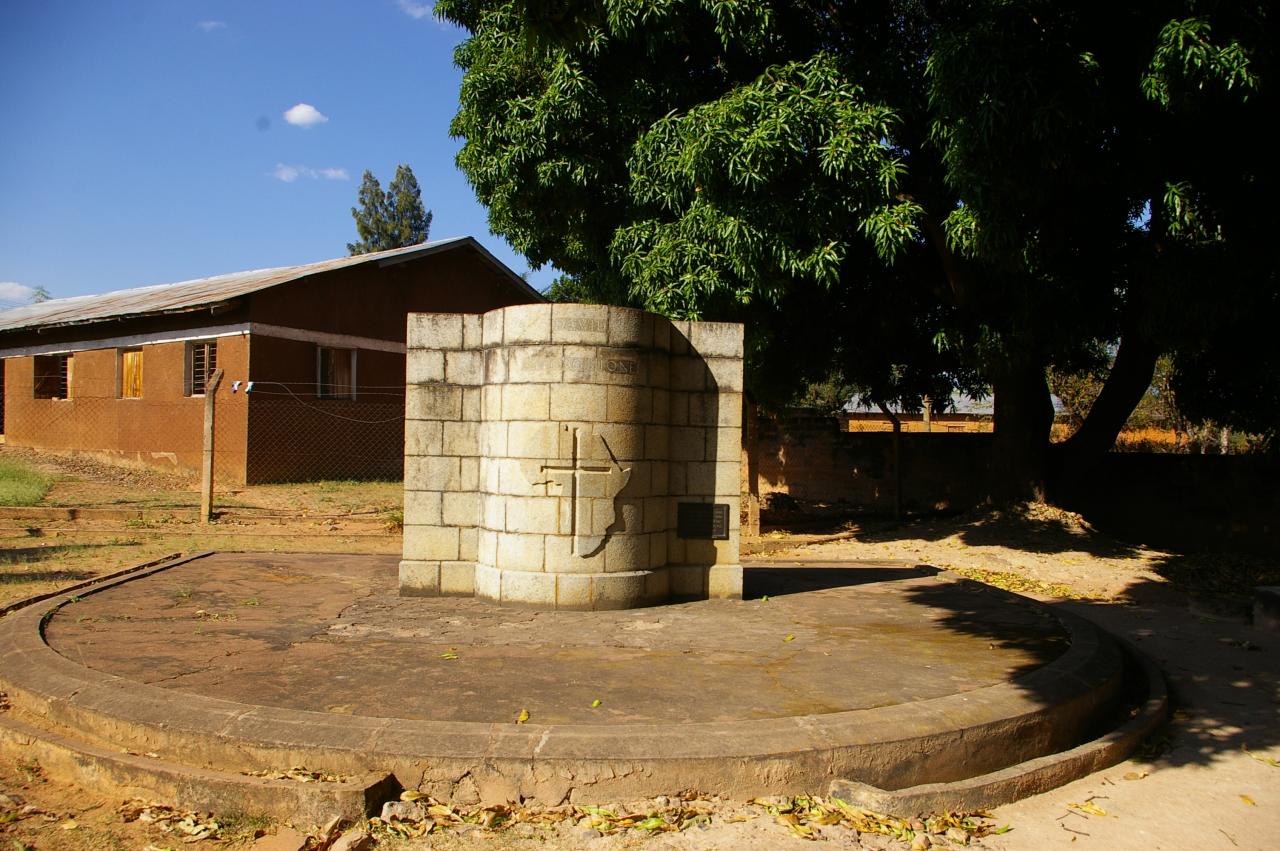
Perched on a quiet hill overlooking the vast expanse of Lake Tanganyika, the Livingstone Memorial in Kigoma is one of those rare places where history feels both distant and deeply personal. It marks the spot where, in 1873, the heart of David Livingstone was buried—a small but profound gesture that tied the famous explorer forever to the land he had spent years traversing. His body was carried over a thousand miles to the coast and eventually laid to rest in Westminster Abbey, but here, in this unassuming corner of Tanzania, his heart remained. The choice was symbolic: Africa had claimed him in life, and in death, it kept a part of him.
The memorial itself is simple—a low stone pyramid rising from the earth, its clean lines unadorned except for a modest plaque. There are no grand statues or ornate carvings, just the quiet dignity of a place that doesn’t need to announce its significance. From this vantage point, the view stretches across the lake, its waters shimmering under the sun, stretching toward the horizon where the Democratic Republic of Congo begins. It’s easy to imagine Livingstone standing here, gazing out at the same landscape, his mind filled with questions about the continent’s geography and the people who called it home.
Livingstone’s legacy in Africa is complicated. He wasn’t a conqueror or a colonial administrator, but a man driven by curiosity and a desire to understand. His expeditions mapped vast regions previously unknown to Europeans, and his writings introduced the world to the cultures, landscapes, and injustices of 19th-century Africa. Yet his work also became entangled with the forces of empire, a paradox that lingers in the way his story is remembered. In Kigoma, though, the focus is narrower: this is where his journey ended, where his companions made the difficult decision to separate his heart from his body before beginning the long trek to the coast. The memorial doesn’t try to resolve the contradictions of his life—it simply marks the place where he became part of Africa’s soil.
Kigoma itself is a town that moves at its own pace, far from the tourist circuits that draw crowds to Tanzania’s northern safari parks or Zanzibar’s beaches. It’s a working port, where fishing boats bob in the shallows and the rhythm of daily life unfolds without hurry. The lake dominates the landscape, its deep blue waters stretching as far as the eye can see. On clear days, the mountains of the Congo rise in the distance, a reminder of how close this place is to other worlds. The memorial sits just above the town, a short walk from the waterfront, where the sounds of the market and the occasional call of a fisherman drifting in on the breeze.
Visiting the memorial is less about ticking off a sightseeing box and more about stepping into a moment of reflection. There are no guided tours, no audio guides, no gift shops selling postcards. Just the pyramid, the plaque, and the view. For those who know Livingstone’s story, it’s a chance to stand where he once stood, to consider the vast distances he traveled and the questions that drove him. For others, it’s simply a quiet spot to sit and watch the lake, to think about the way history is made not just by grand events, but by the small, human decisions that shape them.
The lack of fanfare is part of what makes the place special. There’s no attempt to dramatize the past or turn it into something it wasn’t. The memorial doesn’t need to. The wind off the lake, the rustle of the trees, the occasional laughter of children playing nearby—these are the only accompaniments to the silence. It’s the kind of place where you might find yourself lingering longer than you intended, not because there’s much to see, but because there’s something to feel. The weight of history here isn’t heavy; it’s gentle, like the touch of the breeze.
Kigoma isn’t a destination for those seeking spectacle, and the Livingstone Memorial won’t appeal to travelers looking for Instagram-worthy backdrops. But for those who appreciate the quiet corners of the world, it offers something far more meaningful. It’s a reminder that exploration isn’t just about discovery—it’s about connection. Livingstone’s heart was buried here because his companions believed this land deserved to keep a part of him. In return, the land has preserved his memory in its own understated way, not with fanfare, but with the enduring presence of the lake, the sky, and the slow passage of time.