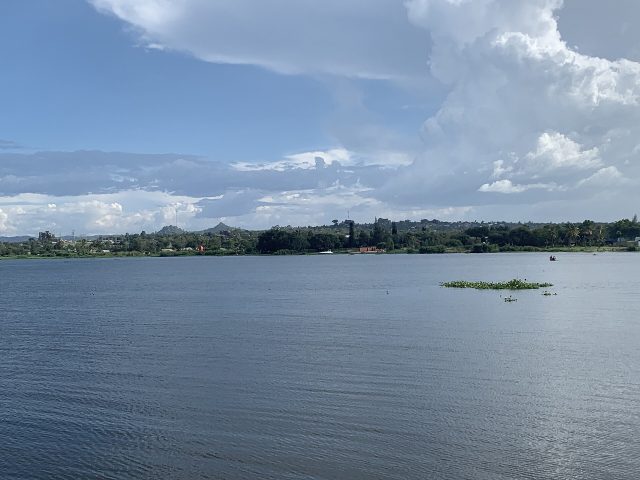
The Julius Nyerere Memorial in Musoma is one of those quiet places where history feels personal rather than distant. Perched on the shores of Lake Victoria, it honors Tanzania’s first president not with grand statues or sweeping declarations, but with the kind of understated reverence that suits the man himself. Nyerere was never one for pomp, and the memorial reflects that—no towering monuments, just a modest space where visitors can sit, reflect, and perhaps catch a glimpse of the man behind the legacy.
Born near Musoma in the village of Butiama, Nyerere spent much of his life in Dar es Salaam or abroad, yet this region always remained his anchor. Even after stepping down from politics, he often returned, not as a statesman but as a familiar figure—someone who might drop by a neighbor’s home or join a village discussion. The memorial, opened in 2010, captures that side of him, the one that existed beyond speeches and official portraits. It’s less about politics and more about the everyday connections that shaped his life and, by extension, the nation’s.
The architecture is simple, almost unassuming. The main building houses an exhibition of photographs, documents, and personal items—nothing flashy, just the kind of artifacts that make history feel tangible. Yellowed newspaper clippings, handwritten letters, and the well-worn suits he wore to international summits all hint at a life lived in service rather than spectacle. Nearby, a small library holds books in Swahili and English, many of which Nyerere translated himself. He believed deeply in education, not just as a tool for progress but as a right, and his work as a translator—including versions of Shakespeare—was one way he tried to make knowledge accessible to all.
Lake Victoria adds a layer of tranquility to the memorial. On clear days, the water shimmers in shades of blue that seem almost unreal, and the sunsets here are worth lingering for. Nyerere loved this place for its quiet, and the memorial carries that same sense of calm. It’s rarely crowded, just a few benches where visitors can sit and watch the lake, listening to the cries of gulls and the occasional murmur of fishermen passing by. Sometimes, locals will stop to chat, and in their stories, Nyerere isn’t a distant icon but a man who understood the value of simple things—a shared meal, a good laugh, the rhythm of life by the water.
In Tanzania, Nyerere is often spoken of in almost mythic terms. He led the country to independence, united its diverse communities under the philosophy of *ujamaa* (familyhood), and walked away from power with a humility that still resonates. The memorial in Musoma isn’t an attempt to deify him; instead, it feels like a quiet acknowledgment of a man who saw himself as a teacher rather than a ruler. There’s no grand narrative here, just the sense that Nyerere was deeply rooted in this land, not just as a leader but as someone who belonged to it.
Visiting the memorial isn’t like touring a traditional museum. The exhibition doesn’t follow a strict timeline, and that’s intentional. Photographs and documents are arranged to let visitors piece together Nyerere’s life for themselves—a young student at the University of Edinburgh, a negotiator on the world stage, a man in a field discussing farming with local villagers. Among the displays, his Swahili translations of Shakespeare stand out. Nyerere believed great literature should be available to everyone, and he took on the task himself, proving that African languages could carry the same depth and beauty as any other.
Musoma isn’t a tourist hub, and the memorial rarely makes it into guidebooks. That’s part of what makes it special. There are no crowds, no souvenir stalls, no scripted tours—just a place that exists quietly, on its own terms. Occasionally, school groups visit, and the memorial comes alive with their voices, their questions, their laughter. For them, Nyerere is already history, but it’s a living history, one that still shapes conversations about Tanzania’s future.
If you find yourself in Musoma, the memorial is worth an hour or two—not to tick a box on a sightseeing list, but to sit by the lake, flip through a book in the library, or strike up a conversation with someone who remembers Nyerere as more than a name in a textbook. They might tell you how he loved football, how he joked about his failed farming experiments, or how he once helped build a school in a neighboring village. In those stories, he becomes more than a historical figure; he becomes human, relatable. And that’s when the memorial stops feeling like a monument and starts feeling like a place where the past and present meet.