Siyadi Mosque in Muharraq is one of those rare places where time seems to have paused, preserving the quiet rhythm of old Bahrain. Tucked away on a narrow street among traditional houses with their distinctive wind towers, it stands as a silent witness to the days when Muharraq was the beating heart of the country. Built in the late 19th century, the mosque was more than just a place of worship—it was a gathering point where disputes were settled, deals were struck, and knowledge passed from one generation to the next. Even now, when the streets are no longer filled with the voices of pearl merchants, the mosque retains a sense of purpose, as if the echoes of those conversations still linger in the air.
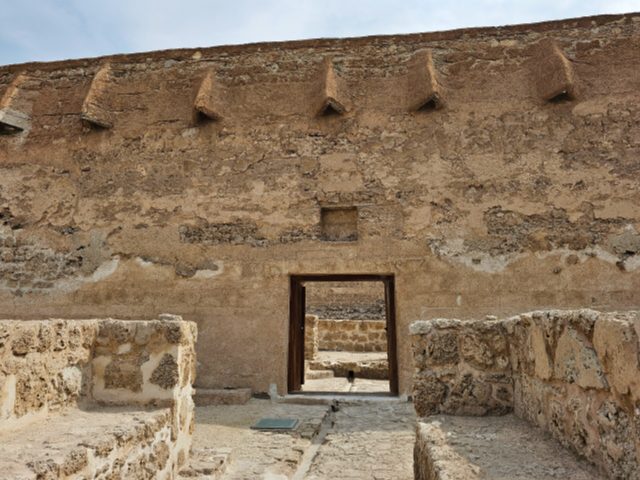
The architecture of Siyadi Mosque is unassuming yet striking in its simplicity. The low walls, made from the same coral stone that defines much of Bahrain’s traditional buildings, support a flat roof, while the slender minaret rises just enough to be seen above the surrounding structures. Inside, the space is modest, with geometric patterns adorning the walls and wooden beams stretching across the ceiling. The Quran niches are carved with the same restraint that characterizes the entire building. There is no gilding or marble here, no grand decorations—just the quiet dignity of a place built to serve its purpose, not to impress.
Muharraq itself was once the center of Bahrain’s economic and cultural life, long before oil transformed the country. For centuries, the city thrived on the pearl trade, with divers setting out into the Persian Gulf for months at a time, risking their lives in search of the precious gems. When they returned, fortunes were made and lost in the houses that still stand near the mosque. Siyadi Mosque was deeply woven into this world—men prayed here before embarking on their voyages, gave thanks for safe returns, and mourned those who never came back. The mosque was a constant in a life that was otherwise unpredictable, a place where the community gathered not just to worship, but to share in the joys and sorrows of their shared existence.
Today, the mosque remains active, though the crowds are smaller than they once were. Friday prayers still draw locals, and the occasional visitor might wander in, curious to see how people in this corner of the Arabian Peninsula lived and worshipped a century ago. Access isn’t always guaranteed, but even from the outside, the mosque offers a glimpse into a Bahrain that existed long before skyscrapers and shopping malls. The coral stone walls, the narrow streets, the wind towers—all of it speaks of a time when life moved at a different pace, when wealth was measured in pearls rather than oil.
Just steps away from the mosque stands the Siyadi House, once the home of a wealthy pearl merchant family. Built in the same style as the mosque, the house and its neighbor form a small but powerful ensemble, a snapshot of Muharraq’s past. Walking through the narrow lanes of the old city, it’s easy to imagine the scene as it once was: the shouts of merchants haggling over prices, the creak of carts laden with goods, the call to prayer rising above it all. The air here feels different, as if the weight of history has settled into the very stones.
Siyadi Mosque is more than just a historical landmark—it’s a living piece of Bahrain’s story. It reminds us that the country was once defined not by oil, but by the sea and the people who depended on it. The pearl divers, the merchants, the families who built their lives around the trade—all of them left their mark here. Now, as Muharraq slowly transforms into a destination for visitors, the mosque remains a quiet anchor, a place where the past isn’t just remembered but still feels present. There’s no fanfare here, no crowds, just the quiet certainty that some things endure, even as the world around them changes.