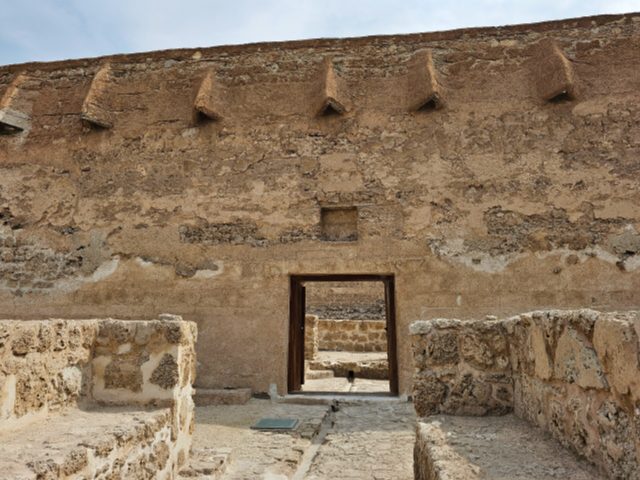
The House of the Qur’an in Muharraq is one of those rare places where time seems to pause, allowing history to unfold in tangible form. It isn’t just a museum or a library, but a sanctuary for ancient manuscripts, carefully preserved with reverence for Islamic heritage. The building itself reflects Bahrain’s architectural traditions—thick limestone walls, high ceilings with wooden beams, and narrow windows that filter soft, diffused light. Inside, the silence is almost palpable, broken only by the occasional rustle of pages or the quiet footsteps of visitors. There’s a sense that this is a space where something sacred is kept, not just books, but fragments of spiritual and cultural memory.
The collection here is extraordinary, not just for Bahrain but for the entire Islamic world. It holds Qur’anic manuscripts spanning centuries, from early parchment copies to later editions adorned with intricate calligraphy and miniature paintings. Some date back to the 7th–9th centuries, a time when Islam was still spreading beyond the Arabian Peninsula. The manuscripts are written on various materials—parchment, paper, even palm leaves—each telling a story of how the sacred text was preserved across different eras. Among the most striking are those with gold embossing and elaborate designs, showcasing the skill of scribes and artists who treated their work as both devotion and craft.
The House of the Qur’an was established in the late 20th century by a Bahraini collector and philanthropist who dedicated his life to finding and safeguarding these ancient texts. His efforts brought together not only Qur’anic manuscripts but also rare books on Islamic law, philosophy, medicine, and astronomy. The collection continues to grow, now numbering thousands of items, including some that have survived wars, migrations, and neglect. Each piece undergoes meticulous restoration, ensuring that future generations can see them as they were meant to be seen.
The architecture of the building is worth noting in its own right. Designed in a traditional Bahraini style with modern touches, it balances heritage with functionality. Inner courtyards surrounded by galleries create a sense of seclusion, while spacious halls allow visitors to examine the manuscripts up close. The main exhibition room is particularly striking, with its glass display cases protecting the most valuable texts. The lighting is carefully arranged to avoid damaging the delicate pages while highlighting the beauty of the calligraphy and ornamentation.
For many visitors, the House of the Qur’an becomes a place of reflection, not just on religion but on the role of writing in human history. Here, you can trace the evolution of Arabic calligraphy, from the angular Kufic script to the flowing Naskh style, and see how the art of the scribe became a form of expression in its own right. Some manuscripts include scholarly annotations, offering context about their creation and how the Qur’an was understood in different periods. It’s a place where history comes alive not through dates and events, but through the physical traces of faith and knowledge.
Muharraq itself is a city steeped in history. Once the capital of Bahrain and a key trading hub between East and West, its narrow streets, traditional limestone houses, and wind towers evoke a bygone era. The House of the Qur’an feels like a natural part of this landscape, a quiet guardian of the past. A visit here can easily be combined with a walk through the old town, where remnants of its former life still linger—ancient markets, mosques, and the homes of wealthy merchants.
Beyond being a museum, the House of the Qur’an is also a research center. Scholars specializing in Islamic paleography, restoration, and history work here, studying and preserving the collection. For academics and students, it’s a rare opportunity to engage with primary sources, while for casual visitors, it offers a chance to connect with a heritage that has shaped the culture and worldview of millions over centuries. Occasionally, the center hosts lectures and exhibitions on Islamic art and history, keeping the space alive and evolving.
A visit to the House of the Qur’an leaves a lasting impression, one of having touched something deeper than a typical museum exhibit. It’s a place where you can sense the weight of history, see how the past is carefully preserved, and understand the vital role of writing in passing down knowledge and traditions. There’s no rush here, no forced experience—just quiet, light, and ancient pages that continue to tell their stories to those who listen.