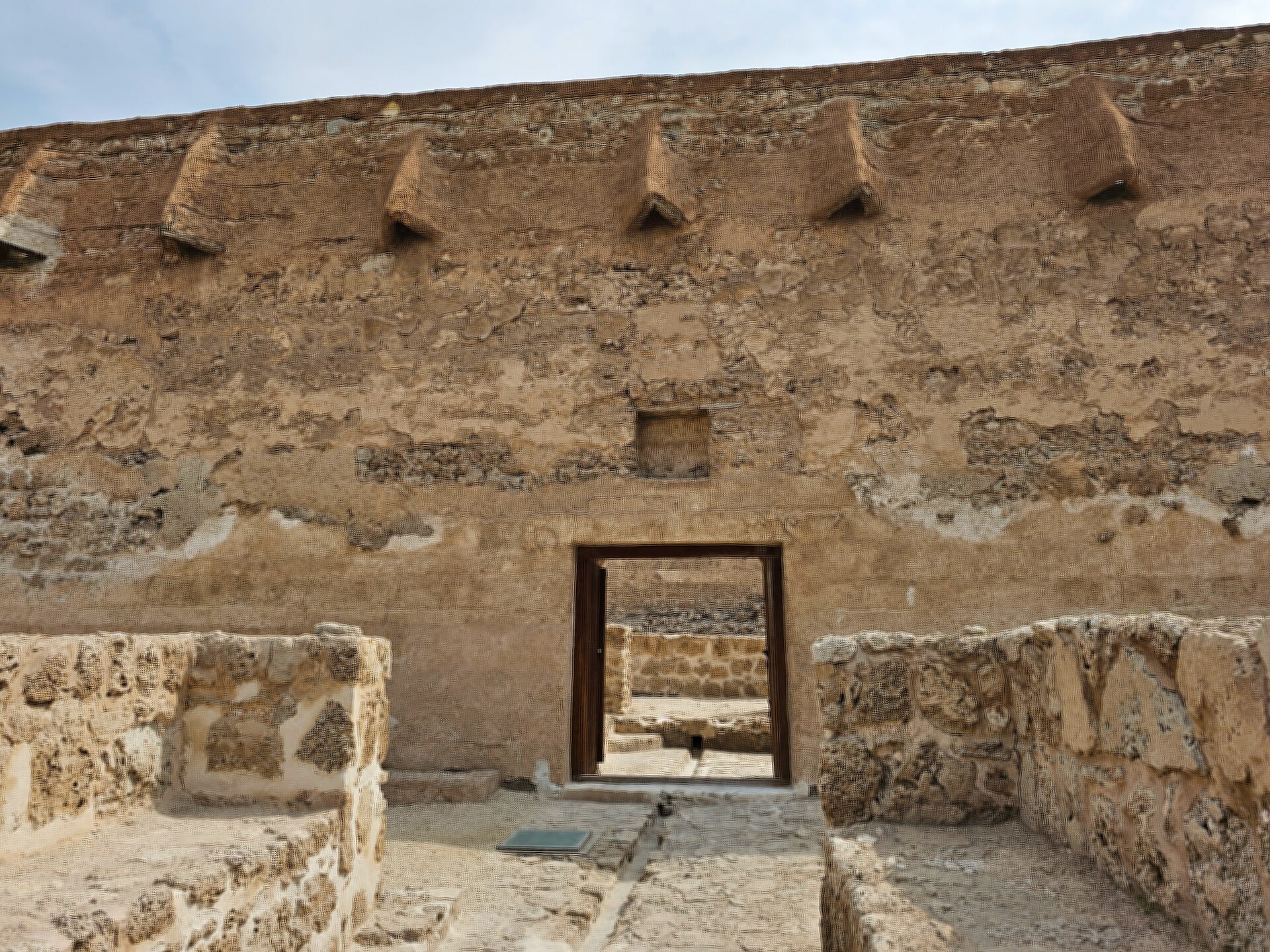
Arad Fort is one of those rare places in Bahrain where time seems to stand still. Perched on the edge of Muharraq Island, it overlooks a narrow strait separating it from the neighboring Arad Island. This compact yet striking fortress isn’t just an architectural relic—it’s a silent witness to an era when Bahrain sat at the crossroads of trade and power struggles in the Persian Gulf.
No one knows exactly when Arad Fort was built, but historians generally agree it dates back to the late 15th or early 16th century. This was a time when Portuguese forces dominated the region, using Bahrain as a strategic outpost to control maritime routes. The fort likely served as a lookout and defensive position, guarding against Ottoman incursions and raids by local tribes. Its location was no accident—from here, its garrison could monitor the strait, where merchant ships laden with pearls, spices, and other valuable goods passed through. The waterway was a lifeline, and whoever controlled it held influence over the region’s wealth.
The fort’s design reflects the military architecture of its time. Built from local coral stone, its walls have a warm, sandy hue that blends with the landscape. Thick and sturdy, they were designed to withstand attacks, with narrow arrow slits allowing defenders to fire while staying protected. Inside, the remains of living quarters, a well, and storage rooms hint at the self-sufficient life of the soldiers stationed here. Four corner towers rise above the main structure, offering vantage points for surveillance and additional firing positions. Though centuries have passed, the fort’s original layout remains largely intact, a testament to the skill of its builders.
By the 17th century, the Portuguese had been driven out of Bahrain, and the fort fell into the hands of Persian rulers from the Safavid dynasty. Later, in the 18th century, it became part of the territory controlled by the Al Khalifa family, who still govern Bahrain today. Over the years, the fort underwent repairs and modifications, but its core structure survived. Modern restoration efforts have ensured it remains standing, though it retains the weathered charm of a place that has seen generations come and go.
Walking through Arad Fort is like stepping into the past. The air inside the walls is still, broken only by the cry of seagulls and the rustle of wind through the arrow slits. From the ramparts, the view stretches across the strait, where the water is calm now, but once teemed with activity—ships docking, merchants haggling, and sometimes, the clash of arms. It’s easy to imagine the fort as it was in its prime, not just a monument, but a living part of a bustling maritime world.
Beyond the fort’s walls, a small park offers a quiet retreat. Locals and visitors alike come here to relax under the shade of palm trees, away from the crowds that gather at Bahrain’s more famous landmarks. The atmosphere is peaceful, especially in the late afternoon when the setting sun casts a golden glow over the coral stone. As shadows lengthen, the fort seems to come alive, as if whispering stories of the people who once stood guard here, defending these shores against unseen threats.
Arad Fort may not have the grandeur of other historical sites in the region, but that’s part of its appeal. It doesn’t overwhelm with size or spectacle; instead, it invites reflection. The stones beneath your feet have seen empires rise and fall, borders shift, and rulers come and go. Yet the sea, the sand, and the sky remain unchanged. For those tracing the history of the Persian Gulf, this fort is a key stop. For the casual traveler, it’s an unexpected discovery—one that lingers in the memory long after the visit, not for its fame, but for its quiet, enduring presence.