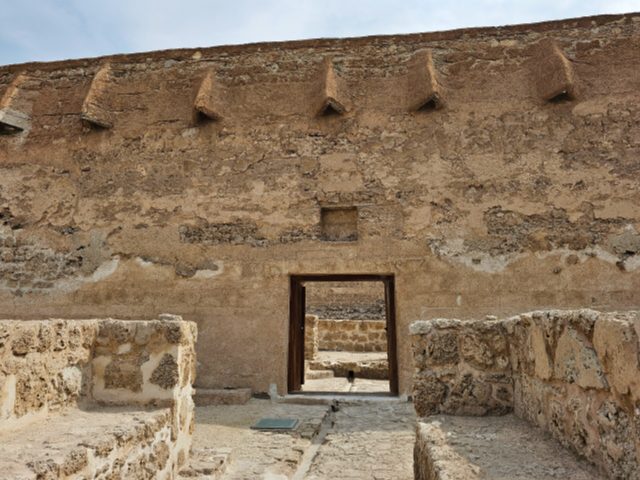
The Siadi House in Muharraq feels like a place where time has quietly settled into the walls. Built in the mid-19th century, it belonged to the Siadi family, who made their fortune in the pearl trade—a business that shaped Bahrain’s economy and society at the time. Pearl merchants were among the most powerful figures in the Gulf, and their homes were more than just residences; they were centers of commerce, diplomacy, and social life. The Siadi House stands as a testament to that era, its architecture reflecting both the wealth and the practical needs of its owners.
The house is constructed from coral stone, a material once quarried locally and still visible in the thick, textured walls. The roof, traditionally made from palm fronds and clay, has been preserved, offering a glimpse into the building techniques of the past. Inside, the craftsmanship is striking—carved wooden ceilings adorned with geometric patterns, intricate latticework on the windows, and spacious rooms designed to impress. The main reception hall, in particular, speaks of the family’s status, with its high ceilings, large windows, and niches where gifts from foreign traders were once displayed.
Muharraq itself is a city that carries the weight of history. Once the capital of Bahrain, it remains the country’s oldest continuously inhabited settlement. Unlike the modern energy of Manama, Muharraq moves at a slower pace, its narrow streets lined with coral-stone houses and mosques with slender minarets. The Siadi House fits seamlessly into this setting, its presence a quiet reminder of the city’s past. Walking through its rooms, it’s easy to imagine the conversations that once took place here—business deals negotiated over coffee, family gatherings, and the quiet rhythms of daily life in a merchant’s home.
What makes the Siadi House special is that it isn’t just a relic behind glass. In recent years, it has been carefully restored, with efforts made to use the same materials and techniques as the original builders. Coral stone was sourced for repairs, and local artisans skilled in traditional woodwork were brought in to recreate the intricate carvings. Today, the house occasionally hosts exhibitions and cultural events, but even on ordinary days, it welcomes visitors. Inside, displays tell the story of Bahrain’s pearl-diving heritage, with photographs of old Muharraq and everyday objects from the 19th century offering a tangible connection to the past.
The design of the house is a masterclass in adapting architecture to the environment. The wooden latticework on the windows, known as mashrabiya, isn’t just decorative—it filters sunlight while allowing breezes to pass through, a clever solution to the Gulf’s intense heat. The inner courtyards, often featuring small fountains, act as natural cooling systems, drawing air through the building. Even the thick coral-stone walls help regulate temperature, keeping the interior cool during the hottest months. Every element of the house serves a purpose, blending beauty with functionality in a way that feels effortless.
Bahrain today is a country of contrasts, where gleaming skyscrapers stand alongside ancient forts and modern shopping malls coexist with quiet historic neighborhoods. The Siadi House offers a different perspective—a glimpse into a time when life moved at a gentler pace, when trade was built on trust and tradition, and when a home was more than just a place to live. Visiting it feels like stepping into another era, one where the past isn’t just remembered but still lingers in the details.
Muharraq is full of such places, each with its own story, but the Siadi House stands out. It’s not just a well-preserved building; it’s a piece of living history, a place where the craftsmanship, culture, and commerce of 19th-century Bahrain are still palpable. For anyone curious about the country’s roots, it’s a quiet but powerful reminder of how much the past continues to shape the present.