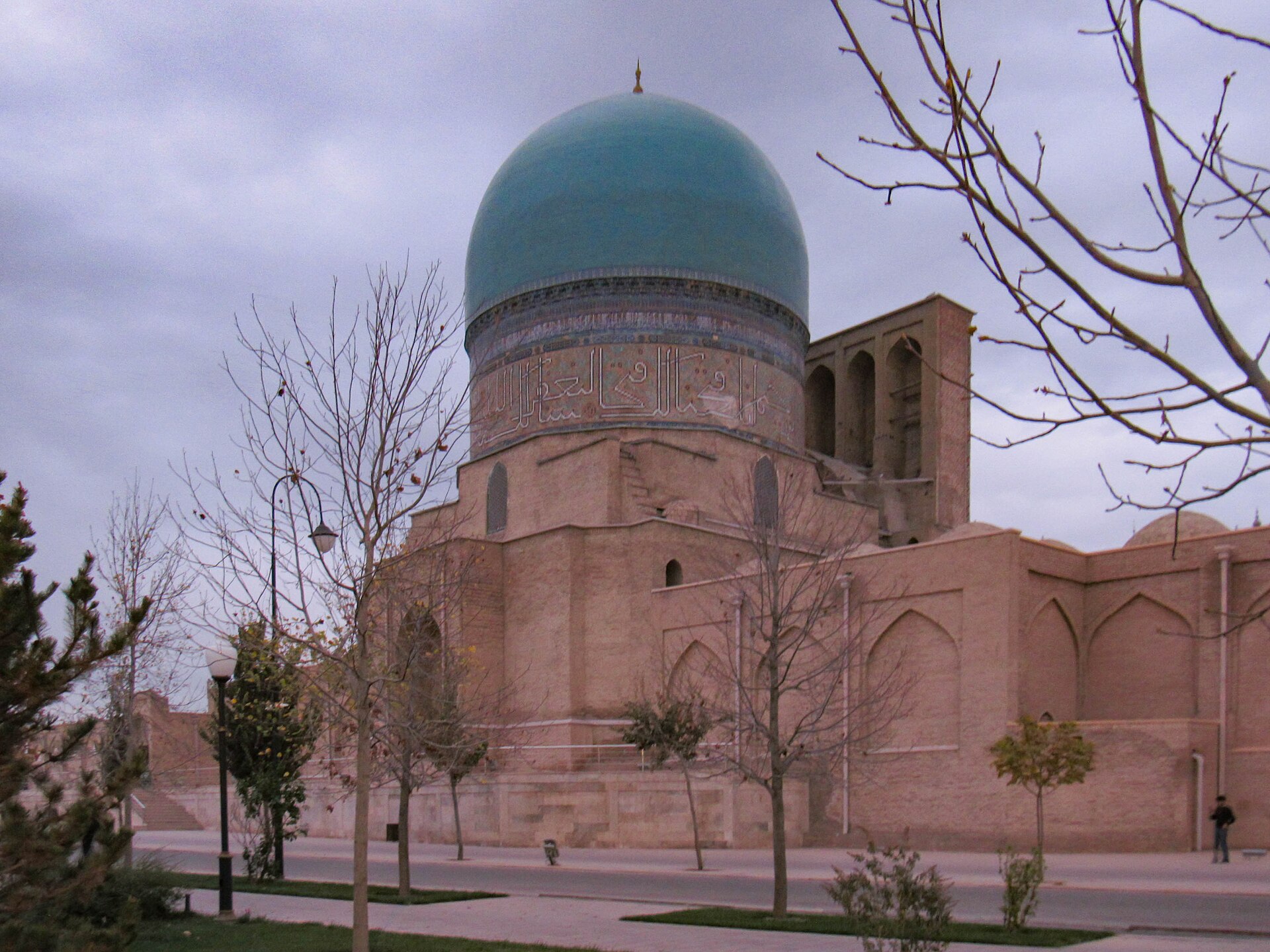
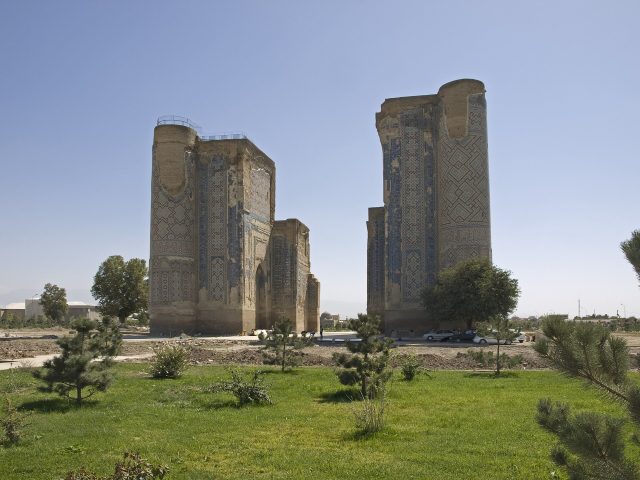
Shakhrisabz is a city that often fades into the background next to Uzbekistan’s more famous destinations like Samarkand or Bukhara. Yet it was here, in the heart of ancient Sogdiana, that some of the most enduring monuments of the Timurid Empire were built—reminders of a time when this land was a center of power, learning, and faith. Among them stands the Kok-Gumbaz Mosque, its name meaning "Blue Dome" in Persian, a structure that still commands attention from afar. Its turquoise cupola rises above the low clay houses of the old town, a quiet but unmistakable symbol of the city’s past grandeur.
The mosque was commissioned in the 15th century by Ulugh Beg, the grandson of Tamerlane, a ruler whose legacy extended far beyond conquest. For the Timurids, Shakhrisabz was more than just another city—it was the ancestral home of their dynasty, a place where they sought to immortalize their authority and devotion. Kok-Gumbaz was part of a larger complex called Dorut Tilavat, which included a madrasa, mausoleums, and other religious buildings. Ulugh Beg, who was not only a ruler but also a renowned astronomer, approached the mosque’s construction with a rare blend of ambition and intellect. He envisioned it as a place where faith and scholarship could coexist, a reflection of his own belief in the harmony between science and religion.
The architecture of Kok-Gumbaz is quintessentially Timurid, yet it carries its own distinct character. The massive blue dome, covered in intricate turquoise tiles, dominates the skyline, appearing almost weightless despite its considerable size. Inside, the mosque is spacious and airy, with high vaulted ceilings that create an atmosphere of solemn simplicity. The walls are adorned with geometric patterns and Arabic calligraphy, but the true focal point is the mihrab—the niche indicating the direction of Mecca. Carved from marble and inlaid with colored stones, it stands as a masterpiece of craftsmanship, a subtle yet striking contrast to the otherwise restrained interior.
Unlike many mosques of its time, Kok-Gumbaz was never intended for everyday worship. It was built as a congregational mosque, designed to accommodate large gatherings for Friday prayers and religious festivals. On such occasions, the square in front of it would transform into a bustling marketplace, filled with merchants selling spices, textiles, and handwritten manuscripts. Over the centuries, however, the mosque’s role shifted. After the fall of the Timurid dynasty, Shakhrisabz entered a period of decline, and much of the Dorut Tilavat complex fell into ruin. Kok-Gumbaz survived, though it lost some of its original splendor, its once-vibrant colors fading and its surroundings changing with the passage of time.
Today, the mosque remains an active place of worship, though its significance has evolved. Locals still come to pray, but it is more often visited by travelers drawn to its history and architecture. Stepping inside, you’re met with a cool, quiet space where the light filters softly through small windows, casting gentle shadows on the ancient patterns of the walls. Occasionally, guided tours pass through, and visitors might hear stories of Ulugh Beg’s court, where scholars debated astronomy and mathematics, or of how Shakhrisabz briefly became a beacon of learning in Central Asia. These tales, though fragmented, add layers to the mosque’s presence, making it more than just a relic of the past.
The area around Kok-Gumbaz feels untouched by the rush of modernity. Nearby streets are lined with stalls selling dried fruits and flatbread, children play under the shade of old trees, and elderly men sit on benches, exchanging news in low voices. Shakhrisabz moves at its own unhurried pace, and in this slow rhythm, the mosque is not just a monument but a living part of the city’s fabric. It stands as a reminder that history is not something distant or abstract—it lingers in the stones, in the color of the dome, in the faint echoes of prayers that still drift through its halls.
If you ever find yourself in this part of Uzbekistan, take a moment to step away from the usual tourist paths. Walk up to the mosque, pause at its entrance, and look inside. You may not see anything extraordinary at first—just old walls and faded patterns. But if you listen closely, the past begins to reveal itself: the murmur of ancient bazaars, the voices of scholars debating under these very arches, the footsteps of rulers who once shaped empires. That is the quiet magic of places like Kok-Gumbaz. They do not just occupy space; they hold the memories of those who came before, waiting for those who are willing to pause and listen.