Dorut Tillavat Mausoleum: A Quiet Echo of Shakhrisabz
Shakhrisabz holds its history in stillness. The Dorut Tillavat Mausoleum sits on the edge of the old town, away from the busier landmarks. Its presence is unassuming, yet it lingers in memory longer than many grander sites. Built in the fifteenth century, it was never meant to rival the monuments of Amir Timur. That’s why it feels real.
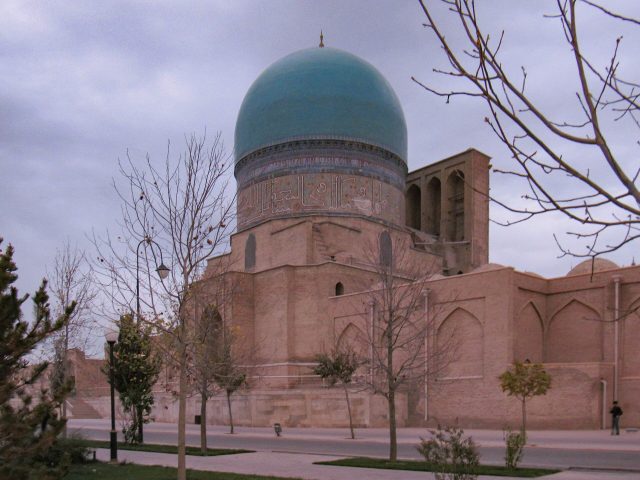
The building is small, square, and topped with a dome. Fired brick covers its clean, unadorned lines. The entrance portal carries carved terracotta details—subtle, not showy. Inside, a spacious hall centers on a mihrab facing Mecca. The walls once bore paintings, but only fragments remain. These traces still carry the weight of time, making it easy to imagine the quiet of prayer or the turn of a page.
Dorut Tillavat honors Ulugh Beg’s spiritual mentor. The name means *Remedy for Sorrows*. Pilgrims once came here, drawn by its purpose as both tomb and madrasa—a place where theology and science were taught side by side.
Low clay walls surround the mausoleum today. Mulberry trees stand nearby. In the mornings, the scent of fresh bread from neighborhood tandoors fills the air. Locals sometimes sit in the shade, especially when the summer heat becomes unbearable.
Shakhrisabz is Timur’s birthplace, thick with history. But Dorut Tillavat offers something different: a place where history doesn’t shout. No crowds, no guides, no rush. You can stand in the courtyard, listening to the silence, or step inside to feel the coolness of the walls against the heat.
Time has worn many of Shakhrisabz’s monuments. Dorut Tillavat endures. It was never built for grandeur, but for remembrance. Its value isn’t in size or splendor, but in the way it asks you to pause. To listen. To remember.