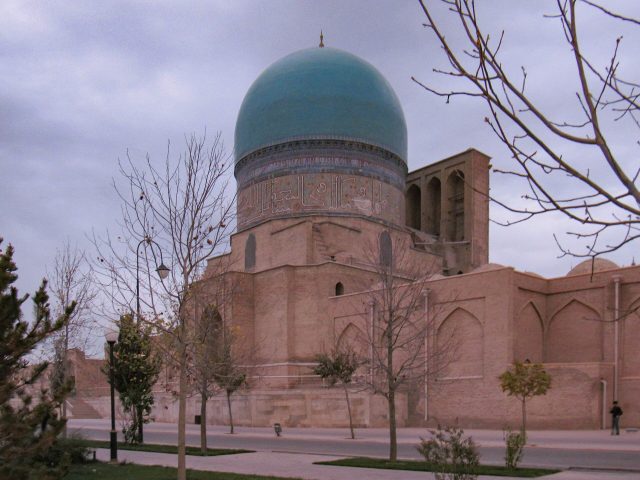
Shakhrisabz is a city where history lingers in the air, and the Gumbazi-Seyidan Mausoleum is one of those quiet places where the past feels almost tangible. Tucked away on the edge of the old town, it stands beneath the shade of tall trees, its blue-tiled dome catching the eye from a distance. Built in the 15th century, it may not be as famous as other Timurid-era monuments, but that’s part of its charm. There are no crowds here, just a sense of stillness that lets you imagine what this place must have been like centuries ago.
The architecture is simple yet elegant. The square building is crowned with a large dome, once covered in vibrant majolica tiles that now remain only in fragments. The entrance portal is adorned with carved terracotta patterns, and inside, the walls were once painted with floral motifs, though only faint traces remain. The main chamber is spacious and airy, with a high vaulted ceiling that offers relief even on the hottest days. There’s no excess ornamentation, just a quiet harmony in every detail, a testament to the skill of the craftsmen who built it.
Gumbazi-Seyidan was commissioned by Ulugh Beg, the grandson of Tamerlane, in honor of his spiritual mentors—the seyids, descendants of the Prophet Muhammad. The name translates to Dome of the Seyids, and true to its name, the mausoleum houses the tombs of these revered figures. Ulugh Beg, known as both a ruler and a scholar of astronomy, placed great importance on spiritual legacy, and this mausoleum was one way he paid tribute to tradition. In its time, Shakhrisabz was more than just a city; it was a center of learning and culture, and Gumbazi-Seyidan is one of many reminders of that era.
Today, the mausoleum feels a little forgotten, though it remains under state protection. A small park with ancient plane trees surrounds it, where locals sometimes gather for picnics or simply rest in the shade. Unlike the more popular attractions in Shakhrisabz, this place rarely sees tour groups, which only adds to its peaceful atmosphere. You can sit for a long time on the stone bench by the entrance, listening to the rustling leaves and distant voices, imagining the religious ceremonies or scholarly discussions that once took place here.
Inside, the tombs of the seyids are marked with Arabic inscriptions, their elegant script telling the stories of those buried beneath. For most visitors, the words are just beautiful patterns, but even without understanding them, there’s a sense of solemnity in the air. Light filters through small windows, softly illuminating the stone slabs, and time seems to move differently here. That might be why the mausoleum still holds a quiet allure, drawing those who seek a moment of reflection.
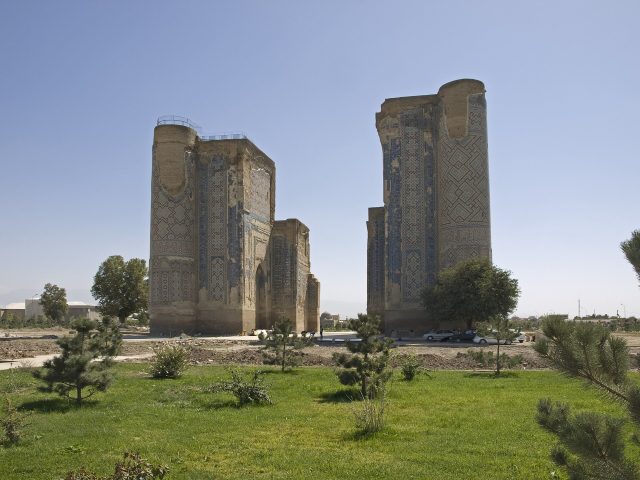
Shakhrisabz, the birthplace of Tamerlane, is a city where history is never far away. While the grand palaces and mosques like Ak-Saray or the Dorut-Tilovat Mausoleum command attention with their scale, Gumbazi-Seyidan offers something different—a place for those who prefer stillness and contemplation. There are no grand declarations of past glory here, just an authenticity that speaks for itself. When wandering through the old town, it’s worth stepping off the main streets to visit this quiet corner, where the scent of ancient stone and dry grass lingers in the air.
The mausoleum doesn’t claim to be the city’s most important landmark, and that’s what makes it special. It doesn’t demand admiration or awe, just a moment of quiet connection with the past. In an age where everything competes for attention, places like this are rare. Gumbazi-Seyidan isn’t a museum exhibit; it’s a living part of the city, existing on its own terms, untouched by tourist crowds. And perhaps that’s why it leaves such a lasting impression.