- Home
- Uzbekistan
- Shakhrisabz
Shakhrisabz
Uzbekistan · 3 places
Photo: Davide Mauro, CC BY-SA 4.0
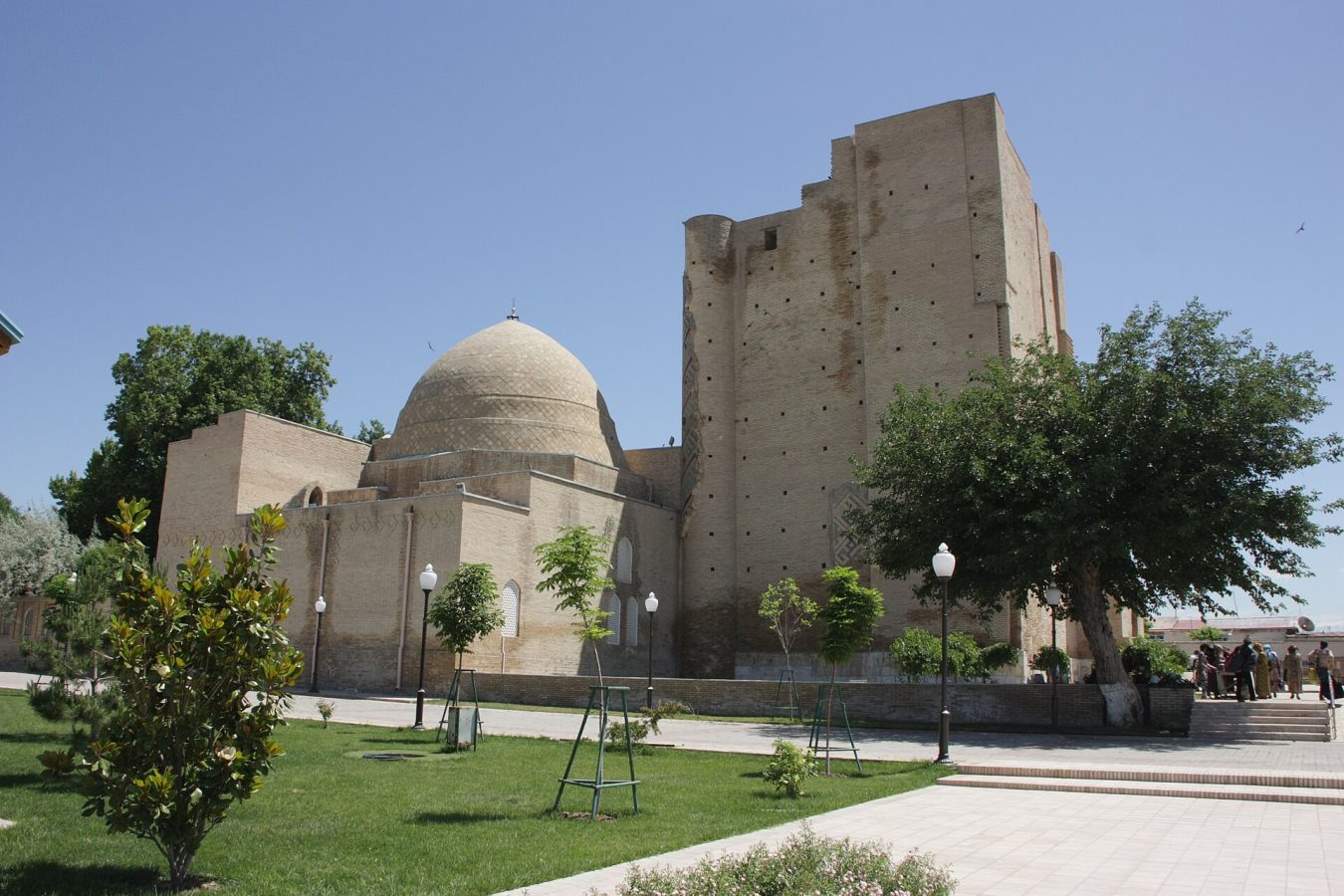
Shakhrisabz feels like a place where time has paused, leaving behind the quiet echoes of the Timurid era. Tucked into the foothills of the Zeravshan Range, it sits away from the well-trodden paths of Uzbekistan’s more famous cities, and that’s precisely what makes it special. There’s no rush here, no modern clamor—just narrow streets where every stone seems to whisper stories, and bazaars where trade still unfolds much as it did centuries ago. The city is small, but its place in Central Asian history is anything but. This is where Amir Timur, the great conqueror, was born and raised, where he first dreamed of the grand monuments that would immortalize his name.
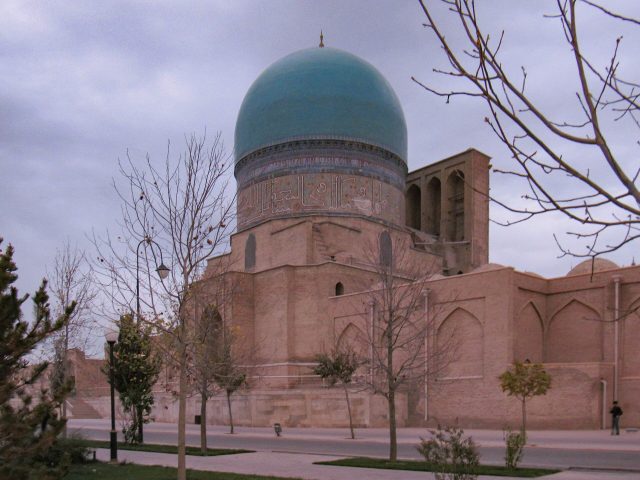
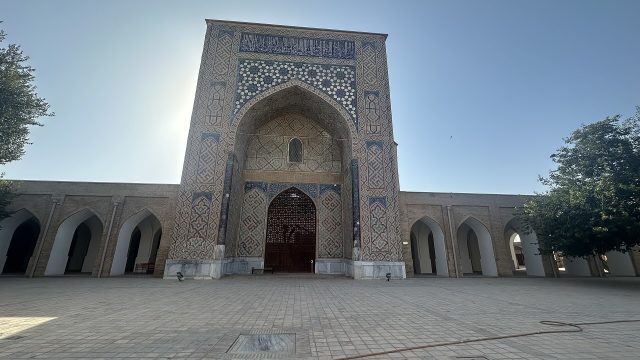
The architectural legacy of Shakhrisabz is striking, even for those familiar with the splendor of Samarkand or Bukhara. The most imposing remnant is the ruins of Ak-Saray Palace, Timur’s ambitious project meant to symbolize his power. What remains are two towering portals, their arches reaching nearly forty meters high, their mosaic patterns still catching the sunlight despite the centuries of wear. Nearby stands the Kok-Gumbaz Mosque, its blue dome a later addition by Timur’s descendants, offering a cool, shaded courtyard where the heat of the day feels distant. Just beyond lies the Dorus-Saodat mausoleum, the resting place of Timur’s relatives, and further still, a complex of madrasas and khanakas that once served as the spiritual heart of the city.
But Shakhrisabz isn’t just a museum of the past—it’s a living town with a rhythm all its own. Mornings begin with the hum of workshops: potters shaping clay on ancient wheels, weavers crafting carpets with time-honored patterns, blacksmiths forging knives and candlesticks. The central bazaar is a sensory overload, stacked with spices, dried fruits, and local sweets like parvarda and halva. The silk trade is particularly fascinating—here, it’s still made the old way, with hand-spun threads prized as much as the finished fabric. By evening, the streets grow quiet, the only light coming from lanterns reflected in the irrigation channels, a reminder that this was once a stop on the Silk Road.
The people of Shakhrisabz welcome visitors with the warmth typical of Uzbekistan. In the chaikhanas, there’s always room at the low tables, and the hosts are happy to share stories about the city’s history and traditions. There’s no need to hurry here; even a simple stroll feels like stepping back in time. The best seasons to visit are spring, when apricot and almond trees bloom, or autumn, when the air is thick with the scent of ripe pomegranates and grapes. The mountains on the horizon seem closer then, and the city takes on a particularly serene beauty.
Despite its historical weight, Shakhrisabz remains a place where you can still feel the pulse of authentic Central Asia—unhurried, unspoiled, and far from the tourist crowds. There are no luxury hotels or bustling nightlife, just quiet streets, ancient stones, and the sense that time moves differently here. For anyone wanting to understand what this region was like in Timur’s day, Shakhrisabz offers one of the clearest windows into the past.
See & Do
All of them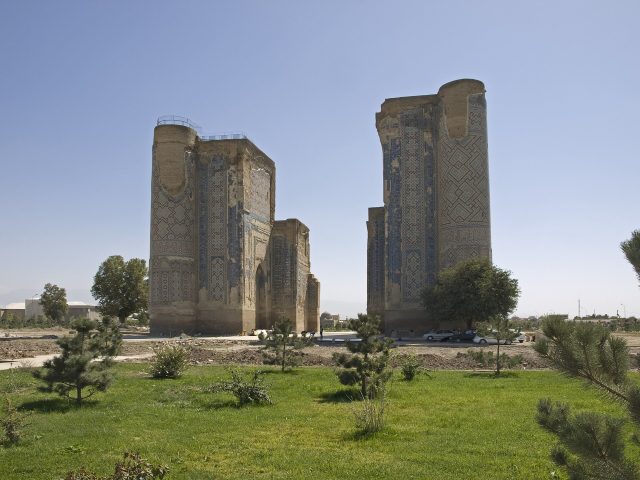
Places on the map
Marker colour follows the categoryClimate and weather
Detailed weather: Shakhrisabz- Average temperature
- 16 °C
- Precipitation per year
- 393 mm
- Sunshine hours per day
- 7.8 h
Average air temperature
°C
3
6
11
16
22
27
29
26
21
14
8
4
Jan
Feb
Mar
Apr
May
Jun
Jul
Aug
Sep
Oct
Nov
Dec