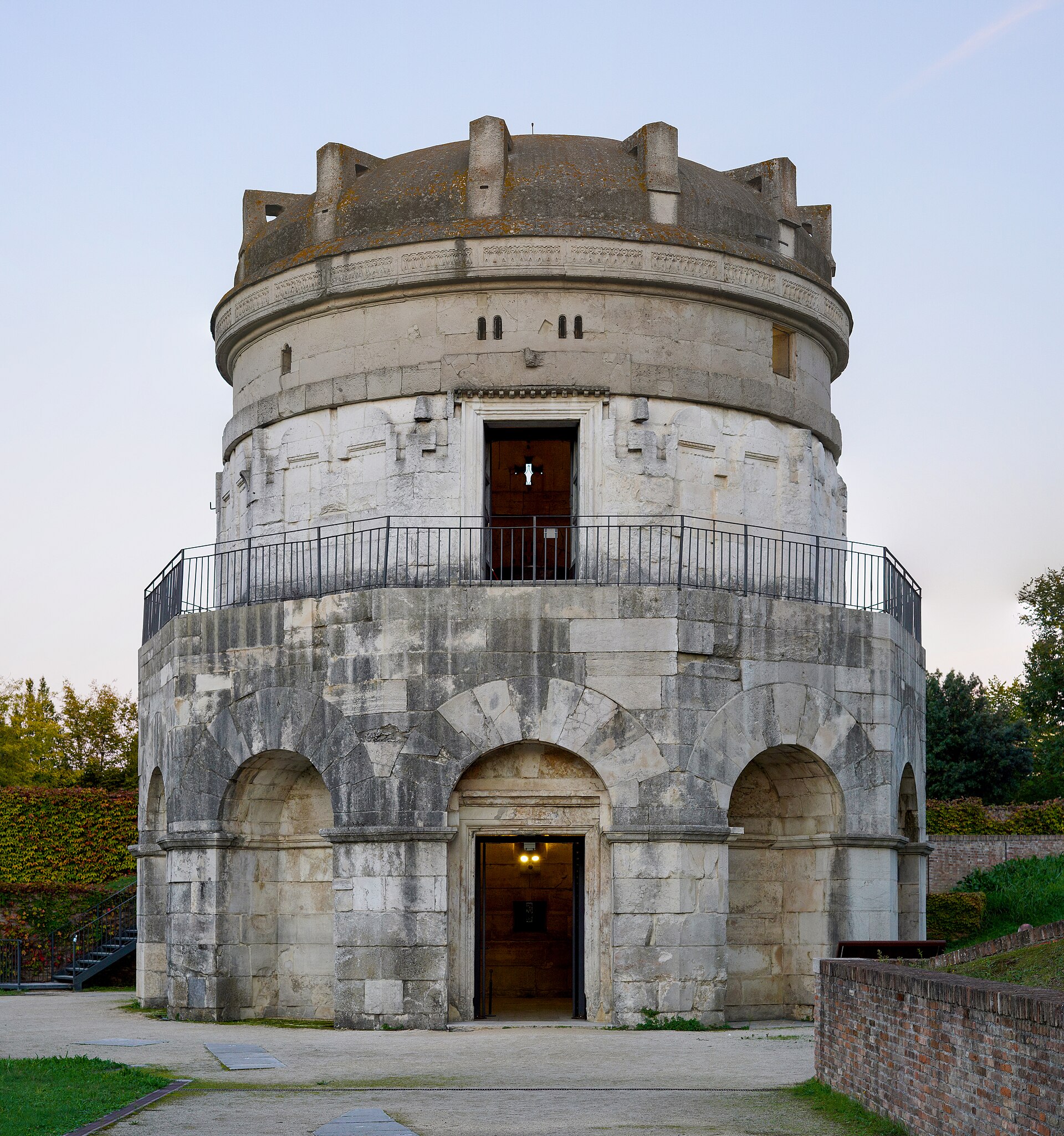
The Mausoleum of Theodoric in Ravenna is one of those places that makes you pause, even if history and architecture aren’t your usual interests. It stands slightly apart from the city’s main tourist routes, and that distance gives it a quiet power. There are no crowds rushing for photos, no noise—just stillness and the sense that time has slowed down. The building itself feels like a silent giant, patiently sharing its story with anyone willing to listen.
Built in the early sixth century for Theodoric the Great, king of the Ostrogoths, the mausoleum is a rare example of architecture that has survived nearly intact. Theodoric ruled Italy from Ravenna, making it the capital of his kingdom, and this monument was meant to be his final resting place. But history had other plans. After his death, his remains were removed from the tomb, and the building itself went through many transformations—first a Christian church, then a prison. Today, it stands empty, yet its grandeur remains undiminished.
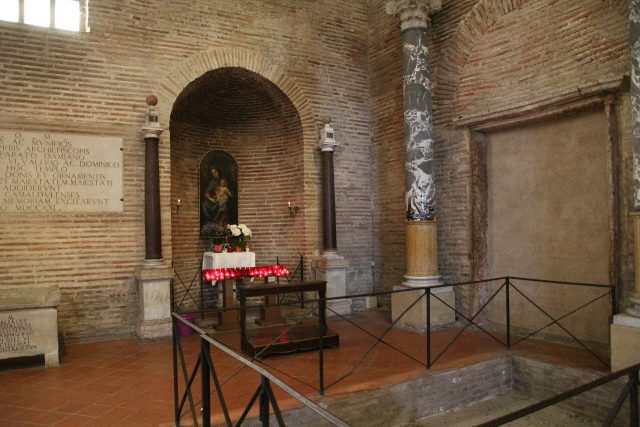
What strikes you first about the mausoleum is its simplicity and sheer scale. The ten-meter dome, carved from a single block of Istrian stone, weighs around three hundred tons. How it was lifted into place without modern machinery is still a subject of debate among scholars. Inside, the structure is divided into two levels: the lower, square in shape, and the upper, circular, connected by a narrow staircase. The walls are marked by niches and arches, but there are no frescoes or mosaics—just stone, speaking for itself.
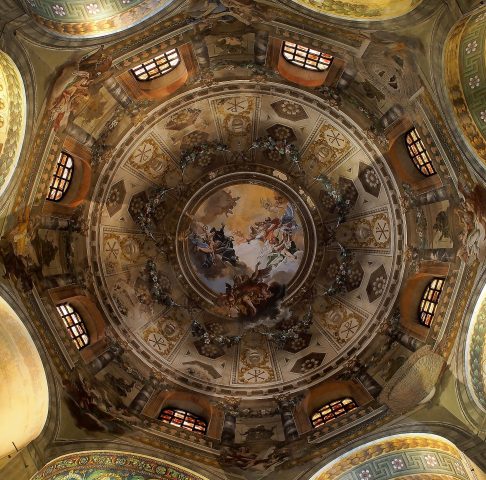
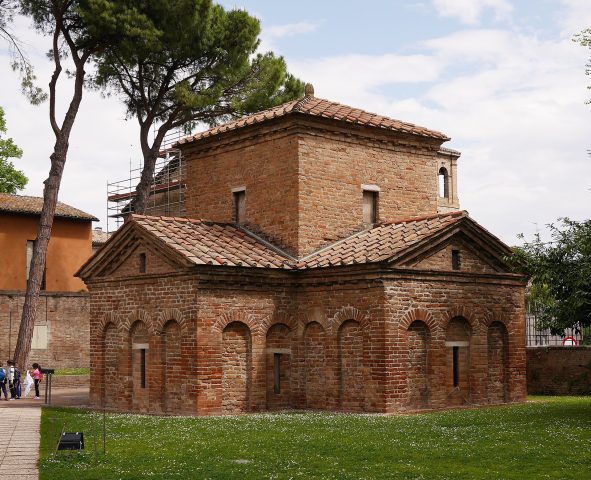
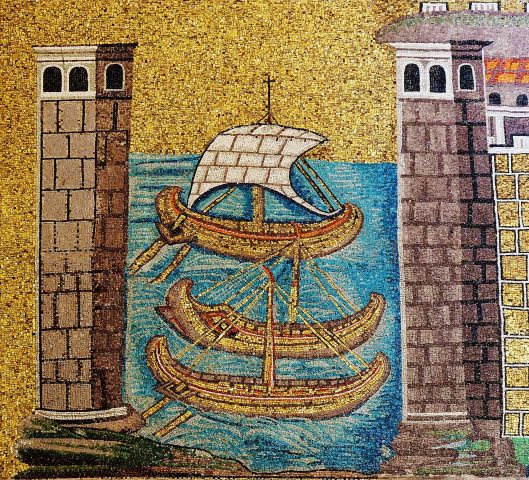
The mausoleum is often compared to Ravenna’s other famous monuments, particularly its early Christian basilicas. But it feels entirely different. While the mosaics of San Vitale or Sant’Apollinare Nuovo dazzle with color and intricate storytelling, the Mausoleum of Theodoric is about something else. It’s about strength that doesn’t need ornamentation. About a kind of barbaric majesty that doesn’t mimic Roman opulence but exists on its own terms. There are no golden backgrounds, no biblical scenes—just geometry and stone that have outlasted empires.
Beyond being a monument to the Ostrogothic era, the mausoleum also reflects how ideas about death and memory have changed over time. Theodoric was an Arian Christian, and his tomb was meant to reflect his beliefs. But after the fall of the Ostrogothic kingdom and Ravenna’s absorption into the Byzantine Empire, the mausoleum’s purpose shifted. It became a church dedicated to the Virgin Mary, and later, a defensive structure. Each new owner left their mark, yet the mausoleum itself remained unchanged, as if reminding us that stone outlasts even the mightiest of empires.
Today, the Mausoleum of Theodoric draws more than just tourists. Locals come here too—some to sit on the benches nearby, others to study the details of the masonry, and some simply to feel a connection to the past. A small park surrounds the monument, offering shade and a quiet escape from the city’s bustle. It’s a place where thoughts come easily, especially if you try to imagine the people who walked these same stones over fifteen hundred years ago, when Theodoric was a living ruler, not just a name in a history book.
Ravenna is a city where history feels present at every turn, but the mausoleum is one of those rare places where it becomes almost tangible. Maybe it’s because it stands apart, not fitting neatly into the usual narrative of Christian sanctuaries. Or maybe it’s because its story is full of unanswered questions. No one knows why Theodoric chose this particular design for his tomb. No one knows what happened to his remains. No one even knows for certain if he was ever buried here. But those mysteries make the mausoleum feel alive—less like a museum piece and more like a fragment of the past that still breathes.
If you find yourself in Ravenna, don’t rush straight to the famous mosaics. Take a moment to visit the mausoleum first. Give yourself time to stand beside it, to let the stone tell its story—not in words, but in its weight, its silence, its endurance. After all, places like this remind us that travel isn’t just about seeing new things. It’s also about encountering what came long before us.