Ravenna is a city that feels suspended in time, a place where the early Middle Ages linger in quiet streets and weathered stone. Unlike Florence or Rome, it doesn’t draw crowds, but it holds something far more enduring—the weight of history pressed into its walls, its mosaics, its very air. At the heart of this legacy stands the Basilica of San Vitale, built in the sixth century, a structure that doesn’t so much belong to Italy as it does to another world entirely. Step inside, and you leave the familiar behind.
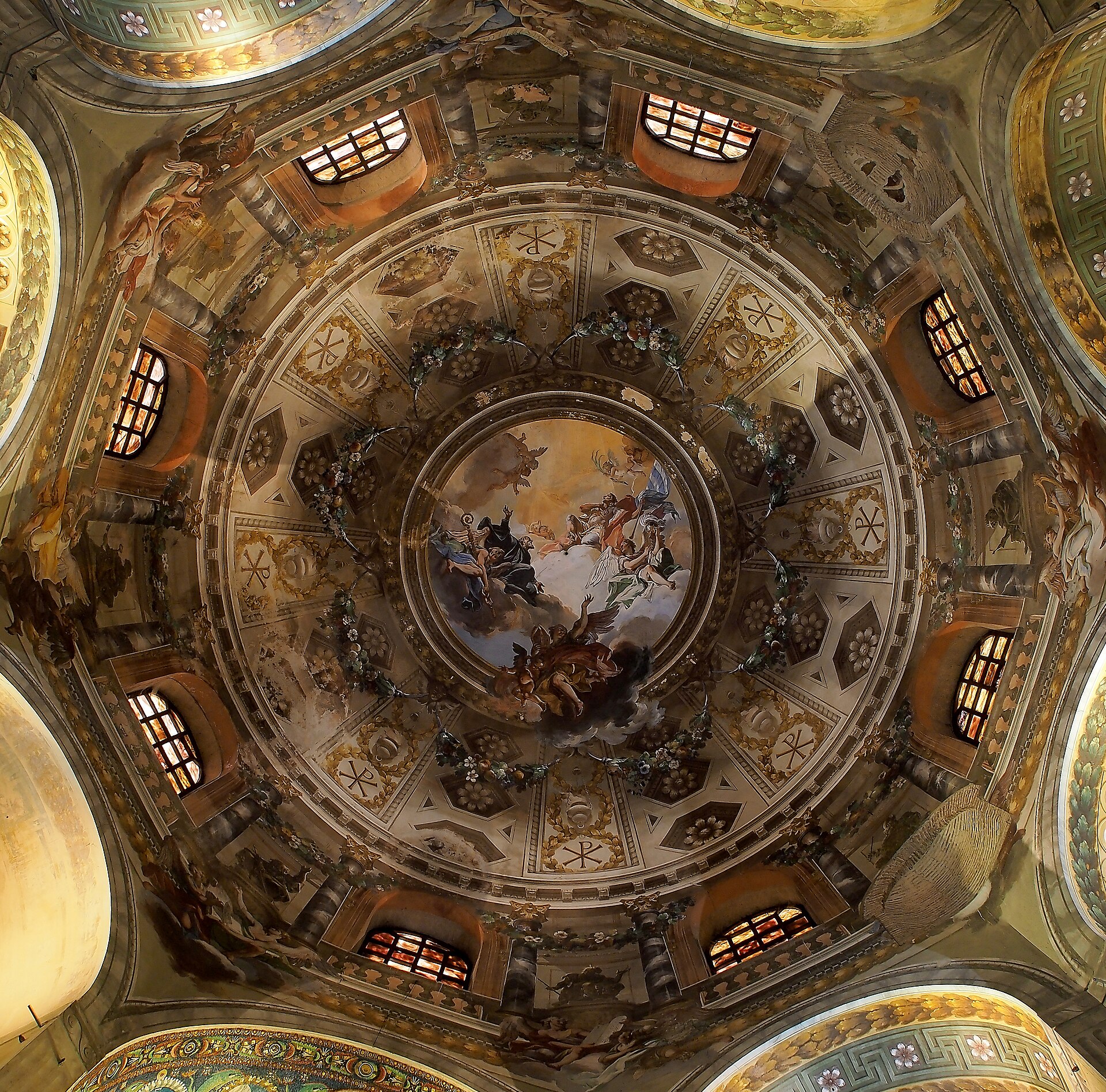
From the outside, San Vitale is unassuming. Its brick walls form an octagonal shape, low and solid, with a bell tower that seems almost an afterthought. There’s no grand façade, no sweeping staircase to announce its importance. But cross the threshold, and the space unfolds into something extraordinary. The interior is a dazzling expanse of mosaic, gold and deep lapis blues covering every surface—walls, vaults, even the dome itself. These aren’t mere decorations; they’re a visual language, a narrative of faith, power, and the early Christian world. The light here is soft, filtered through narrow windows, and it catches the gold in a way that makes the entire space shimmer, as if the walls themselves are breathing.
Among the most striking images are the portraits of Emperor Justinian and Empress Theodora, flanked by their courts. Justinian holds a model of a church—perhaps San Vitale itself—while Theodora offers a chalice, her gaze steady, her presence commanding. These mosaics aren’t just art; they’re political statements, a reminder that Ravenna was once the western stronghold of the Byzantine Empire. The figures seem almost alive, their robes falling in precise folds, their expressions serene yet unyielding. It’s easy to imagine them stepping down from the walls, joining the procession of history that still moves through this place.
The basilica was begun in 526, when Ravenna was under Ostrogothic rule, and completed in 547, by then a Byzantine city. Its construction was overseen by Bishop Maximian, with funding likely provided by a banker named Julianus Argentarius. The architecture blends Roman traditions with Eastern influences—an octagonal plan, common in early Christian buildings, here enriched with Byzantine elements like the exedrae and galleries. The dome, a marvel of engineering, doesn’t rest directly on the walls but is supported by a system of arches and pendentives, a technique that would later define Byzantine architecture. It’s a building that feels both ancient and ahead of its time.
The mosaics serve a purpose beyond beauty. They were meant to instruct, to remind worshippers of sacred stories and the divine right of emperors. The Lamb of God at the dome’s center symbolizes Christ, while the four angels surrounding it represent his divine nature. In the apse, scenes from the Old Testament unfold, and in the side niches, saints and prophets stand in quiet vigil. Every detail is deliberate, every color and gesture loaded with meaning. Even the way light falls across the gold leaf was carefully considered, designed to create an otherworldly glow that would have awed medieval visitors.
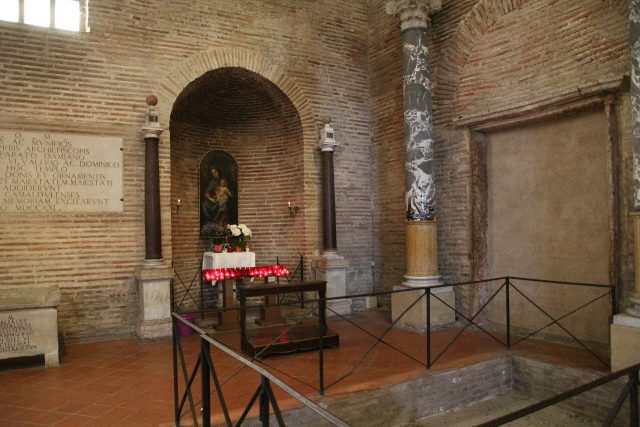
Today, San Vitale remains both a place of worship and a museum, a rare example of a sixth-century church where almost everything—the mosaics, the marble, the very structure—has survived intact. Unlike many ancient sites, which have been restored or altered over centuries, this basilica feels remarkably preserved, as if the hands of time have barely touched it. The silence inside is profound, broken only by the occasional murmur of visitors or the distant sound of footsteps on stone. It’s a place where you can sit and let the weight of history settle around you, where the past doesn’t feel distant but immediate, almost tangible.
Ravenna’s role in history made it the perfect canvas for Byzantine art. In the fifth century, it was the capital of the Western Roman Empire, and later, the seat of Ostrogothic kings. When the Byzantines reclaimed the city in the sixth century, Ravenna became the center of their power in Italy, a place where emperors ruled through their representatives, the exarchs. San Vitale was built to reflect this new order, a fusion of Roman tradition and Eastern opulence. It wasn’t just a church; it was a statement, a declaration of faith and authority in a world that was constantly shifting.
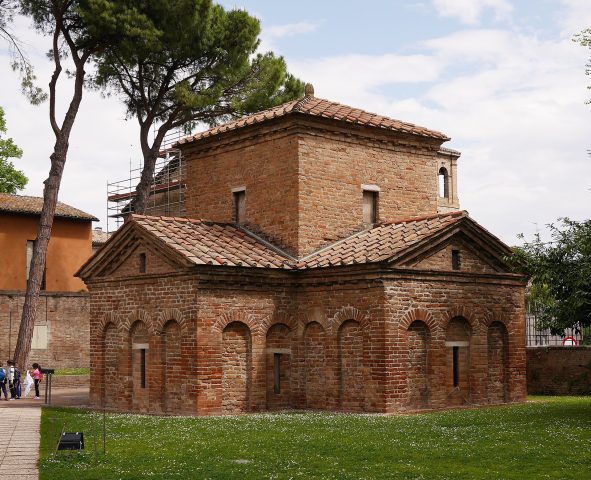
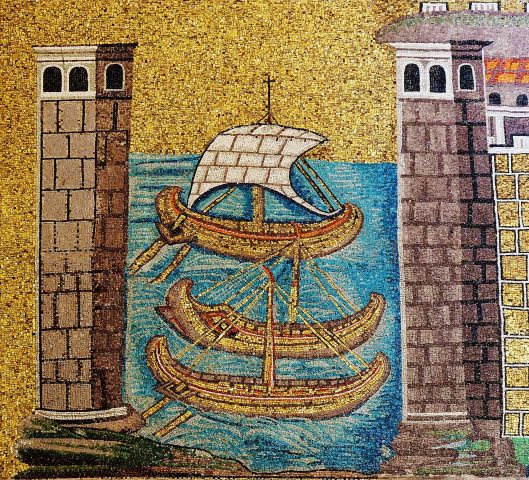
Visiting San Vitale is less about ticking off a tourist attraction and more about stepping into another era. You could spend hours deciphering the mosaics, tracing the stories they tell, or simply sitting in the quiet, letting the space work on you. The city around it feels just as steeped in history. Nearby, the Mausoleum of Galla Placidia and the Basilica of Sant’Apollinare Nuovo offer their own glimpses into the past, each a piece of the puzzle that is Ravenna. Together, they form a UNESCO World Heritage site, a place where the layers of time are so visible, so present, that you can almost reach out and touch them.
San Vitale doesn’t demand attention the way the Colosseum or St. Peter’s Basilica do. There are no grand gestures here, no sweeping vistas designed to impress. Instead, it invites you to slow down, to look closely, to listen. The beauty of the place lies in its quiet persistence, in the way it has endured while the world around it changed. If you’re lucky, you might leave with the sense that you’ve glimpsed something real, something that won’t fade with time. And that, perhaps, is the most extraordinary thing of all.