Ravenna’s Basilica of Sant’Apollinare Nuovo stands where empires once rose and fell. Built in the early sixth century under the rule of Theodoric the Great, this church began as an Arian place of worship, a reflection of the Ostrogothic king’s vision for his realm—a state where Gothic warriors and Roman citizens could coexist under a shared faith, though not the one that would later dominate Europe. When Ravenna passed into Byzantine hands, the basilica was rededicated, first to Saint Martin of Tours and later to Saint Apollinaris, the city’s first bishop. The layers of its history are as visible as the mosaics that cover its walls, each era leaving its mark on stone and glass.
The architecture is deceptively simple. From the outside, the basilica appears unassuming—a long, rectangular structure with high, plain walls and narrow windows topped by rounded arches. There is no grand façade, no soaring dome to announce its importance. Yet this restraint only heightens the impact of what lies within. Stepping inside, the space opens up, filled with light that spills through the upper windows, illuminating the nave. The columns dividing the interior into three aisles draw the eye forward, but the true marvel waits above, where gold and glass tell stories older than most European nations.
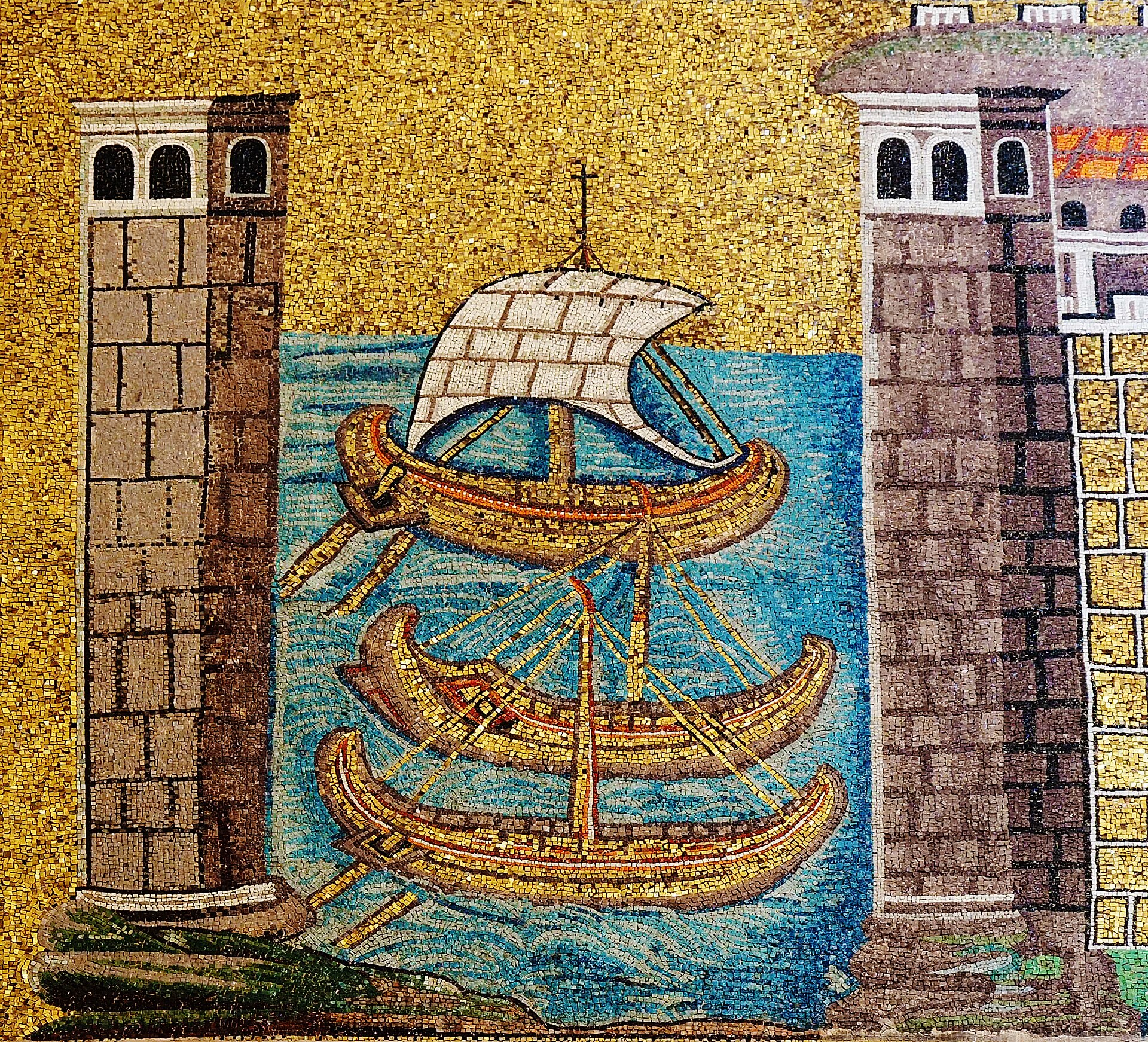
The mosaics of Sant’Apollinare Nuovo are among the finest surviving examples of early Byzantine art, a visual chronicle of faith and power. Three distinct tiers unfold across the walls. The uppermost depicts scenes from the life of Christ, their golden backgrounds shimmering as if lit from within. Below, processions of saints and martyrs move in solemn lines—on one side, holy women approach the Virgin and Child, while on the other, martyrs advance toward Christ. The figures are stylized, their elongated forms and wide, staring eyes giving them an otherworldly presence. They do not move in the way of later Renaissance art; instead, they seem suspended between earth and heaven, caught in a moment that is both still and eternal.
The mosaics also bear the scars of political and religious upheaval. When the basilica was reconsecrated under Orthodox rule, images of Theodoric and his court were removed or altered, their faces replaced with decorative patterns. Yet traces remain, faint outlines beneath the gold, a reminder of the shifting tides that shaped Ravenna. This was a city where empires clashed—Arian Goths, Orthodox Byzantines, and later the Lombards—each leaving their imprint on its churches. Sant’Apollinare Nuovo stands as a testament to those changes, its walls a palimpsest of belief and ambition.
What makes the basilica so striking today is its quiet. Unlike the crowded cathedrals of Rome or Florence, it rarely feels overrun by visitors. The hush inside is broken only by the occasional murmur of voices or the soft rustle of a guidebook. Sunlight filters through the windows, casting a warm glow over the mosaics, making the gold flicker as if alive. In that light, the figures on the walls seem to breathe, their expressions shifting with the angle of the sun. It’s easy to lose track of time here, to forget the modern world outside and slip into the rhythm of another era.
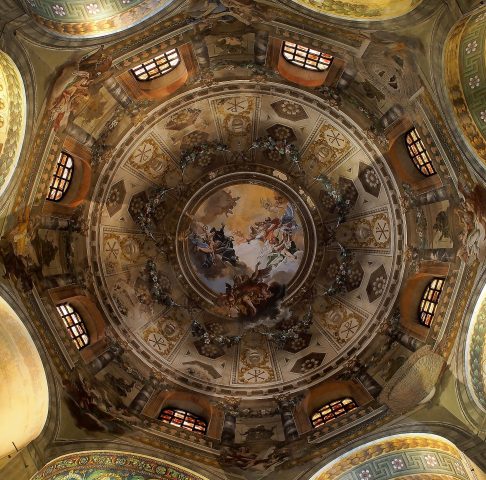
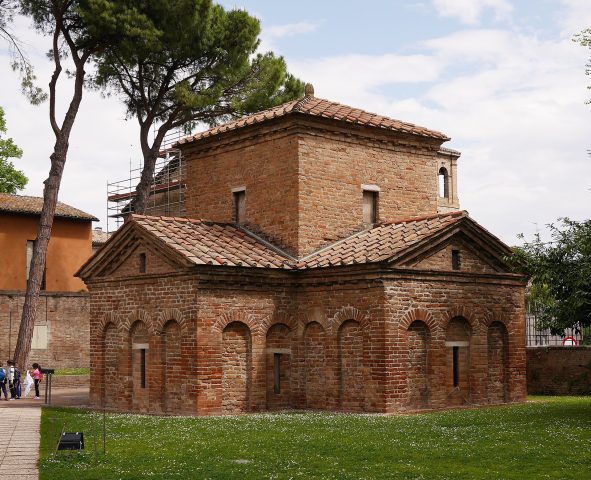
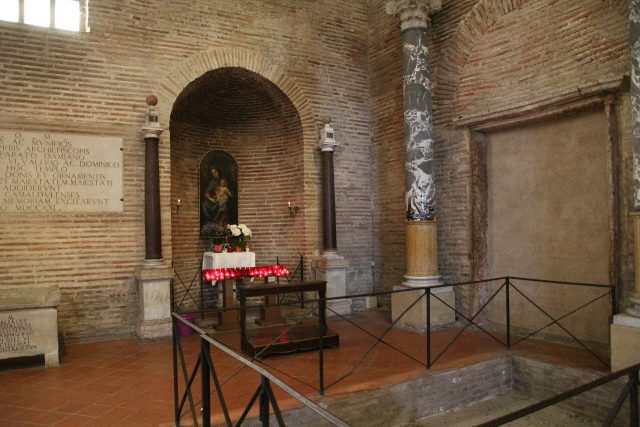
Ravenna itself feels suspended in time. There are no towering skyscrapers or bustling piazzas, no relentless hum of traffic. Instead, the city moves at its own pace, its narrow streets winding past ancient walls and quiet courtyards. Sant’Apollinare Nuovo is just one piece of a larger mosaic—literally and figuratively. A short walk away stands the Basilica of San Vitale, its mosaics even more lavish, or the Mausoleum of Galla Placidia, small but breathtaking in its intimacy. Then there is Sant’Apollinare in Classe, standing alone in the countryside, its bell tower visible for miles. Together, these sites form a UNESCO World Heritage ensemble, a collection of buildings that have survived wars, plagues, and the slow march of centuries.
Visiting the basilica is less about ticking off a landmark and more about stepping into a different way of seeing the world. The mosaics here do not strive for realism. There are no vanishing points, no lifelike landscapes, no attempt to mimic the physical world. Instead, they offer something more abstract—a language of symbols, where every gesture and color carries meaning. The saints in their white robes move through fields of gold, their feet barely touching the ground, their gazes fixed on something beyond mortal sight. This is art meant not to impress, but to elevate, to remind those who look upon it of something greater than themselves.
The power of Sant’Apollinare Nuovo lies in its ability to make the past feel immediate. There is no need for elaborate explanations or dramatic reconstructions; the building itself is enough. The worn stone beneath your feet, the cool air inside, the way the light plays across the mosaics—all of it conspires to make history tangible. Ravenna does not try to be anything other than what it is: a city that has witnessed the rise and fall of empires, where the echoes of those who came before are still present if you know how to listen.
Standing in the basilica, it’s easy to imagine the voices that once filled this space—the murmured prayers, the chants of the liturgy, the footsteps of worshippers who have long since turned to dust. The building has outlasted them all, a silent witness to the passage of time. And yet, in its quiet way, it speaks. The mosaics, the architecture, the very stones beneath your feet—they tell a story of faith, of art, of the enduring human need to create something that will last. In Ravenna, that story is still unfolding, one golden tessera at a time.