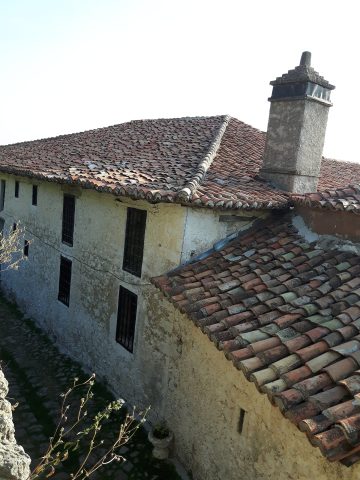
Perched on a hill overlooking the ancient town of Krujë, the Skanderbeg Mausoleum is where Albania’s past feels most tangible. This is the resting place of Gjergj Kastrioti, better known as Skanderbeg, the warrior who became a national symbol of resistance. For nearly a quarter of a century, he held back the Ottoman advance, and his legacy still shapes how Albanians see themselves—not just as a people with a history, but as one that refused to be erased. The mausoleum isn’t a grand monument in the usual sense; it’s quieter than that, more like a place of reflection than celebration.
Built in the mid-20th century, the structure blends modern simplicity with echoes of the past. Its white stone walls and dark wooden beams give it a timeless quality, as if it could have stood here for centuries. Inside, the space is open and airy, with light filtering through high windows. The centerpiece is a marble sarcophagus bearing Skanderbeg’s name, surrounded by replicas of 15th-century weapons—swords, shields, and armor—that hint at the battles once fought in these mountains. The weapons aren’t just decoration; they’re reminders of the violence and determination that defined his era.
Krujë itself was the heart of Skanderbeg’s domain, a fortress city clinging to the slopes of the Albanian Alps. Its streets wind along the contours of the land, and from here, the view stretches across valleys and distant peaks that have witnessed centuries of conflict. In the Middle Ages, Krujë was nearly impregnable, and it was here that Skanderbeg organized his defense against the Ottomans. The city’s fortress, still standing today, draws visitors, but the mausoleum holds its own kind of power. It’s not just about what happened here; it’s about why it still matters.
The interior of the mausoleum is hushed, the kind of quiet that invites contemplation. The walls are lined with frescoes depicting key moments in Skanderbeg’s life—his early years at the Ottoman court, his return to Albania, the battles and alliances that shaped his legend. Each scene is a fragment of a larger story, one that turns a man into a myth. Near the sarcophagus, a guestbook lies open, filled with entries in different languages. Some are brief, others more personal, but many share a sense of awe. For Albanians, though, this place is more than a stop on a tour; it’s a connection to something deeper.
Outside, the mausoleum is surrounded by a small garden of pines and shrubs. From here, the fortress of Krujë looms on a neighboring hill, the two sites linked by an old road that once carried soldiers and merchants. Today, it’s mostly tourists who walk this path, but the landscape hasn’t changed much. On clear days, the Adriatic Sea shimmers in the distance, a reminder that Albania has always been part of a wider world, even when its mountains made it feel isolated.
Krujë wasn’t just a military stronghold; it was a cultural hub. In Skanderbeg’s time, the city thrived with trade, crafts, and even early forms of Albanian writing. He understood its importance, not just as a fortress but as a symbol. After his death in the late 15th century, Krujë eventually fell to the Ottomans, but his legacy endured. The mausoleum stands as a testament to that endurance, a place where Albanians come to honor him and where outsiders can glimpse a history that often goes untold.
Many visitors pair a trip to the mausoleum with a walk through the fortress. Its stone walls bear the marks of different eras—Byzantine foundations, Ottoman modifications—and inside, the ruins of a mosque, baths, and houses hint at the lives once lived here. There’s also a small museum with artifacts from the period, but the fortress doesn’t need exhibits to tell its story. Its position, its massive towers, and its narrow passages make it feel unassailable, just as it was centuries ago.
The mausoleum isn’t just a building; it’s part of a living history. It doesn’t shout about heroism or glory. Instead, it stands quietly, letting the weight of the past speak for itself. For Albania, Skanderbeg remains a symbol of defiance, his name woven into the country’s identity—its anthem, its streets, its conversations. In Krujë, where the past is always present, the mausoleum holds a special place. It doesn’t offer easy answers, just a chance to reflect on what it means to fight for something, and what it costs to keep it.