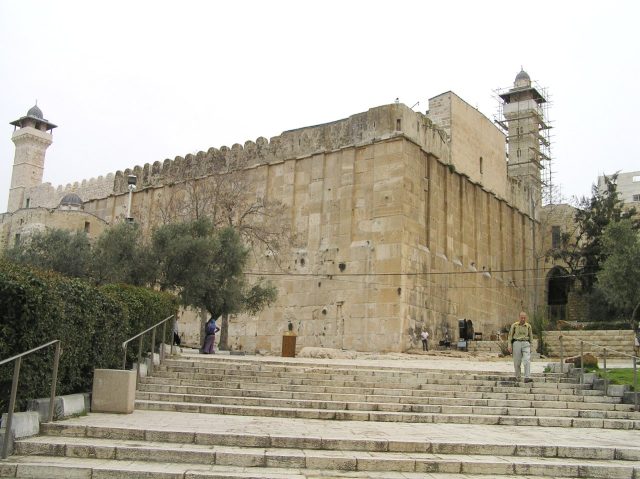
Hebron’s old quarters carry the weight of centuries. The Mamluk neighborhood, in particular, feels like a place where time moves differently. Its narrow, stone-paved streets lead you past buildings that have stood for hundreds of years.
The Mamluk Quarter is a maze of alleys. Thick walls and small, lattice-covered windows tell of a time when homes needed to be fortresses. Carved wooden doors and arched entryways show the care put into even the smallest details. Many houses open into inner courtyards, where families once gathered around fountains. These spaces were built for privacy, but also for beauty—cool and quiet, sheltered from the heat outside.
The Mamluks ruled this region from the 13th to the 16th century. Their buildings reflect the era’s priorities: security and trade. Hebron was a market town then, a crossroads for merchants trading spices, textiles, glass, and ceramics. The city’s glassblowing tradition still survives in a few workshops, where craftsmen use methods passed down through generations. The air here carries the scent of freshly baked bread, coffee, and spices—a reminder of Hebron’s long history as a trading hub.
Al-Jawali Mosque stands at the quarter’s heart. Built in the 14th century, it has a warm stone facade and a slender minaret. Its inner courtyard offers a quiet space in the middle of the city. Nearby, the remains of old madrasas hint at Hebron’s past as a center of learning. Scholars once came here from across the region, drawn by the city’s reputation.
The Mamluk Quarter isn’t frozen in time. Families who have lived here for generations still call it home. Their ancestors might have been merchants or artisans, and some traditions endure. Meals are still prepared using old recipes—musakhan, with its tender chicken and caramelized onions, or makloubeh, a rice dish layered with eggplant and meat. Sweets made with dates and nuts are shared during gatherings, just as they were centuries ago.
Life here is unscripted. In a small café, elderly men play backgammon, their laughter mixing with the clatter of coffee cups. A vendor might offer you a taste of olive oil pressed from trees that have stood for decades. These moments feel ordinary, but they’re part of a place that has seen empires rise and fall.
Hebron is a city of layers. The Mamluk Quarter is just one of them, but it’s the one that feels most alive. The stones underfoot have absorbed the footsteps of countless generations. Each left behind traces of their stories.
This isn’t a museum. There are no grand palaces or restored facades, just the quiet persistence of everyday life. The beauty of the place is in its authenticity—its ability to endure, adapt, and remain a home. It’s a reminder that history isn’t just something to observe. It’s something that shapes the present, one street, one family at a time.