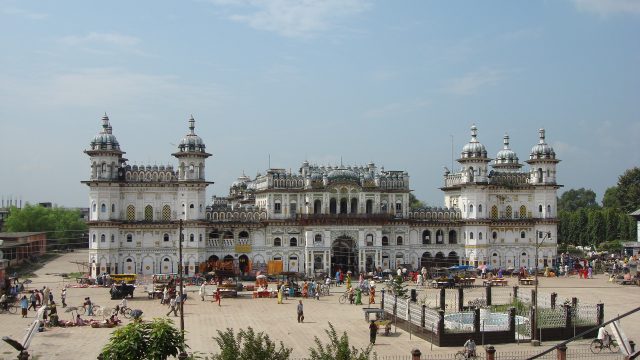
Lahan is a quiet town in southern Nepal, stretched along the highway that links the country to India. It’s not a place that appears on tourist maps, and life here moves at the unhurried pace of rural trade and border commerce. Most buildings are low, rarely more than two stories, and the streets often carry a fine layer of dust from passing trucks. Amid this modest setting, Lahan District Hospital stands as a steady presence—nothing like the grand medical centers of Kathmandu, but a vital resource for those who have few other options.
The hospital’s origins trace back to the mid-20th century, when Lahan emerged as a crossroads for trade and labor migration between Nepal and the Indian states of Bihar and Uttar Pradesh. The flow of people and goods created a need for basic healthcare, and by the 1960s, a small medical facility had taken root here. Over the decades, it has grown and adapted, though it remains a humble institution by any measure.
From the outside, the hospital looks much like other provincial buildings in Nepal—two stories tall, with simple, pale facades and a small courtyard where patients and their families sometimes rest under the shade of trees. Inside, narrow corridors are lined with posters offering advice on hygiene and disease prevention. There’s no luxury here, no high-tech equipment or polished marble floors, but there are doctors, nurses, and at least the essential tools to provide care. For many in the surrounding villages, that’s more than they might find elsewhere.
The hospital serves not just Lahan but dozens of nearby farming communities, where life revolves around agriculture and small-scale trade. For some patients, reaching the hospital is a journey in itself—some arrive by bus, others by bicycle, and a few walk for hours along dusty or muddy paths. They come with all manner of ailments, from seasonal infections to injuries sustained in the fields. The monsoon season brings a surge in patients, as flooded roads and damp conditions increase the risk of illness.
Despite its limited resources, the hospital plays a crucial role in the region’s healthcare system. In a country where medical access in remote areas is often scarce, even a modest facility like this can make the difference between despair and relief. The staff here are mostly local, many of them raised in the same villages they now serve, which gives them an intimate understanding of their patients’ struggles. Occasionally, specialists from Kathmandu or even abroad visit, volunteering their time to train staff or deliver much-needed supplies.
The atmosphere inside the hospital is far from the rushed, impersonal feel of larger urban clinics. There’s no constant bustle, no sense of urgency pressing down on patients and staff. Nurses move calmly between wards, families gather on benches in the courtyard to talk, and doctors sometimes step outside for a moment of quiet, sipping tea in the open air. Medicine here hasn’t been reduced to a mechanical process—it still carries a human touch, even if the conditions are far from ideal.
Of course, challenges remain. Equipment is often outdated, power outages are common, and the supply of medicines can be unreliable. But for the people who rely on this hospital, it’s more than just a building with a red cross on its wall. It’s a place where help can be found when there’s nowhere else to turn. Here, treatment isn’t just about physical healing—it’s about easing the anxiety that comes with illness when the nearest doctor might be hours away.
In recent years, Nepal has placed greater emphasis on improving healthcare in its provinces, and Lahan District Hospital is one example of how that effort takes shape on the ground. It doesn’t aspire to be a cutting-edge medical center, but it fulfills its purpose: offering people a chance at recovery where few other options exist. That, in the end, is what makes it indispensable.