Lahan Agrotourism Park
Nepal · 7 places
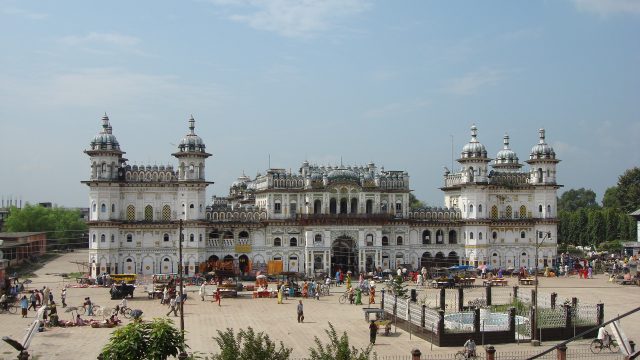
Photo: Innocentbunny, CC BY-SA 3.0
Lahan is one of those quiet places where Nepal unfolds without fanfare. Tucked away in the southern plains of the Terai, it moves at the unhurried pace of the Koshi River, which drifts lazily through the lowlands nearby. There are no crowds here, no trekking trails or mountaineering base camps, no souvenir stalls catering to tourists. Instead, the town exists in its own steady rhythm, a borderland settlement where days blend into one another with an almost deliberate simplicity. The people—mostly Madhesi, with their own language and traditions—welcome visitors with a warmth that feels genuine precisely because it isn’t performative. Lahan doesn’t try to charm you. It just is, and that quiet authenticity is its own kind of appeal.
The landscape around Lahan is all flat expanses and fertile earth, where the heat of the Terai gives way to monsoon rains that turn roads into streams and fields into shimmering green. Rice paddies stretch toward the horizon, broken only by the occasional stand of sugarcane, while in the distance, the faint outline of the Himalayan foothills serves as a reminder that the world’s highest mountains are never far away. The town sits along the highway connecting Birganj to eastern Nepal, a natural stopping point for trucks rumbling toward Kathmandu or the Indian border. Drivers pull over at roadside tea stalls, sipping strong, milky chai as they swap stories about fuel prices and village gossip, their voices blending with the hum of idling engines.
At the heart of Lahan is its market, a sprawling maze of stalls where everything from fresh vegetables and spices to cheap plastic goods from India changes hands. Mornings are the liveliest time, when farmers arrive with their harvest, women in bright saris haggle over prices, and children dart between the crowds, either helping their parents or chasing each other in games of tag. A small Hindu shrine stands at the center of it all, its steps worn smooth by generations of worshippers. Religion here isn’t something separate from daily life—it’s woven into it. Festivals like Diwali or Chaturdashi spill into the streets with music, dancing, and the scent of incense, turning the town into a temporary carnival of color and sound.
For all its unassuming size, Lahan plays a key role in the region. It’s home to one of Nepal’s largest sugar mills, a hulking industrial presence that has shaped the town’s economy and infrastructure. Workers live in nearby hostels, and small shops have sprung up to cater to them, creating a micro-economy that hums alongside the factory’s operations. The town also serves as a waypoint for pilgrims traveling to Janakpur, the sacred city where Sita, the heroine of the Ramayana, is said to have been born. During festival seasons, the streets fill with devotees, their chatter and prayers mixing with the clatter of rickshaws and the sizzle of street food stalls. For a few days, Lahan becomes a crossroads of faith and movement, a fleeting but vivid snapshot of Nepal’s spiritual life.
To visit Lahan is to see the country stripped of its tourist veneer. There are no boutique hotels or restaurants with multilingual menus, just simple guesthouses where the owners serve dal bhat—lentils and rice, the staple of Nepali meals—with a generosity that feels like an invitation rather than a transaction. Evenings bring the soft glow of kerosene lamps, the distant cheers of teenagers playing cricket in the dusty streets, and the murmur of neighbors gathered on rooftops, sharing stories as the day cools. Time here doesn’t rush. It lingers, and if you let it, you might just find yourself slipping into a rhythm that feels older, slower, and far more real than the one you left behind.
See & Do
All of them
Places on the map
Marker colour follows the categoryClimate and weather
Detailed weather: Lahan Agrotourism Park- Average temperature
- 24 °C
- Precipitation per year
- 1464 mm
Average air temperature
°C
15
18
24
28
29
29
29
28
28
26
22
18
Jan
Feb
Mar
Apr
May
Jun
Jul
Aug
Sep
Oct
Nov
Dec