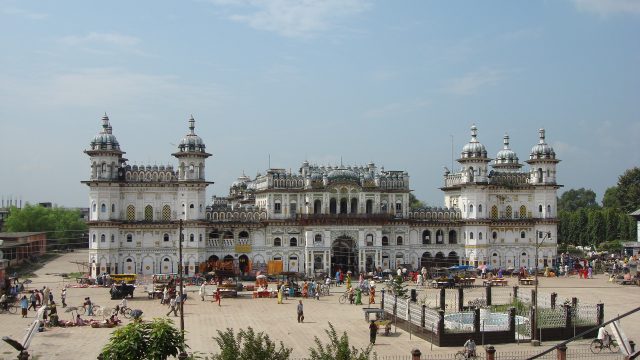
Lahan Bazaar isn’t the kind of place you’ll find in glossy travel magazines or on lists of must-see destinations. It’s not a monument, a palace, or a scenic viewpoint—it’s something far more ordinary and, in its own way, far more revealing. Tucked in the southern plains of Nepal, just a stone’s throw from the Indian border, this market town pulses with the unfiltered rhythm of daily life. There are no guided tours here, no souvenir stalls hawking trinkets, no signs in English pointing the way. What you get instead is the raw, unscripted energy of a place that exists for its own sake, not for visitors.
The bazaar stretches along the main road that cuts through Lahan, a ribbon of commerce and movement where the boundaries between market and home blur. Shops spill into living spaces, and living spaces double as workshops. A bicycle repair stand might sit next to a stall selling ripe mangoes, while a tiny tea shop, its plastic chairs faded by the sun, is wedged between a spice merchant and a fabric seller. In the early hours, the market comes alive with farmers hauling sacks of rice, mustard seeds, and sugarcane from nearby fields. By mid-morning, the air is thick with the scent of frying masala, woodsmoke from roadside grills, and the sharp tang of turmeric and cumin sold by the handful. The noise is constant—a mix of haggling voices, the honk of motorcycles, and the occasional bleat of a goat being led through the crowd.
Lahan wasn’t always like this. Half a century ago, it was little more than a sleepy outpost, a place people passed through on their way to somewhere else. That changed in the 1960s, when a highway linking Kathmandu to the Indian state of Bihar sliced through the town. Almost overnight, Lahan became a crossroads, a place where goods and people flowed in both directions. The road brought traders, laborers, and migrants, turning the town into a patchwork of communities. Today, you’ll hear Nepali, Maithili, Bhojpuri, and Hindi spoken in the same breath. The market reflects this mix—Indian merchants sell cheap textiles and plastic wares, while Nepali farmers offer produce grown in the fertile plains. The border isn’t a divide here; it’s a seam, stitching together two countries that have more in common than not.
The architecture of Lahan Bazaar is as practical as the lives it supports. Most buildings are two or three stories tall, made of brick and concrete, their flat roofs used for drying laundry or storing grain. The facades are often painted in bright blues, greens, or pinks, though the colors fade quickly under the relentless sun. The ground floors are almost always shops, while families live above, their lives playing out in the narrow spaces between commerce and domesticity. The streets are too crowded for sidewalks, so pedestrians weave between motorcycles, handcarts, and the occasional cow. There’s no grand design here, no master plan—just a place that has grown organically, shaped by necessity rather than aesthetics.
Religion is woven into the fabric of the bazaar, as it is across Nepal. Small Hindu temples dot the streets, their shrines adorned with marigolds and flickering oil lamps. The most prominent is the Mahadev Temple, dedicated to Shiva, which draws pilgrims during festivals like Mahashivaratri. On ordinary days, the temple is still a hub of activity—vendors sell flowers for offerings, incense sticks, and sacred ash, while elderly men sit in the shade, counting beads or gossiping. The line between the sacred and the mundane is thin here; a shopkeeper might pause to touch his forehead to a shrine before opening for the day, or a customer might light a lamp before haggling over the price of onions.
What makes Lahan Bazaar special isn’t any single landmark or attraction, but the way it feels like a living organism. It’s a place where culture isn’t performed for outsiders but simply exists, unselfconsciously. In the evenings, when the heat finally eases, the streets take on a different energy. Musicians play traditional instruments, children fly kites made of newspaper and bamboo, and groups of men gather around radios to listen to cricket matches. The conversations are about everything and nothing—crop prices, political scandals, family disputes, the latest Bollywood songs. There’s no agenda, no rush. Time moves differently here, measured in cups of tea and the slow unfurling of the day.
For travelers, Lahan Bazaar offers something rare: a chance to see Nepal without the filter of tourism. There are no luxury hotels, no restaurants with English menus, no guides offering to show you the "real" Nepal. What you get instead is the real Nepal, or at least one version of it. You can spend hours wandering the market, watching farmers unload their produce, women in vibrant saris haggling over vegetables, or old men playing cards outside their shops. The chaos can be overwhelming at first—the noise, the crowds, the sheer sensory overload—but that’s part of the appeal. This is a place where life isn’t curated or sanitized; it’s messy, vibrant, and utterly human.
The connection to India is impossible to ignore. Lahan sits right on the border, and the influence flows both ways. Indian rupees are as widely accepted as Nepali ones, and you’ll hear as much Hindi as Nepali in the streets. The food reflects this blend, too—momos (Nepali dumplings) share menu space with samosas and chai. The border crossing is just a short walk from the bazaar, and you’ll see Indian traders loading up on Nepali goods, while Nepali laborers head the other way, bound for jobs in Delhi or Mumbai. The two countries aren’t just neighbors here; they’re intertwined, their economies and cultures overlapping in ways that feel natural, even inevitable.
Lahan Bazaar hasn’t changed much in decades, and that’s part of its charm. There’s no rush to modernize, no push to cater to tourists. The market remains what it’s always been—a place where people come to buy, sell, eat, pray, and live. It’s not pretty in the conventional sense; the streets are dusty, the buildings are worn, and the air is thick with exhaust and spices. But there’s a kind of beauty in that unvarnished reality. This is a place where you can sit in a tea shop, order a cup of masala chai, and watch the world go by. No agenda, no itinerary, no need to do anything but be present. If you ever find yourself in this part of Nepal, don’t just pass through. Stop. Look around. And let the bazaar tell its own story.