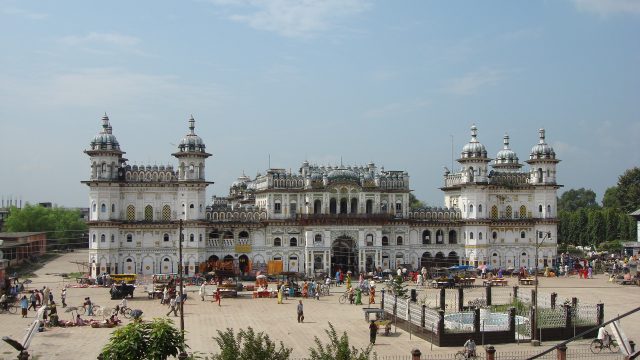
Salahesh Fulbari is one of those quiet places in Nepal that rarely makes it into guidebooks. Tucked away in Lahan, this garden was once part of a palace complex belonging to the region’s former rulers. Though little remains of its former grandeur, the space still carries the weight of the past, offering stillness in a country where temples often draw crowds.
The garden’s story is tied to the Madhesi dynasty, which governed this part of eastern Nepal during the 18th and 19th centuries. It was named after Salahesh, a folk hero revered as a protector of the region. While historical records are scarce, the name reflects its significance in local memory. In its time, it was a place for gatherings and ceremonies, a reflection of Lahan’s role as a trading hub between Nepal and India.
Today, it stands as a reminder of that era.
Time and shifting fortunes have worn away most of what once was. Yet fragments remain: crumbling stone walls, ancient trees whose roots have grown around the foundations of long-gone structures, and a small pond at the center. The water is clear, and locals sometimes come to collect it or sit by its edge, a ritual connecting them to the place.
Salahesh Fulbari doesn’t draw crowds. There are no souvenir stalls, no guided tours, no signs for tourists. Instead, it feels like a private retreat, a corner of Lahan where time moves differently. Mornings bring the rustling of leaves and the call of birds. By late afternoon, children play on the grass, neighbors chat, and elders sit on benches, watching the day wind down.
For travelers used to Kathmandu or Pokhara, Salahesh Fulbari might seem unremarkable. There’s no need to rush or chase photographs. The charm lies in wandering the paths, sitting on a bench, and letting the light filter through the leaves. It reveals itself slowly, in small moments.
Lahan isn’t a tourist destination, and that adds to the garden’s appeal. The town moves to its own rhythm, and Salahesh Fulbari is part of it. There’s nothing staged here—the trees are old, the stones worn smooth, and visitors come because it’s part of their daily lives.
If you find yourself in this part of Nepal, stop by. See a side of the country that rarely makes it onto postcards.
The monsoon season turns Salahesh Fulbari into a green sanctuary. Rain glistens on leaves, the air smells of damp earth, and the pond swells with fresh water. It’s beautiful then, though heat and humidity can be oppressive. In cooler months, the garden is subdued but striking, especially on crisp mornings when frost clings to the grass.
This isn’t a place that demands attention. Salahesh Fulbari exists quietly, a blend of history, myth, and everyday life. It doesn’t claim to be more than what it is—a garden where past and present coexist. The stories of the land are still told, even if only in whispers.
For those who travel to feel, not just to see, it offers something rare: a sense of place untouched by tourism. The trees, the stones, the stillness—they speak for themselves.