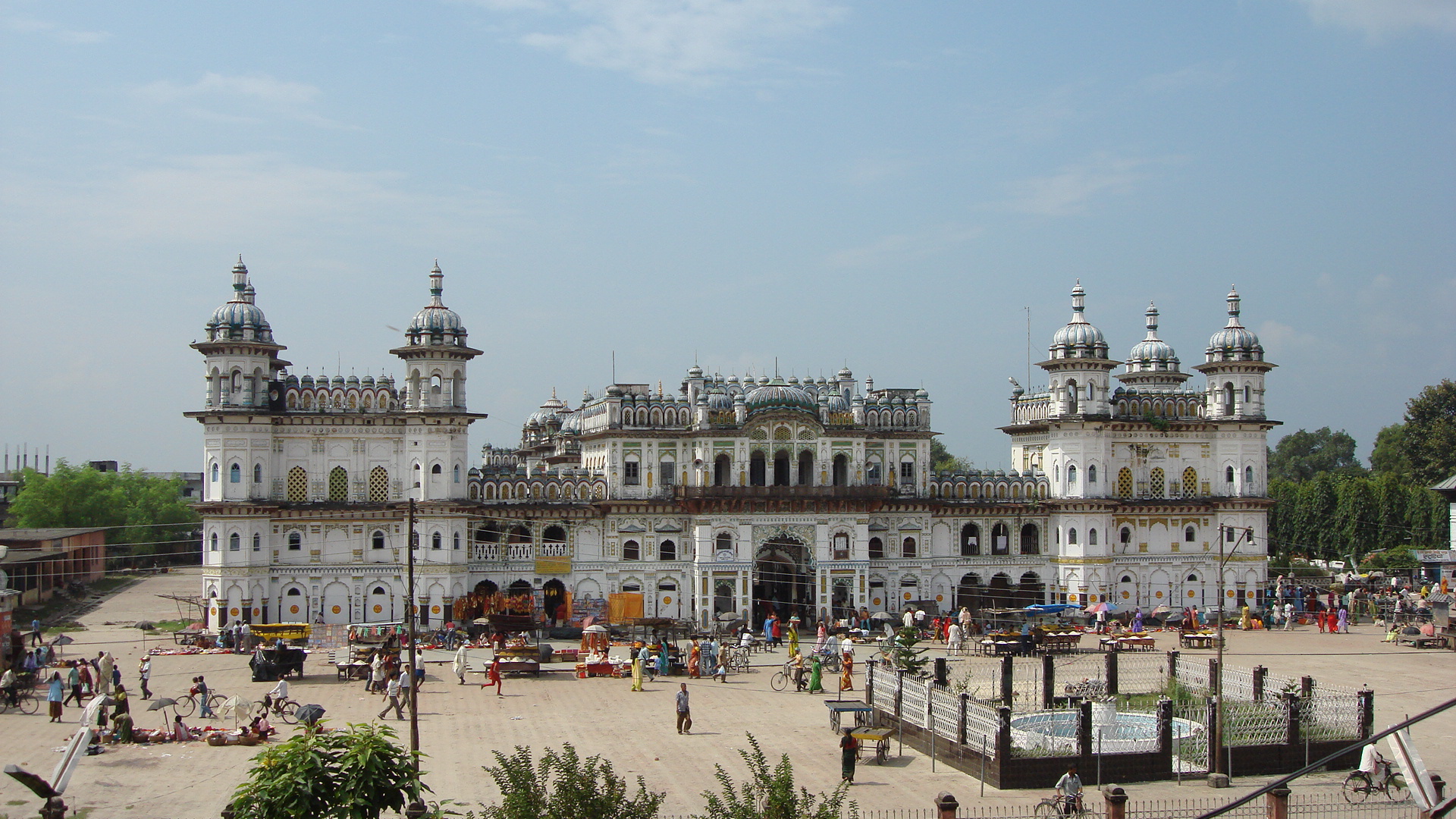
Ram Janaki Mandir in Lahan is one of those places where faith, history, and everyday life merge seamlessly into something quietly profound. Tucked along the banks of the Kamala River, its white walls and intricate carvings stand out against the modest surroundings of this small Nepali town. The temple is dedicated to Sita, the revered heroine of the ancient Hindu epic Ramayana, and her husband Rama, and it still carries the echoes of the stories told in that sacred text—stories that have shaped the beliefs and traditions of generations.
The architecture here reflects a blend of Nepali craftsmanship and Indian influences, a natural fusion given Lahan’s proximity to the border. The main structure is surrounded by a courtyard that hums with activity at almost any hour. Pilgrims come not just to pray but to linger under the shade of trees, exchanging news or sharing stories. Inside, the temple remains cool and serene despite the steady flow of visitors, its walls adorned with scenes from the Ramayana that depict Sita’s discovery in a furrow of earth by King Janaka, the ruler of the ancient kingdom of Mithila.
The temple’s history is deeply entwined with the legend of Janaki, as Sita is also known. According to tradition, this is where she was born and spent her childhood before marrying Rama. While no one knows exactly when the temple was built, locals believe it has stood here for centuries. Around it, a few old structures remain—perhaps once shelters for pilgrims or monks—but today they feel more like part of the town’s fabric than relics of the past.
For the people of Lahan, Ram Janaki Mandir is more than a religious site; it’s a gathering place, a hub of festivals, and even a backdrop for daily commerce. In the mornings, a small market springs up nearby, selling flowers for offerings, incense, fresh fruit, and traditional sweets. During festivals, especially Janaki Navami, which celebrates Sita’s birth, the temple grounds come alive with crowds, music, and rituals. Devotees travel from afar to take part, and the temple is draped in garlands and lit with colorful lanterns.
What makes this place special is how naturally it fits into the rhythm of the town. Unlike grand temples that feel removed from everyday life, Ram Janaki Mandir exists right in the middle of it. Streets nearby bustle with vendors selling vegetables and spices, children play in the alleys, and elders sit on benches watching the world go by. There’s a sense of ease here, as if faith isn’t something separate but simply another thread in the fabric of daily existence.
Early mornings are the best time to visit, when the first light spills over the horizon and the air is filled with the scent of sandalwood and flowers. Locals arrive with offerings, and the temple is quiet enough to notice the details—the carved columns, the wooden beams overhead, the faded murals on the walls. By midday, the atmosphere shifts. The courtyard fills with voices, the sound of prayers, and the soft chime of bells tied by pilgrims hoping for their wishes to be granted.
Ram Janaki Mandir isn’t a place that overwhelms with grandeur or spectacle. Instead, it offers something subtler: a sense of belonging. There are no crowds of tourists snapping photos or guides hustling for business. What you find here is a quiet, almost intimate space where anyone can step in and feel connected to something older and deeper than themselves. That’s why, for those who come, it’s not just a temple—it’s a living part of a story that continues to unfold.