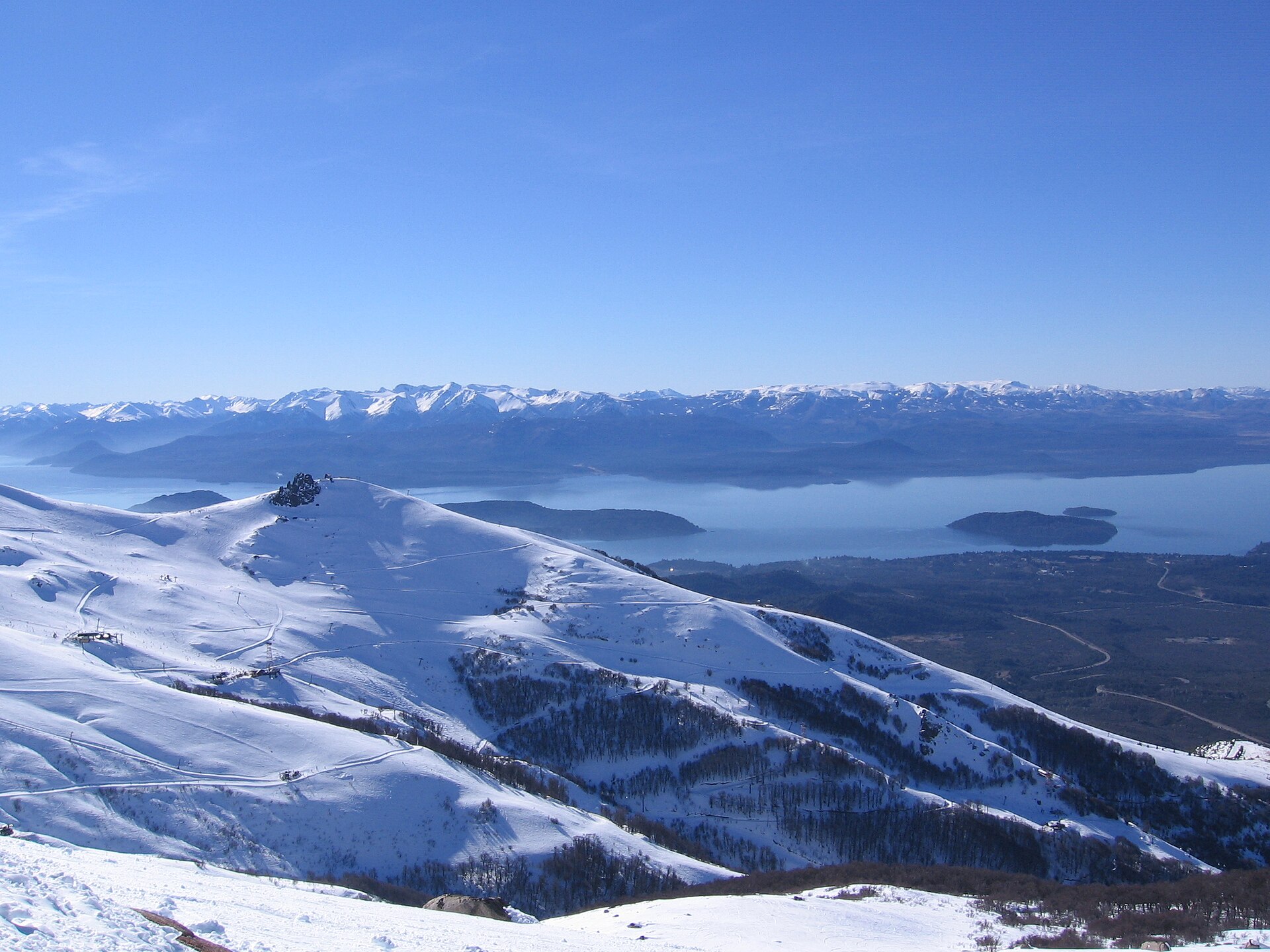
Cerro Catedral isn’t just a ski resort—it’s where the Andes reveal themselves in all their stark, breathtaking beauty. Rising above the shores of Nahuel Huapi Lake near San Carlos de Bariloche, this mountain takes its name from the jagged peaks that crown its summit, their rocky spires resembling the towers of a Gothic cathedral. The effect is most striking at sunset, when the light catches the stone and turns it gold, as if the mountain itself were glowing from within.
The resort’s story began in the mid-20th century, when a handful of skiers and mountaineers started exploring the slopes around Bariloche. They were drawn by the combination of reliable snowfall, dramatic elevation changes, and a climate milder than the high Andes to the north. By the 1960s, the first lifts were installed, and by the 1980s, Cerro Catedral had grown into one of South America’s premier winter destinations. What started as a passion project for a few adventurers became a place where skiers from across the continent could test their skills against the mountain’s varied terrain.
Today, the resort offers over forty kilometers of trails, catering to everyone from first-time skiers to seasoned experts. Beginners can practice on gentle slopes near the base, where instructors and designated learning zones help ease the transition from snowplow to parallel turns. For those seeking a challenge, the mountain delivers steep chutes, narrow couloirs, and wide-open red runs that snake through the trees. The highest lifts climb to around two thousand meters, where the views stretch across the lake and the surrounding peaks, a reminder of just how small you are in this vast landscape.
Beyond the skiing, Cerro Catedral has a rhythm all its own. The base area feels like a small alpine village, with wooden lodges, cozy cafés, and restaurants serving hearty Patagonian dishes—think slow-roasted lamb, wild mushroom stews, and thick hot chocolate spiked with cinnamon. Shops sell everything from high-end ski gear to handmade wool sweaters, while the lodging options range from rustic hostels to boutique hotels with fireplaces and lake views. In peak season, the atmosphere is lively but never overwhelming, more like a gathering of old friends than a crowded tourist hub.
When winter fades, the mountain doesn’t go quiet. Summer transforms Cerro Catedral into a playground for hikers, mountain bikers, and climbers. Trails wind through forests and meadows, leading to hidden waterfalls, glacial lakes, and viewpoints that offer sweeping panoramas of the Andes. The air is crisp and clean, the crowds thin, and the landscape shifts from white to green almost overnight. For those who prefer a slower pace, it’s a chance to wander the same paths skiers carve in winter, but at a walker’s rhythm, with time to notice the wildflowers pushing through the thawing earth.
What makes Cerro Catedral special, though, isn’t just the terrain or the activities—it’s the sense of place. Bariloche and its surroundings have a distinct identity, shaped by waves of European immigrants who settled here in the early 20th century. Their influence is still visible in the architecture, the food, and the crafts sold in local markets. Wooden chalets with steep roofs stand alongside adobe buildings, while bakeries turn out buttery croissants and dense black bread. In the evenings, restaurants serve dishes that blend Patagonian ingredients with Old World techniques, like venison empanadas or trout grilled over beechwood. It’s a mix that feels both familiar and entirely unique.
The weather here is as changeable as the landscape. Winters are cold but not extreme, with temperatures rarely dipping below minus ten degrees Celsius, though wind and snow can turn a bluebird day into a whiteout in hours. Summers are mild, with warm afternoons giving way to cool evenings, especially at higher elevations. Visitors should come prepared for anything—layers are key, whether you’re skiing in July or hiking in January.
What Cerro Catedral offers, above all, is a chance to step into a world where nature still sets the pace. There are no flashy resorts or crowded après-ski scenes, just a mountain that has been shaped by time and the people who love it. Whether you’re here to carve turns down a steep face or simply sit by a fire with a glass of local Malbec, the place has a way of making you feel like you belong. It’s not about conquering the mountain, but about letting it reveal itself to you—one run, one trail, one quiet moment at a time.