The Crimean Nature Reserve is one of those rare places where the landscape feels untouched by time, despite its proximity to civilization. Tucked away in the mountains of the peninsula, it spans vast stretches of wild terrain—deep valleys, dense forests, and rugged peaks that rise sharply against the sky. Unlike the crowded resorts and busy roads that define much of Crimea’s coastline, this reserve offers something far quieter: the kind of silence broken only by birdsong, the rustle of leaves, or the distant murmur of a mountain stream. It’s a refuge for hundreds of plant and animal species, many of which exist nowhere else in the world.
The history of these lands runs deep. Long before it became a protected area, the region drew people with its raw beauty and abundance. In medieval times, trade routes wound through these forests, and later, Crimean khans hunted in the dense thickets. By the 19th century, scientists began taking notice—botanists and zoologists arrived to study the unique flora and fauna, laying the groundwork for what would become one of Russia’s first official nature reserves in 1913. Over the decades, its boundaries expanded, and its protected status helped shield the landscape from development, preserving it much as it was centuries ago.
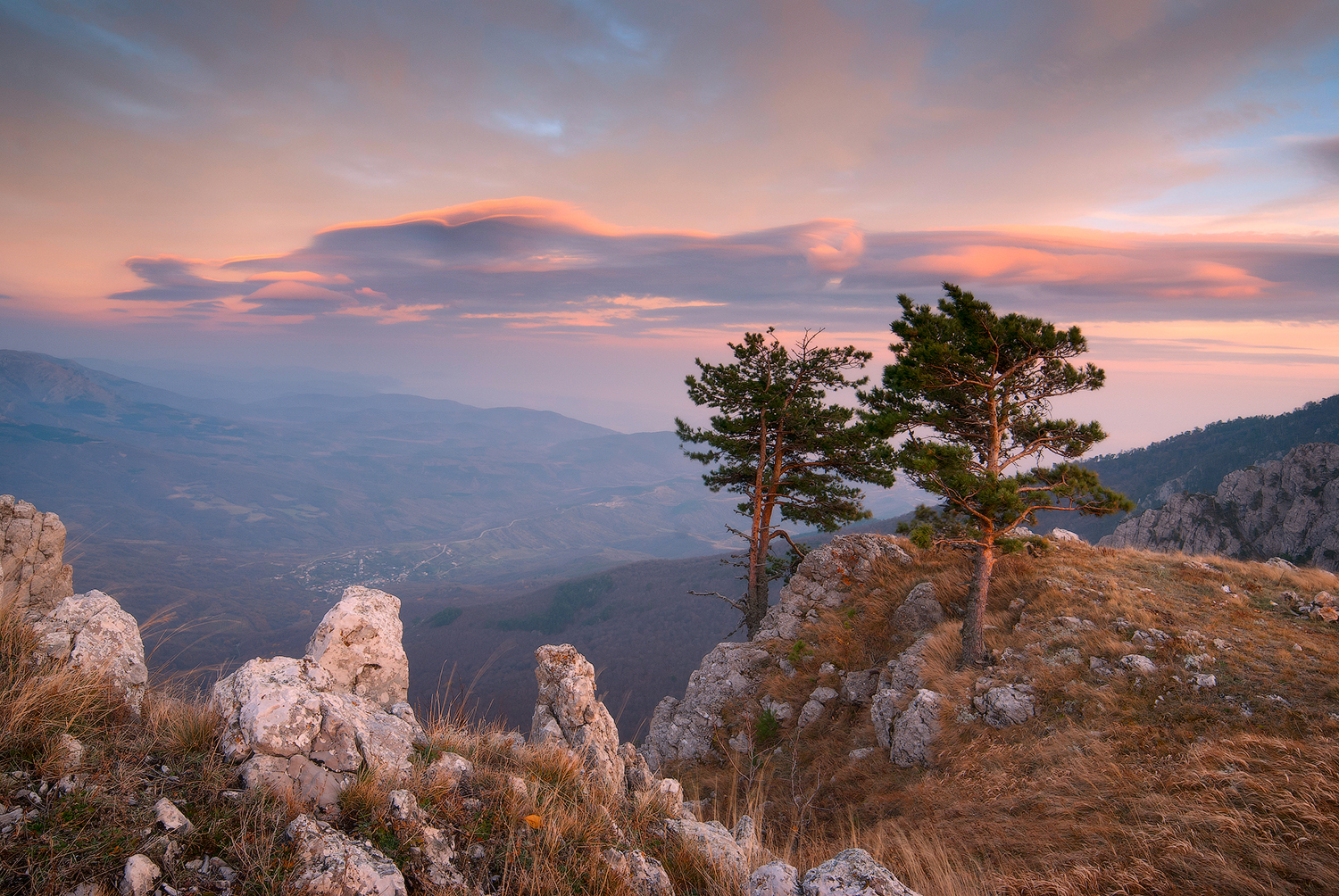
The reserve’s terrain is remarkably varied. At lower elevations, broadleaf forests of oak and beech dominate, their ancient trees towering overhead. Higher up, the landscape shifts to alpine meadows, where wildflowers bloom in spring and the air carries the scent of herbs. Some of the pines here are relics of a bygone era, their gnarled trunks bearing the marks of centuries. In spring, the slopes burst into color with crocuses and snowdrops, while autumn turns the forests into a blaze of reds and golds. Mountain rivers carve their way through the valleys, forming waterfalls and small, crystal-clear lakes that mirror the surrounding peaks.
Wildlife thrives here in ways that feel almost forgotten elsewhere. Red deer and roe deer move through the forests, while wild boars root in the undergrowth. In the mid-20th century, mouflon—wild sheep with impressive curled horns—were introduced and have since adapted to the rocky terrain. The skies belong to birds of prey: golden eagles, peregrine falcons, and griffon vultures circle above the cliffs. Foxes, badgers, and the elusive Crimean forest marten make their homes in the woods, while rare endemic species, like the Crimean lizard, cling to existence in specialized habitats. Among the most striking residents is the black vulture, a massive bird now rarely seen outside protected areas.
Visiting the reserve isn’t like visiting a typical tourist destination. There are trails, but they’re carefully managed to limit human impact. This isn’t a place for crowds or selfie sticks—it’s for those who want to step away from the noise and experience nature on its own terms. The paths lead to some of the most dramatic spots in the region: waterfalls cascading over moss-covered rocks, viewpoints overlooking vast valleys, and caves that hint at the area’s ancient geological past. One of the most famous routes takes hikers through the Great Canyon of Crimea, a deep gorge where sheer limestone walls rise hundreds of meters and the river below churns with raw energy. The canyon’s microclimate supports rare plants that cling to the cliffs, some of which have survived here since the last ice age.
The atmosphere in the reserve is one of quiet intensity. Mornings often begin with mist curling through the valleys, burning off as the sun climbs higher. By afternoon, the light slants through the trees, casting long shadows, and by evening, the forest comes alive with the calls of nocturnal creatures. At night, the lack of light pollution makes the stars feel almost close enough to touch—the Milky Way stretches across the sky in a way that’s hard to imagine in cities. For many who come here, the reserve isn’t just another stop on a travel itinerary. It’s a reminder of what the world once looked like, a place where time moves differently.
Access to the reserve is controlled, and visitors need permits to enter. This isn’t bureaucracy for its own sake—it’s a necessary measure to protect the fragile ecosystems within. Once inside, there are rules: no fires, no picking plants, no straying from marked trails. These restrictions might seem strict, but they’re the reason the reserve has remained so pristine. The landscape here has been shaped by millennia of natural processes, and even small disruptions can have lasting effects. Those who follow the guidelines are rewarded with an experience that feels almost like stepping into another era.
More than just a protected area, the Crimean Nature Reserve is a living archive of the natural world. It’s a place where you can walk among trees that have stood for centuries, spot animals that have adapted to this specific corner of the earth, and feel the weight of geological time in the rocks beneath your feet. It’s not for everyone—there are no souvenir shops, no guided tours with scripted stories, no guarantees of wildlife sightings. But for those who appreciate solitude, beauty, and the quiet power of untamed nature, it offers something rare: a chance to see Crimea as it was long before anyone thought to call it a destination. In a world where so much has been altered by human hands, places like this remind us of what we stand to lose—and what we might still save.