Perched on the quiet outskirts of Lakeside, the Church of Saint Panteleimon sits where the hum of coastal life fades into the rhythm of the sea. Its white walls stand out against the greenery, especially on clear days when sunlight glints off the domes. The bell tower appears to hover above the low-roofed houses around it.
The church was built in the late 1800s, when the area was still a small outpost along trade routes. For the Greek community that lived here, it served as a place of worship and a connection to their homeland. The village, once known as Karantin, was a crossroads for traders, fishermen, and settlers—Greeks, Armenians, Russians—each shaping it in their own way. The name Lakeside came later, but the streets and buildings still carry echoes of those who came before.
The architecture is modest: a single-domed structure with narrow windows and restrained detailing. Inside, faded frescoes cover the walls, their colors softened by decades of damp. Some figures are barely discernible, but the space retains warmth. The wooden iconostasis, carved with simple patterns, frames icons that have aged but remain expressive. There’s no gilded opulence here—just an intimacy, as if the church was built to comfort rather than impress.
Saint Panteleimon, the healer-martyr to whom the church is dedicated, has long been revered in Orthodox tradition as a protector of the sick. Over the years, the church has drawn locals and pilgrims seeking healing. It suffered during the Soviet era—closed, repurposed as a warehouse, left to decay. In the 1990s, it was returned to the faithful. Services resumed, the bells rang again, and restoration began. The work continues.
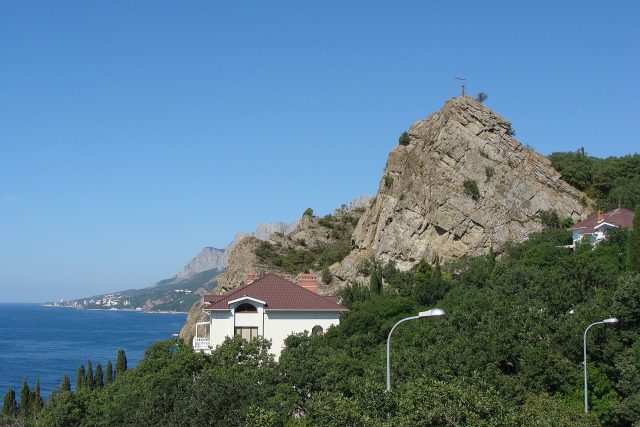
The church sits on a gentle rise, surrounded by vineyards and overlooking the sea. In summer, the air smells of blossoms and salt, and the sound of waves carries up the hill in the evenings. Locals come here not only for services but to sit on the benches outside, to think, or to escape the busyness of life.
Lakeside has other churches and chapels, but this one is the oldest. It has survived wars, revolutions, and shifting ideologies, yet it remains much as it was over a century ago. There are no crowds of tourists, no souvenir stalls—just the church, the sea, and the silence.
For visitors, the church can be an unexpected discovery. It doesn’t demand attention, but once you notice it, it’s hard to look away. The way it blends into the landscape—low-slung, whitewashed, nestled among trees—makes it feel like part of the village. That’s the quiet magic of the place: it doesn’t need to shout to be heard.
Walking through Lakeside, you might not immediately realize the church’s significance. But those who visit often leave with a sense of having touched something timeless. The stones underfoot, the icons on the walls, the air inside—all carry the weight of history. In a world that moves quickly, places like this offer stillness. A chance to step outside of time. And perhaps that’s why people return—not just to pray, but to remember what it feels like to stand where the past lingers.