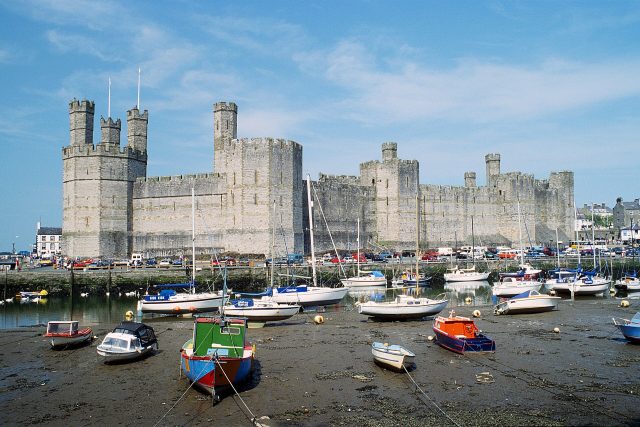
The walls of Caernarfon are more than just stone and mortar—they are a quiet witness to centuries of history, standing firm against the Welsh rain and the passage of time. Built in the late 13th century under the orders of King Edward I, they were part of a grand vision to assert English control over Wales. Caernarfon itself was meant to be a statement, a fortress city that would leave no doubt about who held power. The walls, with their imposing towers and thick ramparts, were designed to intimidate as much as to defend, a physical manifestation of authority in a land where loyalty was often contested.
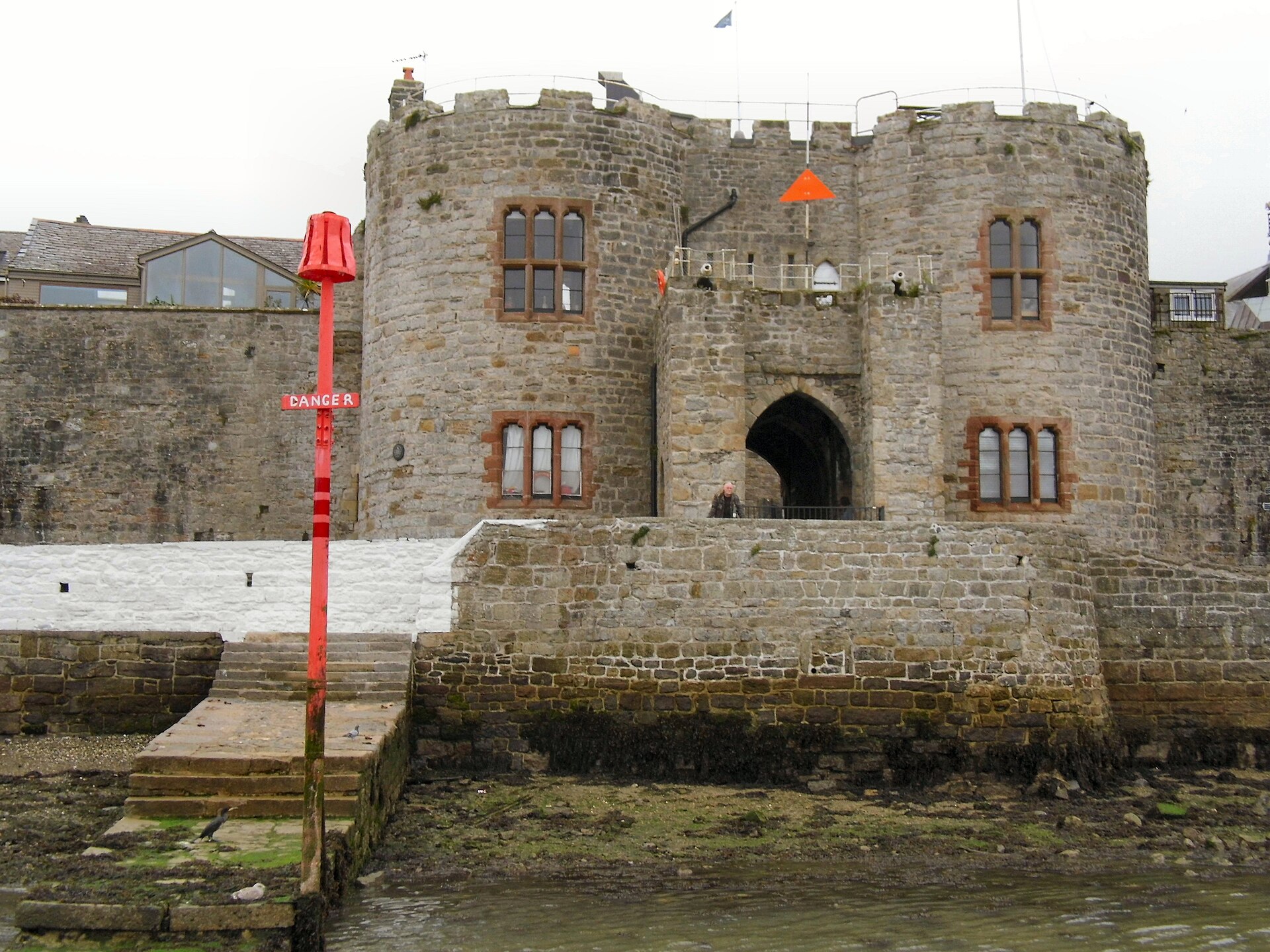
Walking along the battlements today, it’s easy to imagine the scene seven hundred years ago. The walls encircle the old town and the castle, their straight stretches of curtain wall broken by massive towers that once housed soldiers, supplies, and weapons. The most striking of these is the King’s Gate, or Eastern Tower, where legend claims Edward II was born in 1284. Historians debate the truth of the story, but the tale has taken root in local memory, adding a layer of myth to the stone. Whether or not a future king first drew breath here, the tower remains one of the most recognizable parts of the fortifications, its bulk a reminder of the ambitions that shaped this place.
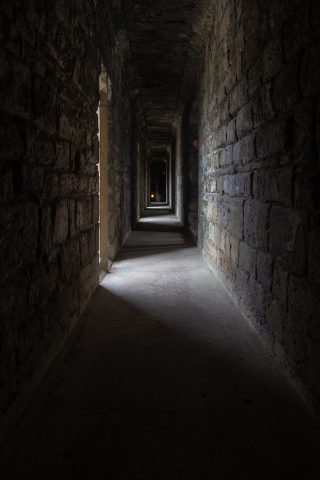
The walls were built to last. In some sections, the masonry is nearly ten feet thick, rising to a height of thirty feet or more. Narrow arrow slits and machicolations—those overhanging stone projections from which defenders could drop rocks or boiling oil—speak of a time when warfare was up close and brutal. Yet there’s an unexpected elegance to the design, too. Decorative arches and crenellations along the parapets show that Edward I wasn’t just concerned with function; he wanted his fortresses to impress. The walls of Caernarfon were as much about propaganda as protection, a way to project strength to both allies and enemies.
Climbing the worn stone steps to the walkway, you emerge onto a narrow path that traces the perimeter of the old town. From here, the view unfolds in layers. Below, the streets of Caernarfon wind between slate-roofed houses, their layouts little changed since the Middle Ages. The market square, where traders once haggled over wool and salt, still hums with life, though now it’s cafés and souvenir shops that draw the crowds. Beyond the town, the River Seiont flows toward the sea, its waters reflecting the walls in the early morning light. On clear days, the peaks of Snowdonia rise in the distance, their slopes a soft contrast to the hard lines of the fortifications. Out toward the horizon, the faint outline of Anglesey is sometimes visible, a reminder of how strategically important this corner of Wales once was.
The walls were never just a military structure; they were part of the fabric of daily life. In the Middle Ages, the space within them was crowded with houses, workshops, and even churches. People lived and worked in the shadow of the towers, their lives shaped by the rhythms of a garrison town. Today, the walls have been reclaimed as a public space. Paved paths follow their course, and in some of the towers, viewing platforms have been set up, offering a place to pause and take in the surroundings. In the summer, the walls come alive with festivals and historical reenactments, the clash of swords and the sound of medieval music echoing off the stone. For a few days, the past feels almost tangible.
The castle that the walls encircle is inseparable from their story. Built at the same time and designed as a royal residence, Caernarfon Castle was meant to be more than a fortress—it was a symbol of permanence. Its towers, with their distinctive polygonal shapes, were inspired by the walls of Constantinople, a nod to Edward I’s crusading ambitions. Inside, the great halls with their soaring vaults and the dimly lit dungeons tell their own stories of power and confinement. The castle and the walls together form a UNESCO World Heritage Site, recognized not just for their architectural significance but for what they represent: a turning point in the history of Wales and England.
For locals, the walls are a familiar presence, something they pass by every day without always noticing. Children play in their shadows, couples stroll along the ramparts in the evening, and tourists snap photos against the backdrop of the towers. At night, the walls are lit softly, their outlines glowing against the dark sky. There’s a sense of continuity here, a feeling that the past isn’t as distant as it seems. The stones have seen generations come and go, and they’ve absorbed the stories of the people who lived within them.
If you’re interested in Welsh history, the walls of Caernarfon are essential. They mark a pivotal moment in the struggle between the Welsh princes and the English crown, a conflict that shaped the identity of the region. The walls tell a story of conquest and resistance, of a land that was both coveted and contested. But even if history isn’t your main reason for visiting, the walls have a way of drawing you in. There’s something about walking along the same paths that soldiers and merchants once trod, something about touching the same stone that has stood for centuries. It’s a rare chance to step outside of time, if only for a little while.
The best way to experience the walls is to take your time. You could walk their full length in an hour, but why rush? Stop at one of the towers, lean against the parapet, and listen to the wind as it whistles through the arrow slits. Look out over the town and the river, and try to imagine the sounds and smells of the past—the clatter of hooves on cobblestones, the shouts of market traders, the distant clang of a blacksmith’s hammer. The walls have seen it all, and they’ve endured. That’s the real magic of places like this: they connect us to something larger than ourselves, a thread that runs through the centuries. You don’t need to be a historian to feel it. You just need to be there.