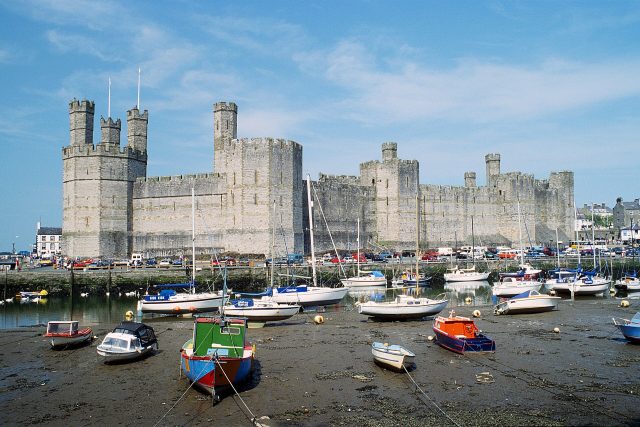
Carnarvon’s harbour is where the mountains of North Wales slip quietly into the sea, a place where the past lingers in the salt air and the curve of the stone walls. Tucked into the mouth of the River Seiont, it was never just a trading post—it was the reason the town exists at all. Now, the water laps gently against the quays, fishing boats rock at their moorings, and the whole scene feels peaceful, almost sleepy. But look closer, and the signs of its former life are everywhere: the old warehouses with their thick walls, the worn steps leading down to the water, the silhouette of the castle on the hill, watching over everything as it has for centuries.
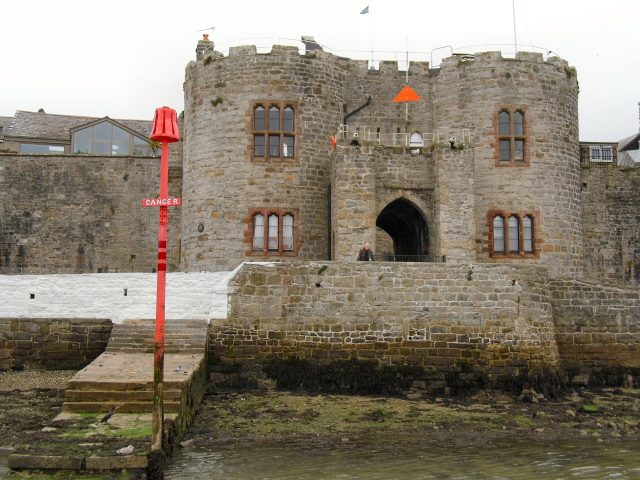
The castle is the heart of the story here. Built in the late 1200s under Edward I, it was meant to do more than just defend—it was a statement, a way to impose English rule over Wales with unmistakable force. The design was deliberate: massive walls, round towers, a deep moat, all arranged to intimidate as much as to protect. The harbour was its lifeline. Without it, the castle could never have been built. Ships brought in stone, timber, food, and men, unloading at the quays before the materials were hauled up the hill. Even now, standing on the waterfront, you can imagine the clatter of carts and the shouts of workers, the harbour bustling with activity while the castle took shape above.
By the Middle Ages, the harbour had grown into a busy trading hub. Wool, leather, iron—goods from across Wales passed through here on their way to England and beyond. Later, in the 1800s, the Industrial Revolution left its mark. Shipyards sprang up along the shore, repairing and building vessels that would carry Welsh slate and coal to distant ports. The harbour was reshaped to fit the times: new docks were dug, quays reinforced, warehouses built. Some of those buildings still stand, their sturdy stone walls now housing cafés, small shops, and workshops where local craftspeople work. The past isn’t preserved behind glass here—it’s still in use, adapted but not erased.
These days, the harbour feels more like a quiet corner of the town than a working port. The water is calm, almost still, broken only by the occasional ripple of a rowboat or the low hum of a pleasure cruiser. In summer, the place fills with visitors—people wandering the wooden walkways, stopping in little galleries, or just sitting on a bench to watch the gulls wheel overhead. The pace is slow, unhurried. There’s no rush, no sense of urgency, just the steady rhythm of the tides and the distant cry of seabirds.
One of the simplest pleasures here is watching the water rise and fall with the tide. At high tide, the docks fill, the boats float higher, and the harbour looks almost like a lake. Then the water recedes, leaving behind mudflats where crabs scuttle and seabirds peck at the exposed shore. Locals sometimes wade out with nets and buckets, gathering shellfish or just enjoying the quiet. For children, it’s a playground—shallow pools to explore, shells to collect, sand to dig in. The whole scene feels timeless, as if the harbour has always been this way, a place where the sea and the land meet without fuss.
Beyond the harbour, the landscape opens up into Snowdonia National Park. Many visitors start their journeys here, renting bikes or catching buses into the mountains. On clear days, the peaks rise in the distance, their slopes dusted with snow in winter, green and rugged in summer. The harbour is also a gateway to the coast. Kayaks can be hired, and boat tours run along the shoreline, passing cliffs and caves where seals sometimes surface. If you’re lucky, you might spot dolphins in the bay, their fins breaking the water before they vanish beneath the waves.
There’s a sense of stillness here that’s hard to find in bigger towns. Even in the height of summer, the harbour doesn’t feel crowded. The evenings are especially quiet, the air soft with the sound of water lapping against the stone. When the castle is lit up at night, its reflection shimmers in the dark water, and the whole scene feels suspended in time. You could sit in one of the waterside cafés with a cup of tea or a pint of local ale, watching the light change over the water, listening to the gulls and the distant crash of waves against the shore.
For anyone curious about history, the harbour is a living record. You can see the layers of time in the buildings—the medieval walls, the Victorian docks, the old warehouses repurposed but still bearing the marks of their original use. Some still have their original ironwork, stone arches, or heavy wooden beams. You don’t need a guidebook to feel it; just walking along the quay, you sense how the place has shifted over the centuries, adapting but never quite letting go of what came before.
Carnarvon’s harbour isn’t just a spot on a map. It’s the town’s pulse, a place that has changed with every era—from a military stronghold to a trading port, from an industrial yard to a quiet retreat. There’s no grand spectacle here, no fanfare, just the quiet persistence of a place that has seen empires rise and fall, industries come and go, and yet remains. To spend time here is to understand why Carnarvon matters to those who know it—not for its fame, but for the way it holds onto its past while still being part of the present.