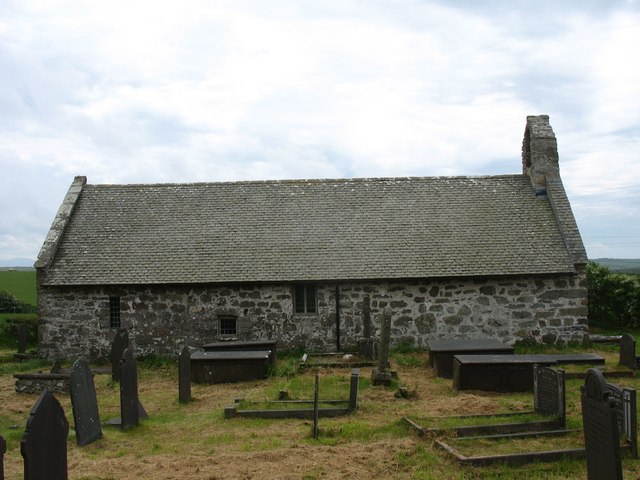
St Pabo’s Church sits quietly on a low hill in Carnarvon, its old stone walls holding centuries of stories within their rough surface. There’s nothing grand about its appearance—just a modest structure built from local stone, with narrow windows and simple arches. Yet that very simplicity gives it a sense of authenticity, as if each block was laid by hands that knew the weight of time. Unlike the soaring cathedrals of Europe, this church doesn’t demand attention. Instead, it offers something quieter: a place where the past feels close enough to touch.
The origins of St Pabo’s reach back to the early medieval period, when this part of Wales was part of the kingdom of Gwynedd. The church is named after St Pabo, one of the wandering preachers who brought Christianity to Wales in the 6th century. According to local tradition, he founded a small chapel here, the first Christian sanctuary in the area. Nothing remains of that original building—the current structure mostly dates from the 14th and 15th centuries—but the site itself carries the memory of those early days. It’s a place where history isn’t just recorded in books but lingers in the very air.
The architecture is typical of rural churches in North Wales. The nave and chancel follow the perpendicular style of the late Middle Ages, with clean lines and little ornamentation. Inside, the walls are bare, save for the dark wooden beams overhead, worn smooth by time. The most striking feature is the 17th-century carved pulpit, its surface adorned with symbols that hint at older, Celtic traditions. Nearby stands an ancient baptismal font, hewn from a single block of stone. It’s older than the church itself, possibly used in the original chapel, and its rough surface tells of countless ceremonies over the centuries.
St Pabo’s was never a wealthy parish. The people who worshipped here were farmers, fishermen, and craftsmen—ordinary lives tied to the land and sea. While Carnarvon grew into an important port and fortress, this church remained on the margins of history. Its story isn’t one of great events or famous figures but of quiet faith and community. Even in the 19th century, when many old churches were renovated in the grand Victorian style, St Pabo’s was left largely untouched. Perhaps the parish couldn’t afford it, or perhaps the locals simply didn’t want to change what had been passed down through generations.
Today, the church is open to visitors, though services are infrequent. The scent of old wood and candle wax fills the air, and soft light filters through the narrow windows, casting long shadows across the stone floor. On the walls, memorial plaques bear the names of local men who died in the world wars. These simple markers are a reminder that the church has always been part of the community, even as the world outside changed beyond recognition.
The small graveyard surrounding the church holds generations of Carnarvon’s residents. The headstones vary—some are plain slabs of stone, others more elaborate, with worn inscriptions that speak of lives long forgotten. A few are so old that the names have faded beyond reading. The cemetery is enclosed by a low wall, beyond which the land stretches toward the sea. On clear days, the view opens to the bay, where trading ships once sailed and now only the waves of the Irish Sea roll in.
St Pabo’s isn’t a place for grand sights or architectural marvels. It draws those who seek stillness and a connection to the past. There are no crowds here, no tour groups rushing through. Locals might stop by briefly—to light a candle, say a prayer, or simply sit in the quiet. That’s the beauty of it: the church doesn’t try to impress. It simply endures, as it has for centuries, a quiet witness to the unchanging rhythms of life.
If you find yourself in Carnarvon, it’s worth taking a few moments to visit. Walk through the graveyard, step inside, run your fingers over the cold stone of the old font. Maybe here, in this unassuming place, you’ll sense what people once sought when they built such churches—not for glory or wealth, but for something far simpler: a moment of peace.