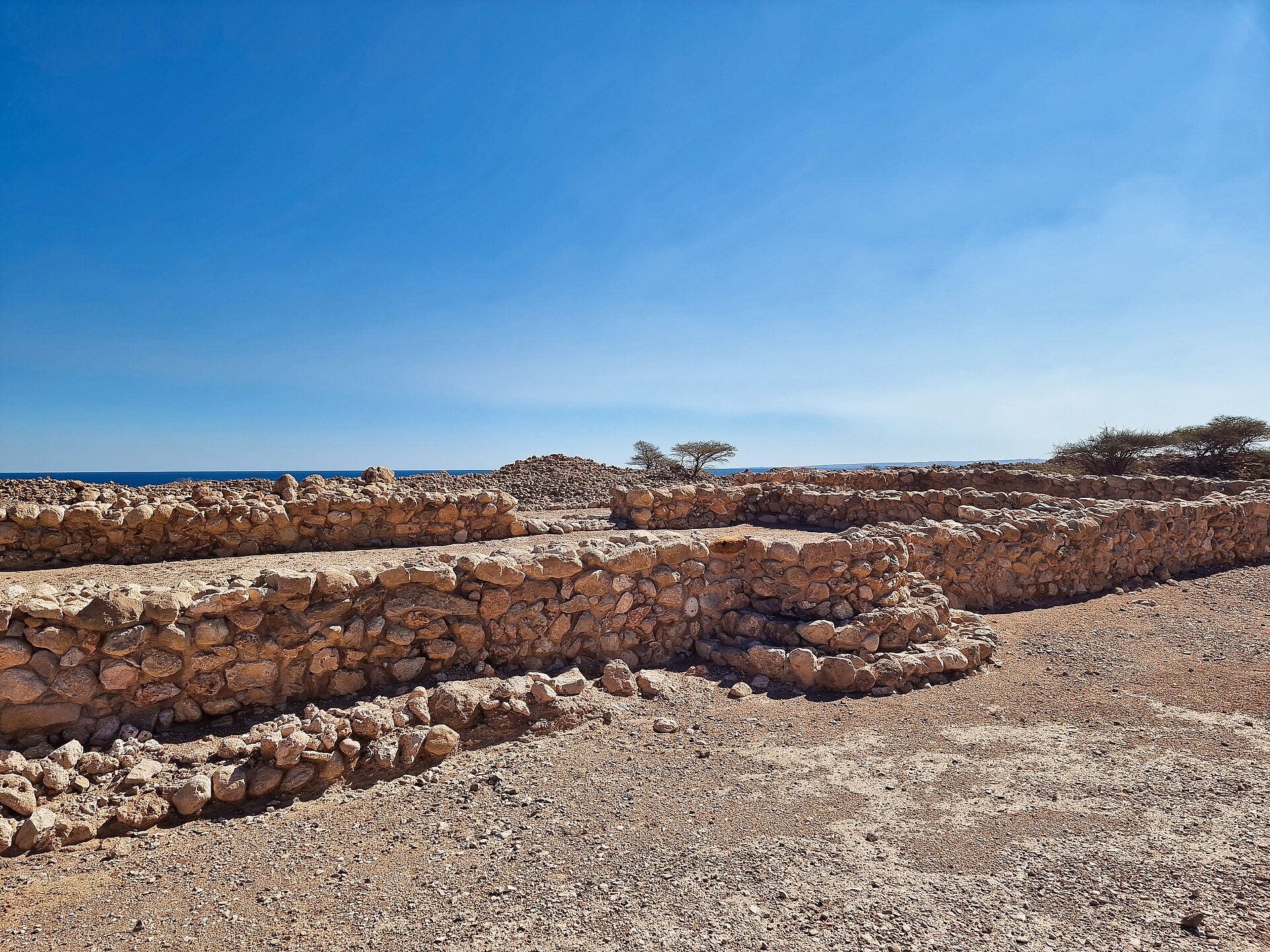
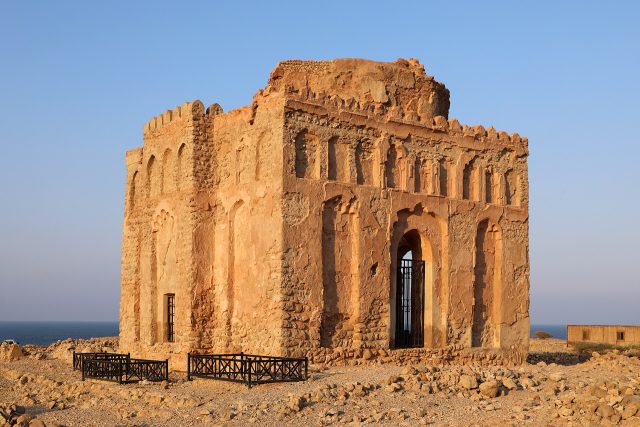
The ancient ruins of Qalhat sit quietly along Oman’s eastern coast, a place where the wind carries whispers of a time when this now-sleepy stretch of land was one of the most important trading hubs in the Arabian Peninsula. Centuries ago, Qalhat thrived as a vital link between India, East Africa, and the Persian Gulf, its harbor bustling with merchants and their precious cargoes—spices, silks, and goods from distant lands. Today, the remnants of its fortress stand as a stark reminder of that era, their weathered stones bearing the weight of history.
The fortress of Qalhat, though reduced to fragments, tells a story of resilience and strategic importance. Built in stages over generations, its walls were designed to withstand sieges and pirate raids, a necessity in a region where power and wealth were constantly contested. What remains today are the skeletal outlines of towers, the foundations of walls, and the dry moats that once brimmed with water. The stones, worn smooth by time and the relentless sun, still hold the marks of the hands that shaped them, a silent testament to the labor and skill of those who built and defended this place.
Qalhat’s golden age was tied to the sea. In the medieval period, it was a key stop on the spice and silk routes, where traders from China, India, and Africa converged. The city’s rulers controlled these lucrative trade networks, and the fortress played a crucial role in safeguarding their wealth. Perched on a rise, it offered a commanding view of the harbor and the approaches from the sea, allowing defenders to spot threats long before they reached the shore. Inside its walls, storerooms, living quarters, and water cisterns once stood, though now only faint traces of them remain in the earth.
The architecture of the fortress reflects the practical needs of its time. Thick walls, narrow arrow slits, and rounded towers were all designed to repel attackers and endure prolonged sieges. But the fortress was more than just a military stronghold—it was also a symbol of authority. In an era when power in the region shifted frequently, such fortifications ensured stability for whoever held them, whether against external invaders or internal unrest.
The city’s significance was noted by Marco Polo, who passed through Qalhat in the late 13th century. He described it as a prosperous and lively place, where goods from across the known world could be found. Polo marveled at the skill of its sailors and merchants, and the city’s markets were renowned for their variety and abundance. Yet, like many trading hubs of its time, Qalhat’s fortunes waned. The harbor silted up, trade routes shifted, and the city gradually faded into obscurity, leaving behind only its ruins to mark its former glory.
Today, Qalhat feels like a place suspended in time. The fortress, the old city walls, and the scattered tombs are the only witnesses to its past, and they speak volumes to those who take the time to listen. There are no crowds here, no modern distractions—just the quiet rustle of the wind and the distant murmur of the sea. The landscape around it is stark and open, a reminder of the harsh beauty that has always defined this part of Oman.
Visiting Qalhat is less about seeing a reconstructed monument and more about stepping into a living fragment of history. There are no polished exhibits or guided tours, just the raw, unfiltered remnants of a city that once thrived. Locals say that on still nights, the echoes of voices can sometimes be heard among the ruins, as if the ghosts of merchants and sailors still linger. Whether or not that’s true, there’s an undeniable sense of mystery here, a feeling that the past is not as distant as it seems.
For those who come to Oman seeking more than just beaches and resorts, Qalhat offers something far more profound. It’s a place for reflection, for imagining the lives of the people who once walked these paths and the bustling world they inhabited. There are no luxury hotels or bustling cafes here, just the quiet vastness of the desert and the sea, and the humbling realization of how fleeting even the greatest cities can be. The fortress of Qalhat stands not just as a ruin, but as a reminder that history is written in stone—and sometimes, in silence.