Qalhat is one of those rare places where the past lingers just beneath the surface, as if time itself has paused to let history breathe. Tucked along Oman’s eastern coast, this once-thriving port city was a cornerstone of trade and culture in the medieval Arabian Peninsula, a gateway between the Persian Gulf and the Indian Ocean. Today, its ruins stand quietly against the desert and sea, a whisper of the bustling life that once filled its streets. Walking through the archaeological park feels less like visiting a museum and more like stepping into a story still unfolding, where the wind carries echoes of merchants, sailors, and travelers who passed through centuries ago.
The city’s golden age spanned the 12th to 15th centuries, when Qalhat became a vital hub for trade routes stretching from Persia to India and East Africa. Ships laden with spices, silk, and precious stones docked in its harbor, while caravans arrived overland bearing goods from distant lands. Marco Polo, who visited in the late 13th century, described Qalhat as a prosperous and wealthy city, a testament to its importance in the medieval world. Arab geographers of the time also wrote of its strategic position, where cultures collided and commerce flourished. Beyond its economic significance, Qalhat was a melting pot of traditions, where Persian, Indian, African, and Arab influences blended seamlessly.
At the heart of the city was its harbor, now little more than a faint outline along the shore. In its prime, this was where the pulse of Qalhat beat strongest—warehouses lined the coast, storing goods from across the known world, while the docks buzzed with activity. Trade was constant, but the city truly came alive during the monsoon season, when favorable winds made sea voyages possible. Local sailors, skilled in navigating by the stars and currents, passed down their knowledge through generations. Though the sea has since receded, the remnants of the harbor still hint at the energy that once defined this place. If you listen closely, you can almost hear the creak of ships’ ropes and the murmur of voices in a dozen languages.
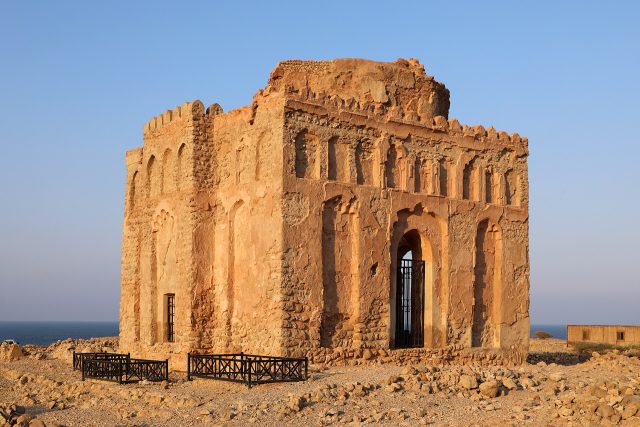
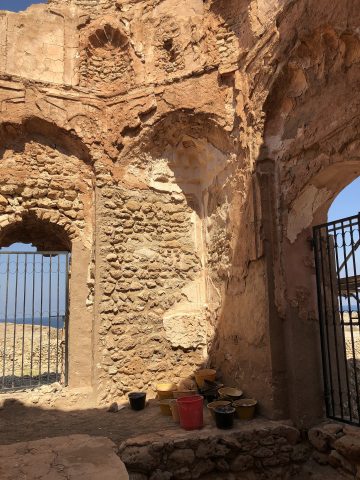
The most striking remnant of Qalhat’s past is the mausoleum of Bibi Maryam, a 12th-century structure that still stands proudly amid the ruins. Dedicated to a revered local saint, it is one of the finest examples of early Islamic architecture in Oman. Built from limestone, the mausoleum features intricate carvings typical of the region’s craftsmanship. Inside, its walls were once adorned with Quranic inscriptions, and sacred relics were kept here. Though time has worn away much of its grandeur, the simplicity of its design remains striking. For locals, the mausoleum is still a place of reverence, and occasional pilgrims visit to pay their respects.
The archaeological park covers what was once the city’s residential and commercial heart, where markets, mosques, and public buildings once stood. Excavations over the decades have uncovered fragments of pottery, coins, jewelry, and everyday objects that offer glimpses into the lives of Qalhat’s inhabitants. One of the most fascinating discoveries is the city’s ancient water system, an engineering marvel that allowed its people to thrive in an arid climate. Underground channels carried water from distant sources, a testament to the ingenuity of its builders. Each new find adds another layer to the story of Qalhat, revealing how its people adapted to their environment and connected with the wider world.
Today, Qalhat is a place of quiet reflection. There are no crowds, no souvenir stalls, just the sound of the wind and the distant murmur of the sea. Visitors can wander along paths that wind through the ruins, imagining the lives of those who once called this place home. Occasionally, archaeologists lead tours, sharing insights from recent excavations and breathing life into the crumbling walls. For anyone interested in Oman’s history, Qalhat is a must-visit—a place where the country’s past feels tangible, where the foundations of its culture were laid centuries ago.
The sea remains an ever-present force here, just as it was in Qalhat’s heyday. From the ruins, the view stretches across the Arabian Sea, the same waters that once carried traders and explorers to distant shores. On clear days, the outlines of nearby islands shimmer on the horizon, while sunsets paint the sky in hues of gold and crimson. Even now, local fishermen set out in traditional wooden boats, their way of life largely unchanged over the centuries. If you’re lucky, you might see them return with the day’s catch, or even sample fresh seafood prepared using age-old recipes.
Visiting Qalhat is more than just a journey into history—it’s a chance to see Oman as it truly is, stripped of modern distractions. There are no luxury resorts or bustling attractions here, just the raw beauty of a place where the past and present coexist. The city serves as a reminder that greatness isn’t always measured in size or wealth, but in the ability to leave a lasting mark. Qalhat doesn’t try to impress; it simply exists, and in that quiet strength, it tells its story. All you have to do is listen.