The ancient city of Qalhat is one of those rare places where time seems to have paused, leaving behind only the faintest traces of its former glory. Tucked along Oman’s eastern coast, a few hours’ drive from the modern capital of Muscat, it was once a thriving port that connected the Arabian Peninsula with India and East Africa. Today, little remains of its grandeur beyond scattered ruins, yet even these fragments tell a story of trade, seafaring, and the cultures that shaped this region over centuries.
Qalhat began as a modest settlement in the 11th century but by the 13th century had grown into one of the Indian Ocean’s most important trading hubs. Its strategic location made it a natural crossroads for merchants carrying spices, silk, gemstones, and incense. More than just a port, Qalhat was a meeting point of civilizations, where Arab, Persian, Indian, and African traditions blended. Travelers and chroniclers of the time, including Marco Polo, described it as a wealthy and bustling city where goods from across the known world could be found.
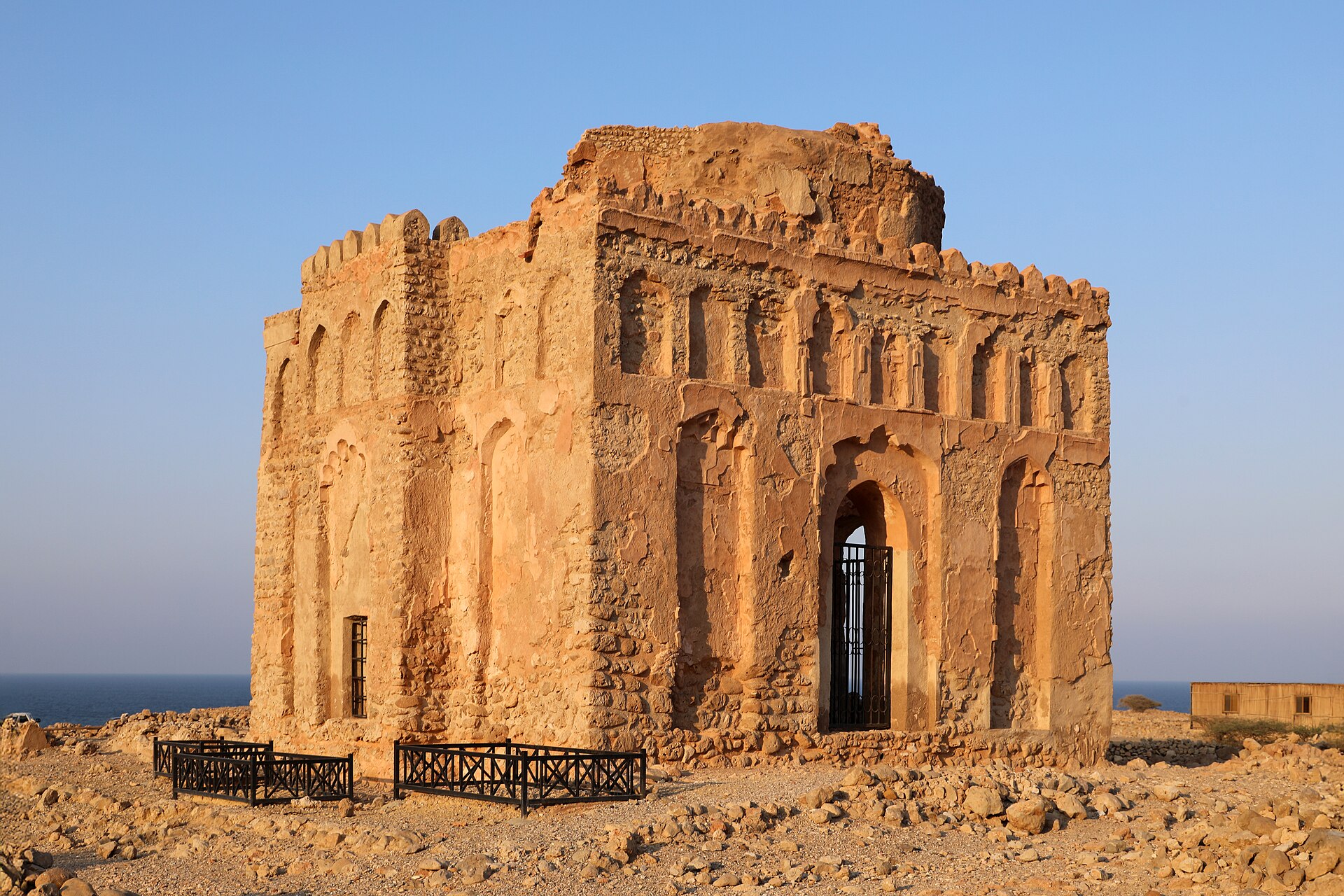
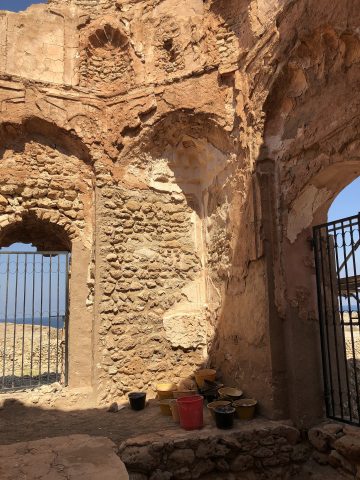
The ruins of Qalhat offer a glimpse into what the city must have looked like at its height. The most striking surviving structure is the mausoleum of Bibi Maryam, a small but elegant building with a dome and intricate carvings on its facade. It likely served as the tomb of a noblewoman or local saint. Around it lie the remnants of residential quarters, markets, and public buildings, all constructed from limestone and clay. The city walls, once a formidable defense, now stand half-buried in sand, their outlines still visible against the desert landscape.
Beyond commerce, Qalhat was also a religious and cultural center. One of the region’s largest mosques once stood here, though today only its foundations and fragments of columns remain. The city was known for its skilled artisans—potters, weavers, and jewelers—whose work was prized from Zanzibar to the Malabar Coast. In the 13th century, Qalhat became part of the Hormuz Empire, a powerful state that controlled trade in the Persian Gulf and beyond. Yet by the 16th century, the city had begun to decline, possibly due to shifting trade routes or natural disasters like earthquakes and floods.
Now, Qalhat is a quiet place where the occasional visitor or local might come to feel the weight of history. The desert slowly reclaims the ruins, and the sound of the waves carries a reminder of the life that once thrived here. The surrounding landscape is stark—a vast, empty plain giving way to rocky hills and the endless sea. Time moves differently here: no crowds, no noise, just the silence of ancient stones and the whisper of sand underfoot.
Visiting Qalhat isn’t so much about ticking off sights as it is about stepping into the past. There are no museum signs or reconstructions, just the raw remnants of a civilization left open to interpretation. Locals say that on clear nights, you can still hear the echoes of distant voices—ghosts of merchants and sailors wandering the ruins, reliving their journeys. It’s probably just the wind, but in a place like this, even the impossible feels plausible.
Qalhat is a UNESCO World Heritage site, a recognition of its historical significance. Yet unlike many such places, it hasn’t become a tourist hotspot. There are no souvenir shops or cafes, just space and silence. For those seeking more than just pretty views—a real connection to the past—it’s a revelation. It serves as a reminder that the greatness of civilizations is fleeting, but their memory can outlast the stones themselves.
If you find yourself in Oman, Qalhat is worth the journey. The drive from Muscat takes a few hours, but the destination makes it worthwhile. The best times to visit are early morning or late afternoon, when the sun is gentler and the light casts long shadows over the ruins, highlighting their texture. Take your time: sit on a stone, listen to the wind, and imagine the life that once filled these streets. In moments like these, history feels less like a series of dates and more like a living thread weaving past and present together.