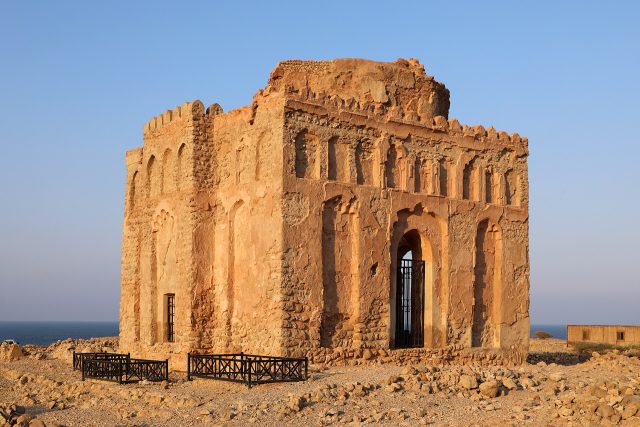
The mausoleum stands in what’s left of Qalhat, a coastal village now quiet but once a key stop on trade routes between Arabia, India, and East Africa. From the 13th to the 15th centuries, merchants passed through here with silk, spices, and precious stones. The city was also a center of political and religious life, rivaling Muscat and Sohar. The mausoleum, built for a local saint or noblewoman, is one of the few structures that survived.
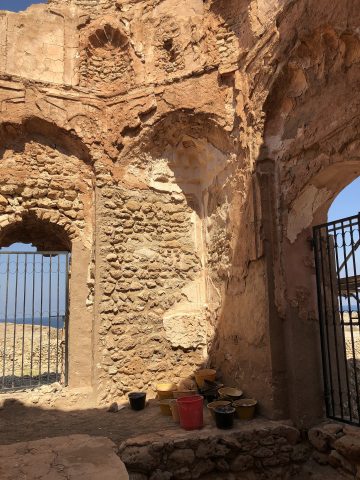
The building is a square of limestone with a flat roof and an arched entrance. Inside, a mihrab points toward Mecca. The walls once had carvings and inscriptions, but most have worn away. Small openings near the ceiling keep the interior cool, a design common along Oman’s coast where climate shaped architecture.
Who was Bibi Maryam? Legends say she was a righteous woman, perhaps a Sufi mystic or related to local rulers. Such tombs often became pilgrimage sites, places where people sought blessings or healing. In Qalhat, where trade and seafaring defined life, faith mattered just as much. She may have been a protector of sailors or merchants.
The mausoleum isn’t on the usual tourist path. You find it while walking the empty streets of Qalhat, where only ruins of fortress walls and mosques remain. The city lost its importance long ago, but that abandonment leaves the place quiet. No crowds, no guides—just the sound of the sea and the feeling that time hasn’t moved.
Qalhat was forgotten until archaeologists rediscovered it in the 20th century. The mausoleum survived earthquakes and raids. In 2018, UNESCO added Qalhat to its World Heritage list, though it’s still less known than Nizwa Fort or Muscat’s palaces.
Visiting isn’t about checking off sights. Around the mausoleum lie the ruins of the old city: markets where frankincense and pearls were traded, foundations of homes, and crumbling mosque walls. Together, they make you feel like you’re walking through a ghost town, where every grain of sand seems to hold memories.
Come early in the morning or late afternoon, when the sun is softer. The air smells of salt and seaweed, and the ocean stretches into the distance. You might meet locals—fishermen or herders—who know stories of the old days or can point you to other hidden spots.
The mausoleum isn’t grand. It’s a reminder that cities rise and fall, trade moves on, but some things endure. That’s why it still draws those who look for meaning, not just beauty. Here, there’s only silence, time, and a chance to think about what lasts.