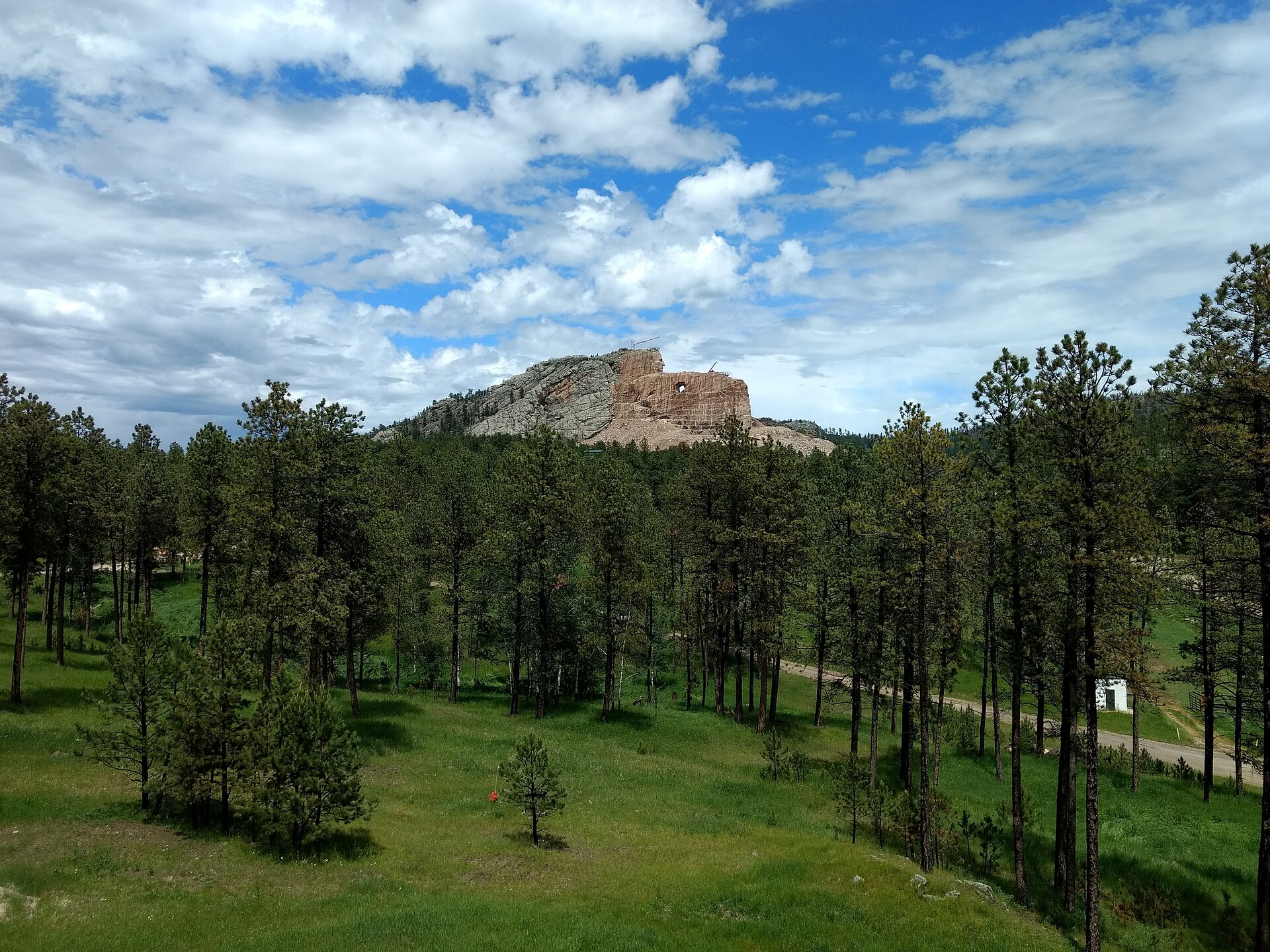
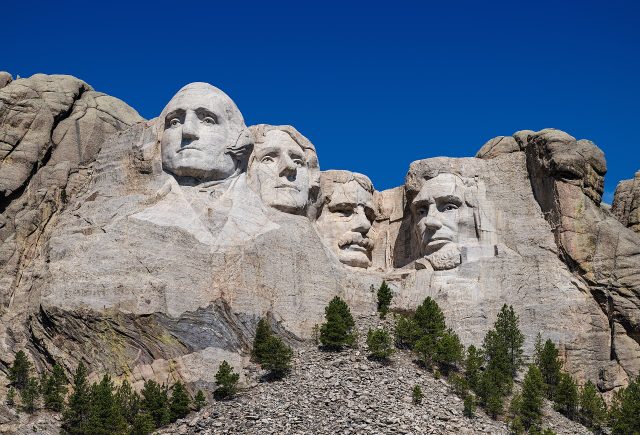
The Crazy Horse Memorial is unlike any other monument in the world. Carved into the granite of the Black Hills in South Dakota, it honors Crazy Horse, the Oglala Lakota leader who became one of the most enduring symbols of Native American resistance. While most memorials are completed within years, this one has been a work in progress for decades—and may remain so for generations to come. When finished, it will be the largest mountain carving in the world, dwarfing even the nearby Mount Rushmore, which lies just a short drive away.
The idea for the memorial took shape in the mid-20th century, when sculptor Korczak Ziolkowski, a Polish-American artist, was approached by Henry Standing Bear, a Lakota chief. Standing Bear wanted a monument that would honor not just Crazy Horse but all Native Americans, their culture, and their struggle to protect their lands. Ziolkowski, already known for his monumental works, accepted the challenge, fully aware that it might take a lifetime—or longer. The Black Hills were a deliberate choice: sacred to the Lakota, these mountains were the site of pivotal moments in their history, including the place where Crazy Horse was killed in 1877.
More than seventy years later, the memorial is still far from complete. The rough outline of Crazy Horse’s face is visible, along with his flowing hair and the beginnings of an outstretched arm. When finished, the sculpture will depict him on horseback, his arm pointing toward the lands his people once called home. The scale is staggering—nearly 640 feet wide and 560 feet high. For perspective, the presidential faces on Mount Rushmore are just 60 feet tall.
The work is painstakingly slow, blending traditional methods with modern engineering. Every blast of dynamite and every chisel strike is carefully calculated to avoid damaging the rock. The project relies entirely on private funding and revenue from the visitor complex at the base of the mountain, making it one of the few major memorials in the world not supported by government money. This independence adds to its unique story.
Visitors don’t just see a construction site—they experience a living tribute to Native American culture. Nearby, the Indian Museum of North America houses exhibits on tribal traditions, crafts, and history. The complex hosts cultural demonstrations, from beadwork and quillwork to traditional dances and storytelling. In the summer, festivals draw Native artists, performers, and visitors from across the country. The atmosphere is quiet and respectful, far removed from the crowds of more commercialized tourist spots.
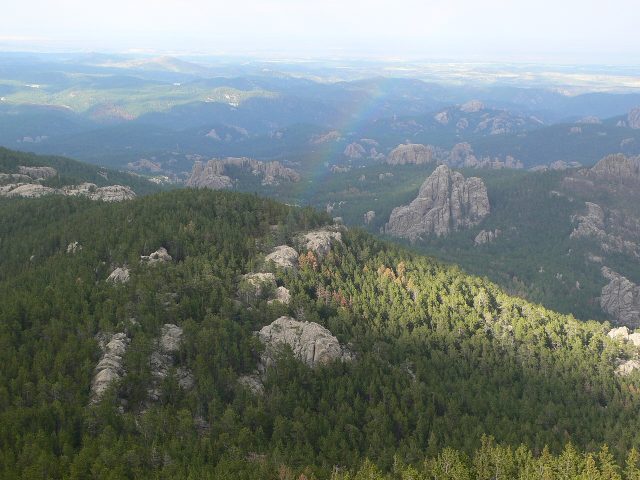
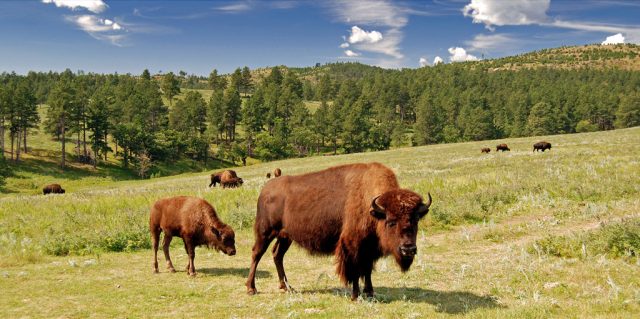
The Black Hills themselves are a place of rugged beauty. Forests give way to open plains, and the air carries the scent of pine and sage. Wildlife—deer, coyotes, even bison—roam freely in the surrounding wilderness. Many visitors find that exploring the landscape is as meaningful as seeing the memorial itself. On clear days, the view from the mountain stretches for miles, offering a glimpse of why these lands hold such significance for the Lakota.
The Crazy Horse Memorial is more than a monument; it’s an ongoing conversation about history, memory, and who gets to tell the story. Unlike most memorials, which are completed and then forgotten, this one evolves with each passing year. Some see it as a powerful tribute to Native resilience, while others question whether carving a sacred mountain is the right way to honor Crazy Horse. The debate itself is part of what makes the memorial so compelling.
For many Native Americans, Crazy Horse is more than a historical figure—he represents defiance, dignity, and the fight to preserve their way of life. The memorial, whether finished or not, has already become a place where that legacy is kept alive. It’s a rare space where history isn’t fixed in stone but continues to unfold, inviting visitors to reflect on whose stories are remembered and why.
A visit here is less about ticking off a tourist attraction and more about stepping into a different kind of experience. There’s no rush, no scripted narrative—just the quiet presence of the mountain and the sense that something meaningful is taking shape. The timeline doesn’t matter. What matters is that the memorial exists, challenging how we think about history and who gets to shape it. And perhaps that’s why it draws people in—not as spectators, but as witnesses to something still being written.