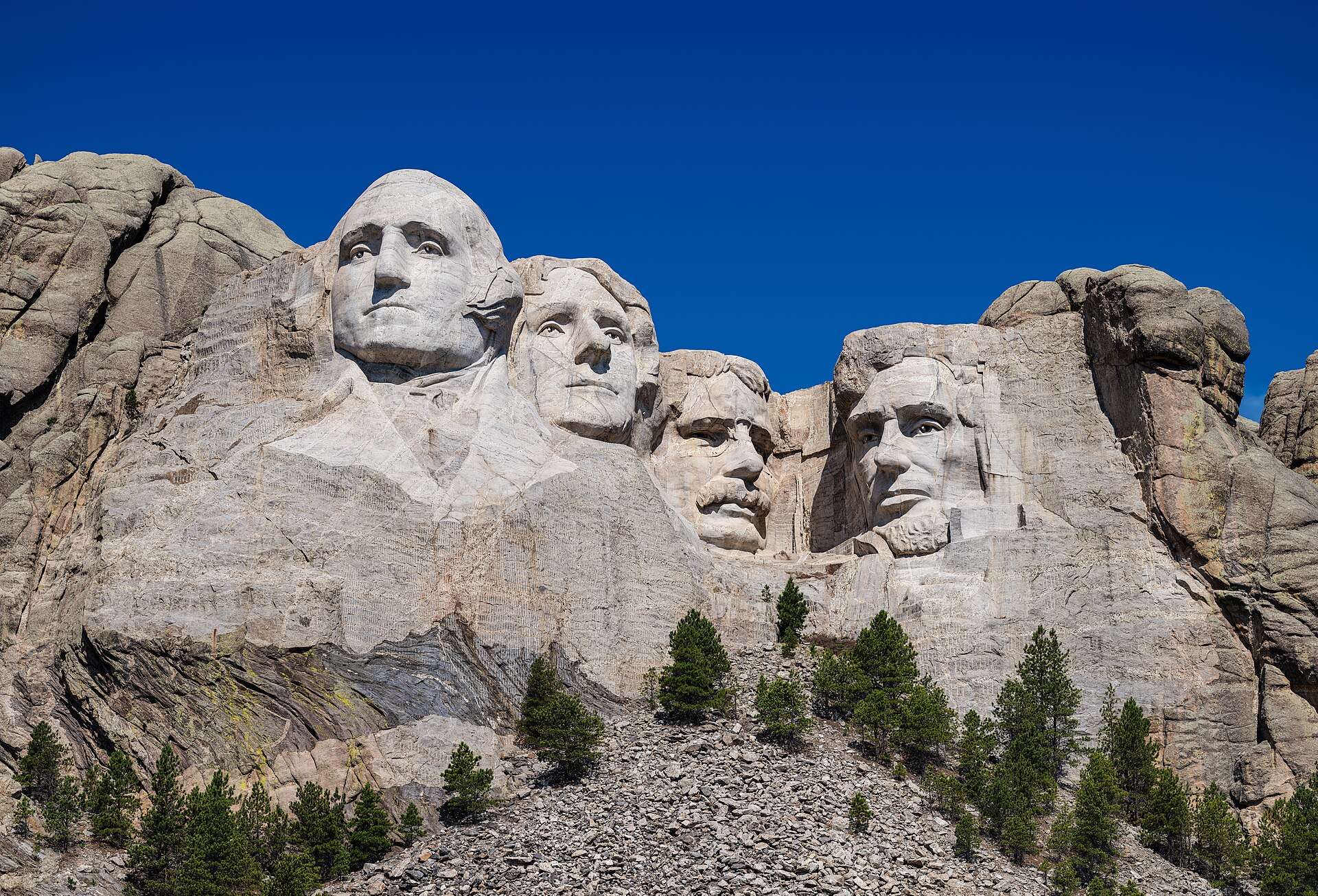
You think you know Mount Rushmore until you stand beneath it. The four presidential faces—Washington, Jefferson, Roosevelt, Lincoln—are carved into granite, each head sixty feet tall. Washington’s nose alone stretches twenty feet. The size forces you to tilt your head back, squinting at the sky, trying to take it in. There’s no crowd like Times Square, no neon, just stone and history.
Doane Robinson wanted to draw visitors to the Black Hills, but Gutzon Borglum insisted on presidents. He chose figures representing the nation’s founding, expansion, democracy, and preservation. Work began in 1927 and lasted fourteen years. Borglum died before completion, leaving his son to finish the details. The result is more than a sculpture—it’s a record of ambition and labor.
The granite here resists wind, rain, and freeze-thaw cycles. The faces have barely changed in eighty years, though winters drop to thirty below. Workers hung from ropes, using dynamite to blast rock before refining features with chisels. One misstep meant a drop of hundreds of feet. Up close, you see tool marks, faint lines where hands shaped stone.
The road to the monument winds through pine forests, narrowing as you climb. The parking lot is a short walk from the viewing area, where the mountain appears. Early morning or late afternoon light makes the granite glow. At night, floodlights illuminate the sculpture, making the presidents seem alive.
The air is still, broken only by visitors’ murmurs or wind through the trees.
A museum near the base holds hammers, chisels, and photographs of workers on ropes. Models show how Borglum’s vision changed—originally, the faces were meant to be deeper. A half-mile trail leads closer, winding through the forest until you’re beneath the sculpture. From here, you see cracks in the stone, deliberate chisel strokes, and how light catches a cheekbone.
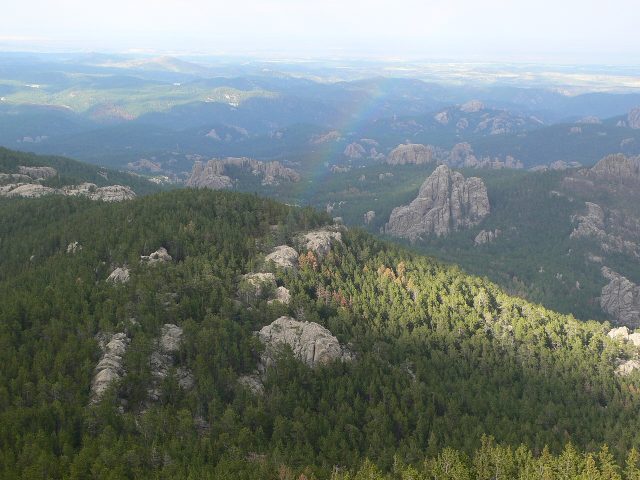
The Black Hills surround the monument. Summer air is cool and pine-scented. Autumn turns aspens gold and oaks red. Winter dusts the peaks with snow, making the faces look austere. Locals walk the trails with their families, spotting deer among the trees.
What strikes you isn’t the monument but how people respond. Visitors speak softly or stand silently. Some take photos, others linger, trying to reconcile the scale with the quiet. There’s no fanfare—just the mountain, the faces, and the sense of something larger. Maybe that’s why people return: to feel it again, to remember standing in history’s shadow.