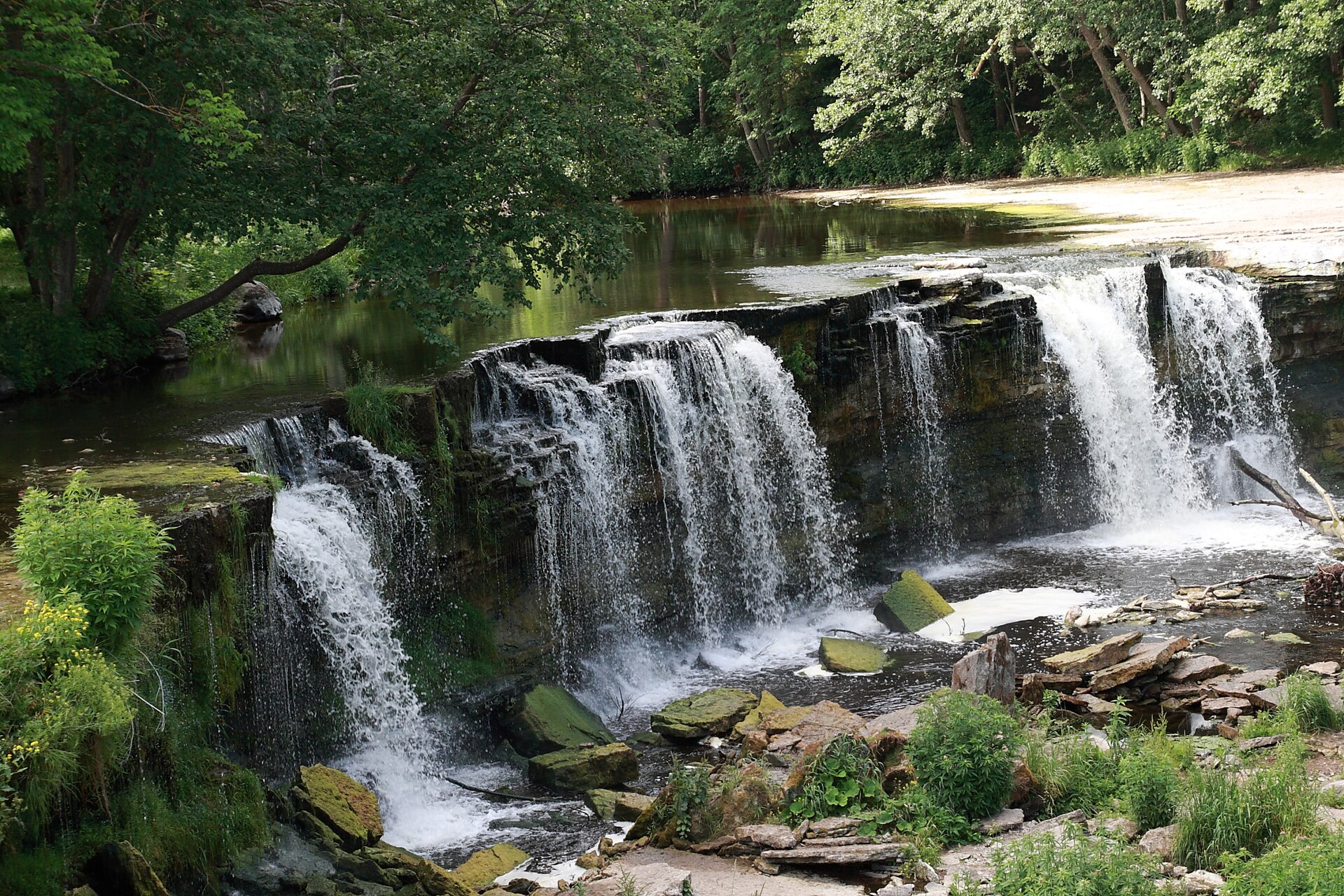
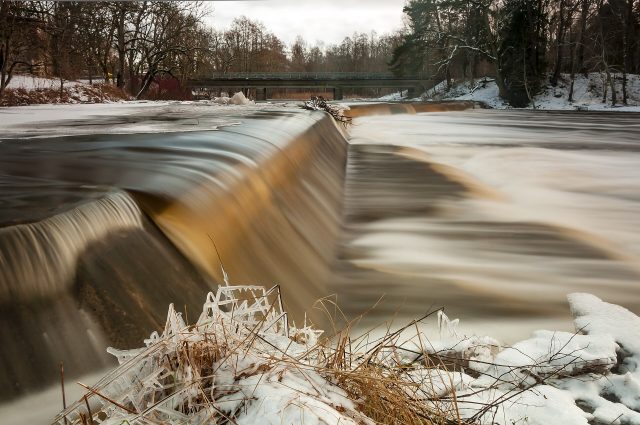
Keila Waterfall is one of those quiet corners of Estonia where nature does the talking. Tucked away near the small town of Keila, it doesn’t draw the same crowds as Narva or Jägala Falls, and that’s part of its charm. There are no souvenir stalls, no tour guides shouting over the noise, just the steady rush of water, the damp scent of moss and earth, and the occasional call of a bird cutting through the silence. At just six meters high, it’s modest in size, but its power and beauty don’t depend on scale. The best times to visit are spring, when meltwater swells the Keila River into a churning torrent, or autumn, when the surrounding forests blaze with gold and crimson.
The waterfall has long been tied to the life of the town itself. In the Middle Ages, the area was part of an important trade route, and the river powered mills that ground grain for the region. Records from the 17th century mention the falls, marking the beginning of industrial activity along its banks. By the 19th century, the spot had become a favorite retreat for locals and visitors from Tallinn, who came to stroll along the riverbanks. That’s when the first paths and bridges appeared, making the area more accessible. Today, well-maintained trails and viewing platforms let visitors get close to the water without disturbing the landscape.
There’s no grand architecture here—nature takes center stage. But if you look closely, you’ll notice traces of human history: the weathered stone pillars of an old bridge, the crumbling foundations of long-gone mills, and the simple wooden walkways that lead down to the water. These details don’t disrupt the scene; they add layers to it, hinting at generations of people who lived alongside the falls without trying to tame them. Winter transforms the place entirely. The water slows to a trickle, freezing into jagged ice formations, while snow blankets the banks, turning the scene into something out of a fairy tale.
Beyond its natural beauty, Keila Waterfall holds a place in Estonia’s cultural imagination. Over the years, it has inspired artists, writers, and musicians. Locals say the 19th-century composer Aleksander Kunileid often visited, drawing inspiration from the sound of the rushing water. Today, people still come not just for photos but to simply sit by the river, listening to the rhythm of the falls. In summer, the grassy banks are perfect for a quiet picnic. In winter, the frozen landscape invites long walks through the snow, the only sound the crack of ice underfoot.
Getting here from Tallinn is easy—just a 30-minute drive or bus ride through the Estonian countryside. The road winds past open fields, patches of forest, and sleepy villages where life moves at its own unhurried pace. If you take the bus, you’ll arrive in central Keila, and from there, it’s a 20-minute walk to the falls. The route is straightforward: first through the town park, then along the river, past a mix of old wooden houses and newer homes. Signs point the way, so it’s hard to get lost.
The waterfall sits in a small gorge, flanked by forest on either side. One bank rises steeply, while the other slopes gently, covered in shrubs and wildflowers. The best view is from the bridge just upstream, where you can watch the water tumble over the ledge, foaming white before smoothing out over the rocks below. On sunny days, a rainbow sometimes arcs across the mist—a fleeting spectacle that makes the trip worthwhile.
For those who enjoy walking, the area offers a few trails. One follows the river upstream to an old railway bridge, where the view opens up over the valley. Another leads through the woods to a small lake, home to ducks and other waterfowl. Neither walk is long, but both let you feel like you’ve stepped into a world apart, where time moves differently.
What makes Keila Waterfall special is what it doesn’t have. There are no luxury hotels, no crowded cafes, no attractions competing for attention. It’s a place where you can escape the noise of the city without venturing too far from civilization. The falls don’t demand anything from visitors except respect—no littering, no shouting, no need to conquer the landscape. It simply exists, as it has for centuries, and that’s enough.