
Narva
Estonia · 8 places
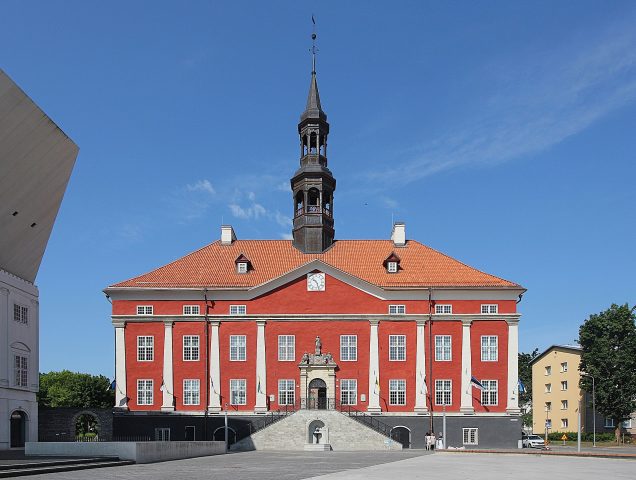
Photo: A.Savin, FAL
Narva sits where Europe brushes against Russia, a place where the past and present blur into something quietly extraordinary. The river here doesn’t just flow—it divides two countries, with the Russian town of Ivangorod standing directly across the water, its fortress walls mirroring Narva’s own. This proximity has shaped the city for centuries, leaving it suspended between identities: a borderland, a crossroads, a place where time moves differently. There’s no rush here, no grand declarations of importance—just the steady rhythm of a city that has seen empires rise and fall without ever losing its own quiet pulse.
The architecture tells the story of those empires, layer by layer. The Hermann Castle, with its thick medieval walls and watchtowers, still stands as a reminder of the Livonian Order’s rule, when Narva was a strategic stronghold. Later came the Swedes, who left behind elegant Baroque mansions and a town hall that still anchors the city center. But the most visible imprint is Soviet: wide boulevards lined with utilitarian apartment blocks, public buildings that feel frozen in the 1970s, and a sense of scale that dwarfs the older streets. In recent years, Narva has begun to peel back the layers—restored facades, new cafes, and museums breathing life into old spaces—but the past lingers in the details, from the faded shop signs to the way the river reflects both the castle and the cranes of a modern border crossing.
Life here moves at its own pace, unhurried and unpretentious. Narva is Estonia’s third-largest city, yet it feels more like a small town, where people know their neighbors and the biggest excitement might be a summer festival in the castle courtyard or a swim at the reservoir’s beach. The riverfront is the heart of the city, a place where locals gather to walk, fish, or just sit and watch the water. In winter, Narva slows even further, the streets quiet under a blanket of snow, the only sounds the occasional crunch of footsteps or the distant hum of a truck crossing the border. There’s no tourist hustle, no need to perform—just the easy, unspoken understanding that this is a place where time isn’t measured in hours, but in seasons.
What makes Narva unique is the way it absorbs influences without losing itself. The city is a patchwork of languages—Estonian, Russian, and a hybrid of the two—spoken in the same breath. Cafes serve herring with sour cream alongside pelmeni, and grocery stores stock both Estonian black bread and Russian pickles. It’s not a melting pot so much as a place where differences coexist, unforced and unremarkable. Narva doesn’t try to be Tallinn or St. Petersburg; it doesn’t have to. It’s content to be itself, a city that has spent centuries on the edge of things, quietly accumulating stories.
For travelers, Narva offers something rare: authenticity without the crowds. There are no guided tour groups here, no souvenir shops hawking mass-produced trinkets. Instead, there’s the chance to wander the fortress walls and imagine the battles they’ve witnessed, or to sit by the river and watch the border guards on the opposite bank. The city doesn’t demand attention—it simply exists, and those who take the time to notice are rewarded with a sense of place that’s hard to find elsewhere. Narva isn’t a destination for everyone, but for those who seek it out, it leaves a quiet, lasting impression.
See & Do
All of them


Places on the map
Marker colour follows the categoryClimate and weather
Detailed weather: Narva- Average temperature
- 7 °C
- Precipitation per year
- 751 mm
Average air temperature
°C
-5
-3
-0
5
12
17
18
17
12
6
2
-2
Jan
Feb
Mar
Apr
May
Jun
Jul
Aug
Sep
Oct
Nov
Dec


