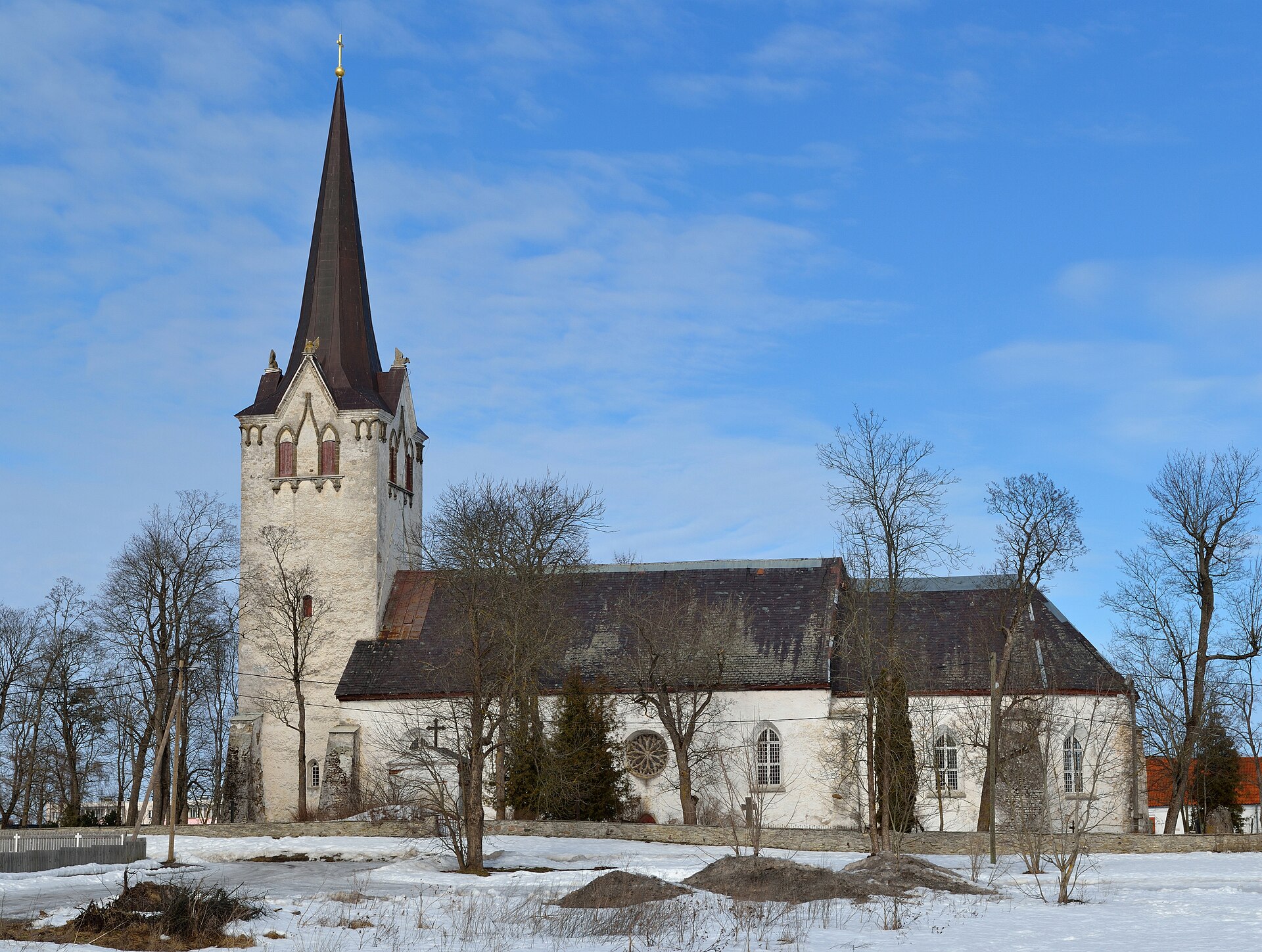
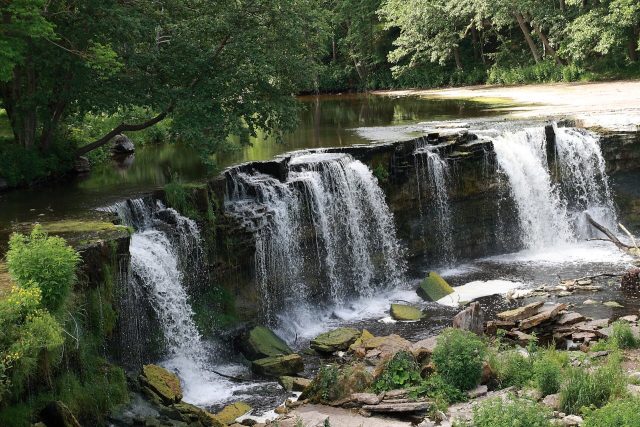
Perched on a gentle hill above the Keila River, St. Michael’s Church has watched over the town for centuries, its presence as quiet as it is enduring. There’s something about the way the light filters through its tall windows or how the cool stone walls seem to hold the weight of time that makes history feel alive here—not as something confined to plaques or exhibits, but as a living, breathing part of the place. The church isn’t just a monument; it’s a thread woven into the fabric of Keila itself, surviving wars, fires, and the slow march of years while retaining a quiet dignity that feels almost human.
The first records of the church date back to the 13th century, when this land was under Danish rule. Back then, it was a simple wooden structure, typical of the early Middle Ages, but by the 14th century, it had been rebuilt in stone. In those days, the church wasn’t just a place of worship—it was also a fortress. Its thick walls and narrow windows could shelter villagers during raids, a reminder of how closely faith and survival were intertwined in those times. Over the centuries, the building was expanded and altered, but its core remained unchanged. The church we see today took shape mostly in the 17th and 18th centuries, when Gothic elements gave way to the more restrained lines of Baroque.
Inside, the church feels both vast and intimate. The high vaulted ceilings, supported by sturdy columns, create a sense of airiness despite the solidity of the stone. The altar is adorned with carved details, but there’s nothing overly ornate about it—everything here is balanced, almost understated. The 17th-century pulpit, with its delicate woodwork and gilding, stands out as one of the few decorative flourishes. The walls bear old epitaphs, silent witnesses to the lives of those who once prayed here, while the organ in the choir loft still fills the space with music on special occasions.
Surrounding the church is a small cemetery, where generations of Keila’s residents lie at rest. There are no grand tombs, just simple stones bearing names and dates, some dating back to the 18th century. Walking among them feels like stepping through time, each marker a quiet story. The cemetery is enclosed by a low stone wall, beyond which a park stretches out—a peaceful place to wander, where the river’s murmur blends with the rustling of leaves. In summer, the shade of the trees makes it an ideal spot to escape the heat, while in winter, the snow softens the edges of the landscape, turning it into something almost dreamlike.
St. Michael’s Church is deeply tied to Keila’s history. In the Middle Ages, it was the heart of a parish that included several surrounding villages, and by the 19th century, as Keila began to grow, it became a symbol of the town’s identity. The church has seen its share of conflict—it stood near the front lines during wars, yet each time, it was restored. During the Soviet era, the building was repurposed as a warehouse, and it wasn’t until the 1990s that it was returned to the faithful. Today, it remains an active place of worship, with regular services, but it’s also open to anyone who wants to step inside, whether to pray, explore, or simply sit in silence.
The architecture of the church tells a story of its own. The original Gothic style is still visible in the pointed arches and tall windows, but later additions brought Baroque influences—softer lines, decorative window frames, and a more symmetrical layout. The bell tower, added in the 18th century, was once one of the tallest in the region, serving as a landmark for travelers. What’s fascinating is how the church wasn’t built all at once but in stages, and you can see that in the varying shades of stone and the seams between the blocks. Each era left its mark, and the result is a building that feels like a patchwork of history, each layer revealing something new.
Visiting St. Michael’s isn’t just about seeing a historic site; it’s about experiencing the rhythm of a small Estonian town. Keila isn’t like Tallinn with its medieval charm or Pärnu with its seaside allure. Life here moves at a slower pace, and the church sits at its quiet center. In the summer, organ concerts draw locals and visitors alike, filling the space with music that echoes off the stone walls. In winter, the church takes on a different kind of beauty—snow dusts the roof, and the warm glow from the windows spills onto the frost-covered square, creating a scene that feels both timeless and deeply peaceful.
From the hill where the church stands, the view stretches out over Keila and beyond. The river winds through the town, and in the distance, forests and fields begin—a classic Estonian landscape. On clear days, the horizon seems endless, a reminder that the church was once more than just a place of worship. It was a lookout, a vantage point from which to spot danger or simply take in the beauty of the surroundings. Today, that view is part of the town’s identity, and many come here just to stand, think, or capture the moment in a photograph.
St. Michael’s Church isn’t the kind of place that dazzles you at first glance. Its beauty lies in the details—the way the light plays on the stone, the stories etched into the walls, the way it has become a natural part of Keila’s life. There are no crowds here, no tourist traps, no commercial hustle. Just silence, stone, and the quiet passage of time. Maybe that’s why it feels so genuine, so unassuming. It’s a place where the past and present coexist without fanfare, where you can touch history without ever leaving the present behind.