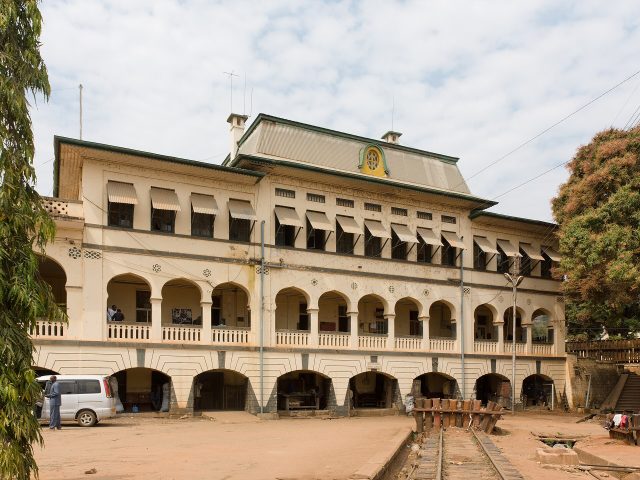
Kigoma is a town where time moves to the rhythm of Lake Tanganyika. The streets are dusty, lined with low hills and the quiet hum of daily life. Among the modest buildings, the Catholic cathedral stands unassuming, yet impossible to ignore. It doesn’t demand attention like the grand cathedrals of Europe. Instead, it draws you in with its simplicity, a building that feels as though it has always been part of the landscape.
The cathedral was built in the early 20th century, when Kigoma was a small settlement on the edge of German East Africa. Catholic missionaries arrived in the late 1800s, bringing their faith to a region shaped by traditional beliefs. The need for a permanent place of worship led to its construction. Local materials—stone and brick—were adapted to the African climate. The result is a structure that blends into its surroundings, a quiet witness to the changes that have swept through the region.
The architecture is understated. The facade has simple arches and narrow windows, designed to keep out the harsh sun while allowing light to filter through. The red-tiled roof, faded by years of sun, adds warmth. Inside, the space is open and airy, with wooden walls and a tiled floor once imported from Europe. The altar is modest, free of ornate decorations. This simplicity gives the cathedral its character. There are no gilded statues or elaborate frescoes—just authenticity.
The cathedral is more than a place of worship. It’s where the community gathers. Locals come for services, celebrations, or just to escape the midday heat. In Tanzania, Catholicism exists alongside traditional beliefs, and this blending is reflected in the parish. The cathedral feels like a communal space, where people connect.
Its history is tied to Kigoma’s. The town was a crossroads where trade routes converged. During the colonial era, it grew in importance. The cathedral observed changes—first under German rule, then during the struggle for independence. World War I brought conflict, and the cathedral was repurposed as a hospital. Look closely: faint cracks in the walls, patches of discolored plaster.
Today, the cathedral remains one of the few places in Kigoma where the past feels tangible. The town has changed around it, but the cathedral endures. Outside, vendors sell fruit and fish, children play soccer, and elders sit in the shade. Inside, the noise fades. The scent of wax and aged wood lingers. Light streams through narrow windows, casting a soft glow.
For travelers, the cathedral offers a different perspective. While Tanzania is often associated with safaris and Zanzibar’s beaches, Kigoma reveals a slower, quieter life. There are no crowds here. You can sit on a bench outside, watching locals, or step inside to feel the weight of history. Past and present coexist without fanfare.
The cathedral asks nothing of its visitors except respect. No tickets, no strict rules—just an invitation to experience the space as it is. In a world where so many places are polished for tourists, this one remains genuine. If you ever visit Kigoma, take a moment to sit, listen to the quiet, and you might understand why it means so much to those who live here. It’s not just a building. It’s part of the town’s soul.