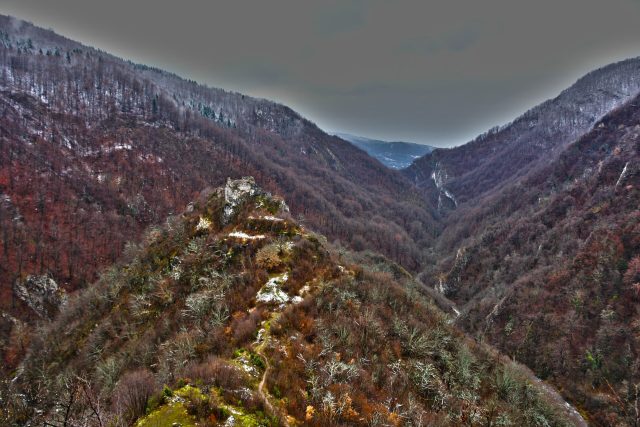
Vareš is one of those quiet Bosnian towns that time seems to have forgotten. Tucked away among rolling green hills and old mining settlements, it doesn’t attract crowds or feature on most travel itineraries. There are no neon signs, no souvenir stalls, no rush—just the slow rhythm of a place that has seen better days but still carries on. At the heart of this unassuming town stands the Catholic Church of St. Michael, a modest building that holds more meaning than its size might suggest.
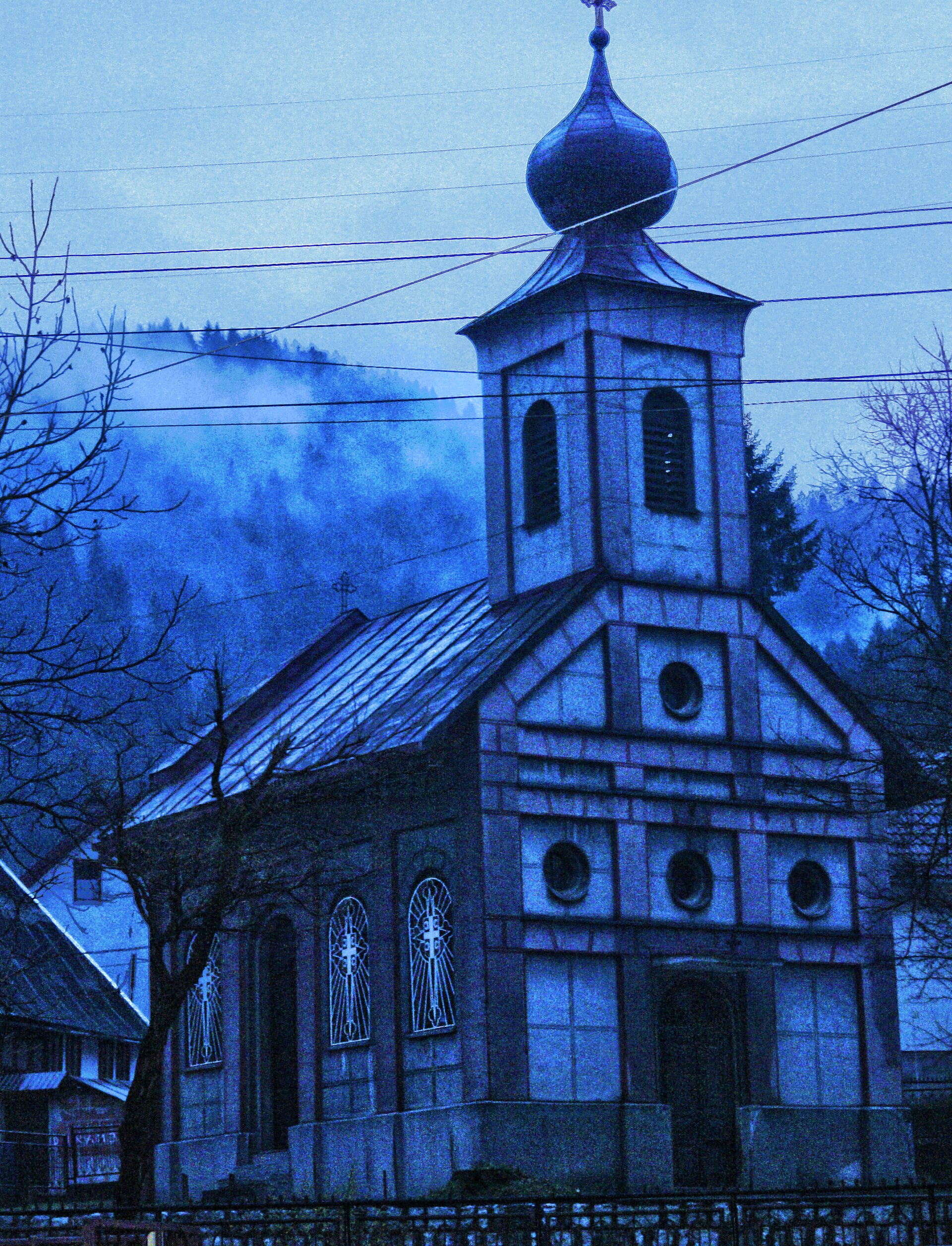
Perched on a gentle slope just off the main street, the church watches over Vareš like a quiet guardian. Its whitewashed walls and simple gabled roof give it the look of a small village chapel, unassuming but warm. The architecture is straightforward—narrow windows, a plain portal, a small bell tower—yet there’s something comforting in its simplicity. Above the entrance, a depiction of St. Michael, the archangel, keeps watch, a subtle reminder of the faith that has anchored this community for generations. Inside, the space is equally unpretentious: wooden pews, a modest altar, a few icons, and stained-glass windows that cast soft, colored light across the stone floor.
The church’s history is woven into the story of Vareš itself. Once a thriving mining town, Vareš drew workers from across the Austro-Hungarian Empire—Poles, Czechs, Hungarians, Croats—many of whom brought their Catholic traditions with them. Built in the early 20th century, when the town was at its economic peak, St. Michael’s became more than just a place of worship. It was a gathering point for a diverse community, a symbol of shared identity in a town where different languages and cultures coexisted. For decades, it stood as a steady presence amid the boom and bust of the mining industry.
Like much of Bosnia, Vareš faced hard times after the war in the 1990s. The mines closed, people left, and the town’s population dwindled. Yet the church remained. On Sundays, a small congregation still gathers—mostly older residents, those who remember Vareš in its heyday. Services are held in Croatian, though Latin hymns occasionally drift through the air during major holidays. The rituals here are quiet, unchanging, a thread connecting the present to a past that feels both distant and immediate.
The neighborhood around the church is a mix of faded charm and slow decay. Narrow streets wind past houses built during the Austro-Hungarian era, their facades weathered but still standing. Some homes are abandoned, their windows boarded up, while others are kept with care, their gardens tidy and their doors open to neighbors. A few small workshops still operate—blacksmiths, carpenters—keeping alive trades that have all but disappeared elsewhere. In the local cafés, the coffee is strong, the conversation unhurried, and the sense of time passing differently here is almost tangible.
St. Michael’s isn’t a grand cathedral, nor is it a tourist attraction. It doesn’t appear in guidebooks or feature on lists of must-see landmarks. Its significance lies in its ordinariness, in the way it serves the people who still call Vareš home. For them, it’s a place of quiet reflection, a link to a past that might otherwise be forgotten. The church doesn’t demand attention; it simply exists, a steady presence in a town that has seen its share of change.
If you ever find yourself in Vareš, the church is worth a visit—not for any grand spectacle, but for the chance to step into a space that feels untouched by time. Inside, the air is still, the light soft. You might hear the distant chime of the bell or see an elderly woman lighting a candle before an icon. There’s no fanfare, no grand narrative, just the quiet hum of a place that has witnessed generations come and go. In a world that often values the loud and the famous, St. Michael’s offers something rarer: the quiet dignity of a place that is simply, and deeply, real.