The Rideau Canal isn’t just a waterway cutting through the heart of Ottawa—it’s one of those rare places where the past and present flow together so seamlessly that time itself seems to move differently here. Built in the early 19th century, it was an engineering marvel of its time, the first navigable canal in North America designed to remain ice-free in winter. Today, it stands as a living piece of history, a place where locals and visitors alike slow down, whether gliding along its waters in summer or skating its frozen surface in winter.
The canal’s origins were born of necessity. During the War of 1812, Britain needed a secure route to transport goods and troops inland, avoiding the treacherous stretches of the St. Lawrence River. Construction began in 1826 under the direction of Lieutenant Colonel John By and took six years to complete. Thousands of Irish and French-Canadian laborers worked on the project, many of whom perished from disease and harsh conditions. Their legacy is honored in memorials scattered along the canal’s banks.
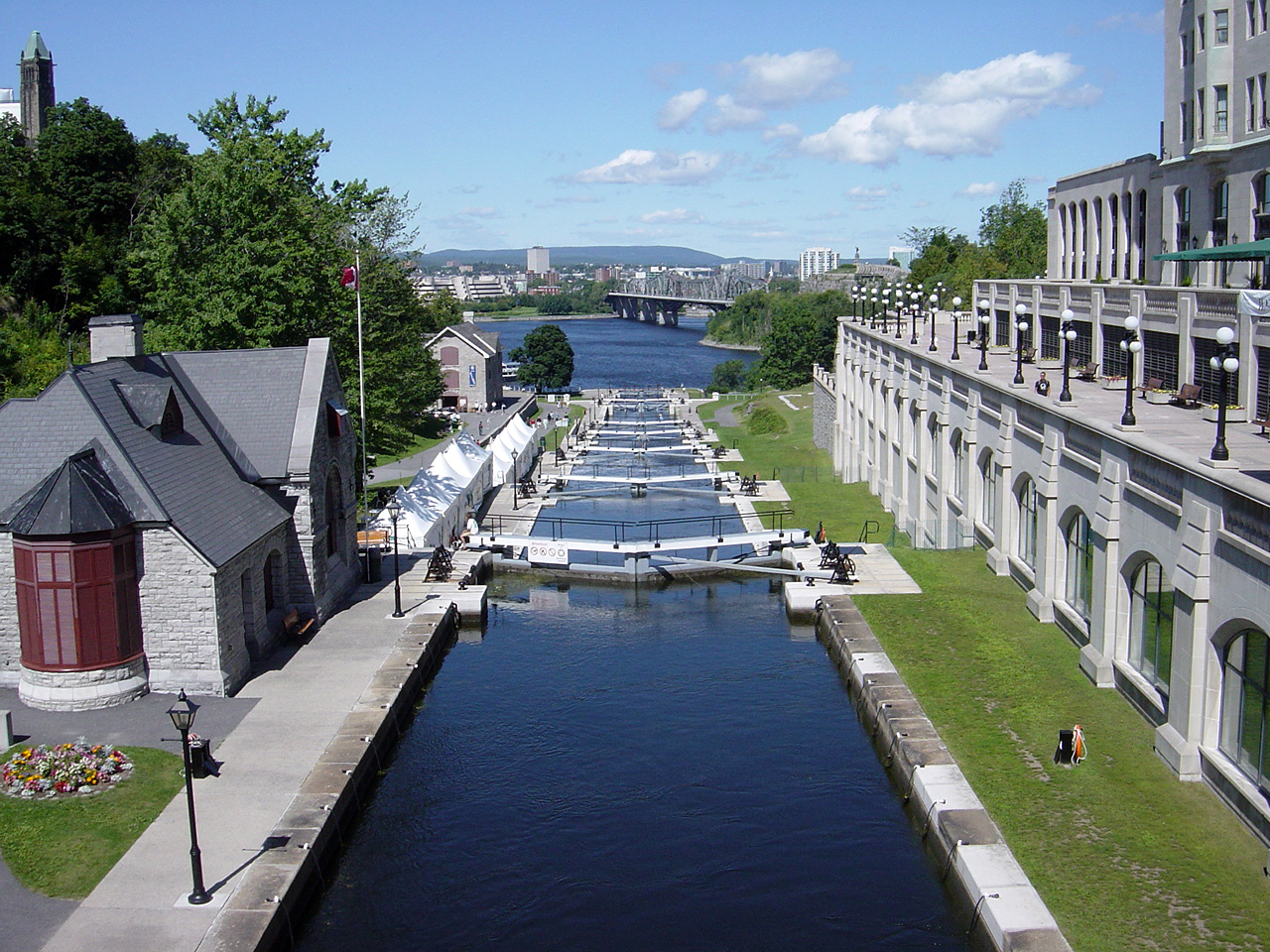
The architecture of the Rideau Canal tells a story written in stone and water. The eight locks in downtown Ottawa, known as the Parliament Hill Locks, still operate manually, just as they did nearly two centuries ago. Their granite walls, massive gates, and wooden mechanisms look much the same as they did in the Victorian era. Along the canal, old warehouses and homes that once served the shipping trade have been repurposed into cafés, galleries, and residences. The stretch near Dow’s Lake is particularly picturesque, where the water widens into a glassy expanse, reflecting the sky and the surrounding trees.
In summer, the canal becomes a haven for leisurely boat rides, kayaking, or even pedal boating. Lush green parks line its shores, perfect for picnics, reading, or simply watching ducks and swans drift by. Evenings here are especially magical, with the glow of bridges and streetlights dancing on the water, while the air fills with the hum of the city and the gentle lapping of waves. Come autumn, the canal transforms again, its banks ablaze with gold and crimson, as if time itself slows to let you savor every moment.
But the canal’s true fame comes in winter. When temperatures drop and the water freezes, it becomes the world’s largest natural skating rink, stretching nearly eight kilometers. The skating season typically runs from January to March, depending on the weather. During this time, the canal becomes the city’s social hub—families glide along its surface, couples skate hand in hand, and commuters cut through the ice on their way to work. Food stalls line the route, serving hot chocolate and beavertails, while impromptu hockey games and figure skating sessions break out on weekends.
The Rideau Canal isn’t just a landmark; it’s woven into the fabric of daily life in Ottawa. It connects neighborhoods, serves as a space for sports and relaxation, and hosts festivals, concerts, and events year-round. In winter, it becomes the centerpiece of Winterlude, a celebration where ice sculptures, slides, and pavilions transform the frozen surface into a festive wonderland. For many Ottawans, the canal is a symbol of the city—a place they return to again and again, whether for a quiet summer morning or a lively winter evening.
The canal’s history is deeply tied to Ottawa’s development. Originally conceived as a transport route, its role evolved over time. When Ottawa became Canada’s capital in the mid-19th century, the canal took on new significance, becoming both an economic and political symbol. Official ceremonies were held here, and in 2007, it was designated a UNESCO World Heritage Site for its outstanding engineering and cultural importance. Today, it remains one of the few operational 19th-century canals still serving its original purpose.
A walk along the Rideau Canal is like stepping through time. You might start at the Parliament Hill Locks, where echoes of barges unloading grain and timber still linger, and end at Dow’s Lake, where modern yachts share the water with historic vessels. Informational plaques dot the banks, but the real story is in the atmosphere—a feeling that doesn’t need explaining. It’s easy to imagine the scene two centuries ago, with sailboats gliding past and workers manually operating the locks to let another shipment through.
The Rideau Canal is a place where history isn’t just preserved; it’s alive. It changes with the city yet remains constant in its essence. In summer, it offers cool respite and tranquility; in winter, it brings the joy of movement and the invigorating bite of cold air. For visitors, it’s a chance to see Ottawa from a different angle. For locals, it’s a familiar part of life, one they’ve grown accustomed to but never take for granted. That, perhaps, is its greatest magic—the canal doesn’t just exist; it continues to inspire, bridging generations and eras.