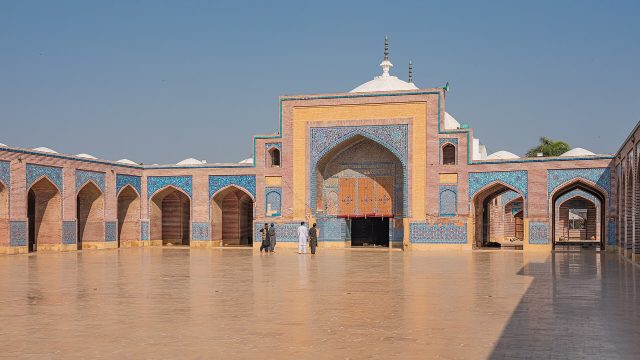
On a low hill above Thatta, the old fort still stands. History isn’t locked behind glass here—it’s in the air, in the stones underfoot, in the way the wind moves through the ruins. The walls have watched empires rise and fall, bearing silent witness to the lives that once filled its courtyards. Thatta was a city of trade and power in Sindh, and the fort was its guardian.
The architecture is simple. Built from local stone, the thick walls and sturdy towers were made to last. Inside, you can see remnants of living quarters, wells, and storage rooms—signs of a fortress ready for long sieges. Time has worn the edges, but the layout remains practical: wide enough for patrols, high enough to keep invaders out.
Thatta sat at a crossroads. Caravans carrying spices, textiles, and metals passed through its gates, linking the Indian subcontinent with Persia and Central Asia. The fort was key in this network, especially under the Samma dynasty and later the Mughals. By the 16th century, it became a battleground between local rulers and the expanding Mughal Empire. The walls still show the scars.
Today, the fort is a ruin. Crumbling gateways open onto empty spaces where buildings once stood. Half-collapsed arches frame views of the town below. Locals talk of hidden tunnels beneath the earth, though no excavations have found them. The stories add to the fort’s mystery—a place where the past feels close.
Unlike Lahore’s monuments, Thatta’s fort doesn’t dazzle. There are no gilded domes or mosaics. Instead, it offers something else: the rough, weathered stones of a structure built to endure. No crowds, no commercialization—just open space to wander and imagine the fort as it was, part of the city’s daily life.
Thatta moves at its own pace. The bazaars smell of spices, camels walk narrow streets, and elders sit in doorways. The fort is part of this life. No barriers, no ticket booths—just open access. Children play among the stones, families picnic in the shade, and visitors are rare.
Early morning is the best time to visit. The light spills over the walls, the air is cool, and shadows stretch long. In these quiet hours, the fort feels alive. You can almost see soldiers standing guard, merchants at the gates, the clatter of hooves and voices filling the air.
This isn’t a place for rushing. The fort asks for patience—the way light catches a stone, the cracks in an arch, the curve of a doorway worn smooth by time. Each detail holds a story. That’s why it stays off the tourist path, overshadowed by bigger landmarks. But those who come often leave feeling they’ve touched something real.
Here, history isn’t something you read. It’s something you feel—the weight of centuries in the stones, the whisper of the wind. The fort doesn’t need grand gestures. It simply stands, as it has for hundreds of years, holding the stories of those who built it, defended it, and lived within its walls. Listen closely, and it might share them with you.