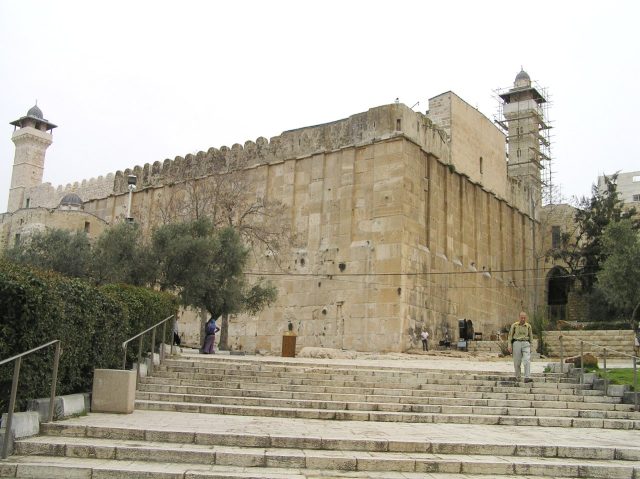
The Tomb of the Patriarchs, known in Arabic as the Ibrahimi Mosque, stands in the heart of Hebron as one of the most revered sites in the Middle East. For Jews, Muslims, and Christians alike, this ancient structure marks the resting place of Abraham and Sarah, Isaac and Rebekah, Jacob and Leah—figures whose stories form the foundation of three major faiths. There are no grand facades or ornate decorations here, just the weight of centuries pressing down on the thick stone walls. The air itself feels different, charged with the quiet reverence of those who have come to pray, reflect, or simply stand in the presence of something older than nations.
The building’s architecture tells a story of layered history. The core structure dates back to the time of Herod the Great, a massive rectangular enclosure built from heavy limestone blocks, its small windows designed more for defense than light. Over the centuries, each ruling power left its mark. The Crusaders expanded the site, transforming it into a church, while later Muslim rulers added minarets and intricate interior details. Today, the complex is divided between a synagogue and a mosque, each with its own entrance and rules, yet the building remains a single entity—a physical manifestation of how deeply these traditions are intertwined.
The site’s significance stretches back millennia. According to the Hebrew Bible, Abraham purchased the cave as a burial plot for Sarah, making it the first piece of land owned by the Jewish people in the promised land. Subsequent burials of Isaac, Rebekah, Jacob, and Leah cemented its status as a sacred site. In Islam, Abraham—or Ibrahim—is revered as a prophet, and the tomb is considered one of the holiest places after Mecca and Medina. Christians, too, hold the site in high regard, seeing it as a link to the earliest days of their faith. The overlapping claims to this place are not just theological but deeply personal for millions.
Hebron has long been a city of tensions, and the tomb has often found itself at the center of conflict. In the 12th century, Crusaders converted it into a church, only for it to revert to a mosque under Muslim rule. More recently, the 1967 Six-Day War brought part of the complex under Israeli control, leading to further divisions. Today, access is strictly regulated: Muslims and Jews pray in separate sections, and visitors must adhere to specific visiting hours. Security measures are visible, a reminder of the fragility of coexistence here. Yet despite these divisions, the tomb remains a rare point of convergence, a place where the past refuses to be neatly divided.
Inside, the atmosphere is hushed, almost solemn. The stone walls, worn smooth by time, absorb sound, leaving only the murmur of prayers and the occasional shuffle of footsteps. In the synagogue, ancient Torah scrolls rest in ornate cases, while the mosque’s interior is adorned with intricate Arabic calligraphy and carved mihrabs. The tombs themselves are simple, covered in cloth—green for the Muslim side, blue for the Jewish—marking the final resting places of figures whose names echo through scripture. Visitors often speak of a strange stillness here, as if the weight of history is palpable in the cool, dim air.
Hebron is not an easy city to visit. There are no tourist crowds or souvenir stalls clamoring for attention, just the quiet rhythm of daily life in a place where history is always present. The streets around the tomb are narrow and winding, lined with small shops selling olive oil, spices, and handmade crafts. The city’s old market, just a short walk away, offers a glimpse into a way of life that has changed little over centuries. This is not a destination for those seeking entertainment or distraction; it’s a place for those willing to engage with the complexities of faith, memory, and identity.
The tomb’s dual identity as both a mosque and a synagogue is a rare example of shared sacred space, though not without its challenges. The physical division of the site reflects broader tensions, yet the building itself stands as a testament to the possibility of coexistence. For some, it is a symbol of hope, a reminder that even in a region marked by conflict, there are places where the past can still bring people together. For others, it is a painful reminder of divisions that seem impossible to bridge. But for all who visit, the tomb offers something intangible—a sense of connection to something far greater than themselves.
What makes the Tomb of the Patriarchs unique is not just its age or its religious significance, but the way it embodies the contradictions of this land. It is a place of deep devotion and bitter disputes, of shared history and competing narratives. To stand within its walls is to feel the pull of these opposing forces, to sense the weight of the stories that have unfolded here. It is not a place that offers easy answers, but it is one that demands reflection. For those who come seeking understanding, it provides a rare opportunity to witness how faith, history, and identity intersect in one of the world’s most contested cities.