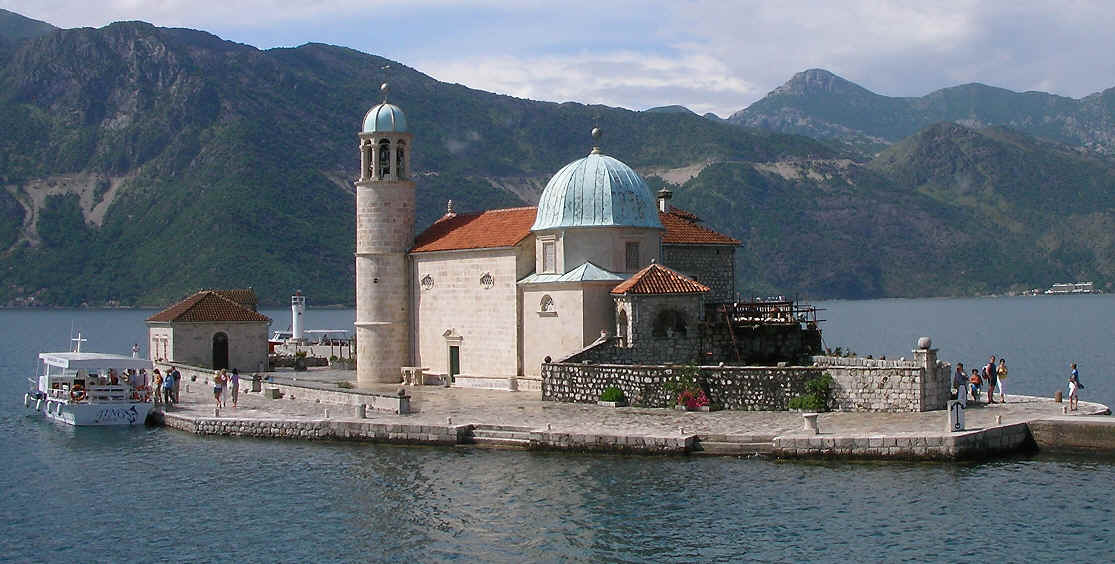
Perched on a tiny island in the Bay of Kotor, just a short distance from the shore, the Church of Our Lady of the Rocks is one of Montenegro’s most unusual landmarks. What makes it remarkable isn’t just its location, but the fact that the island itself is man-made. In the 17th century, locals began piling stones onto a submerged reef, reinforcing the foundation by sinking old ships beneath the surface. The tradition started after fishermen discovered an icon of the Virgin Mary on the rocks, an event they believed brought miracles. Over time, the island grew, and the church was built as a tribute to faith and resilience—a place where the sea, once a source of danger, became a symbol of protection.
The church itself is modest in size, with whitewashed walls and a low bell tower that blends into the surrounding waters. Its simple facade is softened by a small portico with columns, leading to an interior that feels intimate yet luminous. Inside, the walls are adorned with frescoes and icons, the most revered being the original image found by the fishermen. The marble altar, crafted by Venetian artisans, stands as a quiet testament to the skill of its makers, while the collection of silver votive tablets tells stories of survival—sailors saved from storms, the sick restored to health, families reunited after long voyages. Each plaque is a personal offering, a whisper of gratitude left behind by those who once faced the sea’s uncertainties.
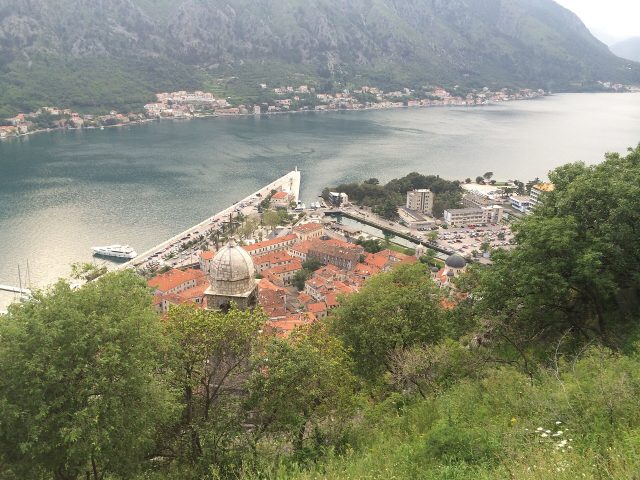
The island is so small that you can walk its perimeter in minutes, yet its scale only adds to its charm. Stone benches are scattered around the church, inviting visitors to sit and take in the view. On clear days, the bay stretches out in all directions, framed by the rugged mountains that cradle Kotor and the pastel facades of Perast. In the evening, when the lights of the shore begin to flicker, the scene takes on a dreamlike quality. Boats ferry tourists across the water in the summer, but even at the height of the season, the island retains a sense of tranquility, as if the waves themselves keep the crowds at bay.
Our Lady of the Rocks is more than just a church; it’s a place where history, faith, and nature converge. The island’s very existence is a story of human ingenuity, built from the remnants of ships and stones carried from different corners of the bay. The church stands as a reminder of a time when the sea was both a lifeline and a threat, when communities relied on it for trade and feared its storms. There’s something deeply moving about a place constructed not for grandeur, but for devotion—a sanctuary raised from the water by the hands of those who depended on it most.
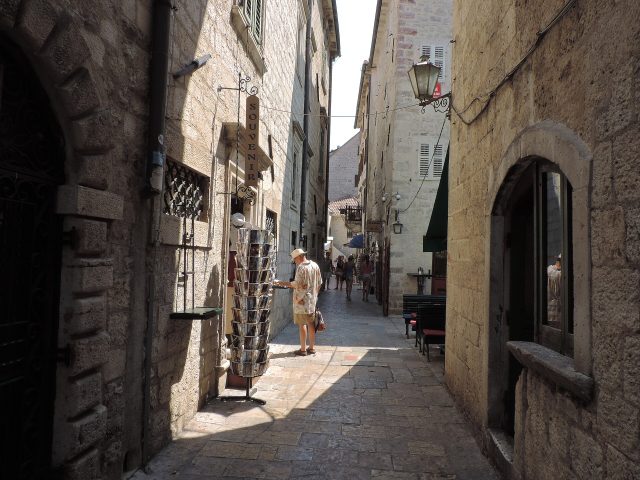
The only way to reach the island is by boat, and the short trip from Perast is part of the experience. The town itself is worth exploring, with its Venetian-era palaces, narrow streets, and quiet waterfront. But even if you’re short on time, a brief stop in Perast followed by a visit to the island offers a glimpse into the region’s past. The ride across the bay takes just a few minutes, and once you step onto the island, the world beyond the water feels distant.
The church is open to visitors, with no entrance fee, though donations are welcome. Inside, the atmosphere is one of quiet reverence—services are still held here, and many who come are pilgrims rather than tourists. In the summer, the church can feel crowded, but even then, it’s possible to find a moment of solitude. The island’s small size means you’re never far from the water, and the sound of the waves against the shore creates a natural rhythm, a counterpoint to the stillness of the church.
What makes Our Lady of the Rocks so compelling isn’t its size or its architectural splendor, but the way it feels alive with stories. It doesn’t overwhelm you with opulence or mystery; instead, it offers something quieter, more personal. There’s a humility to it, a sense that this place was built not for show, but out of necessity and faith. The island, the church, the sea—it all comes together in a way that feels both timeless and deeply human. Perhaps that’s why people return, even after they’ve seen everything else. Here, there’s nothing to distract from the simple act of being present, of listening to the water and the wind, and to the echoes of the past.