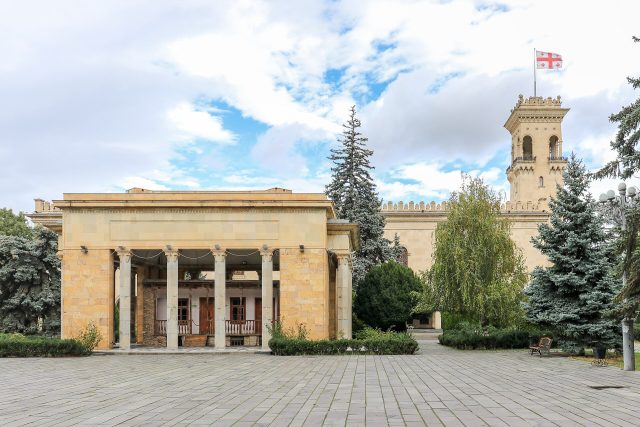
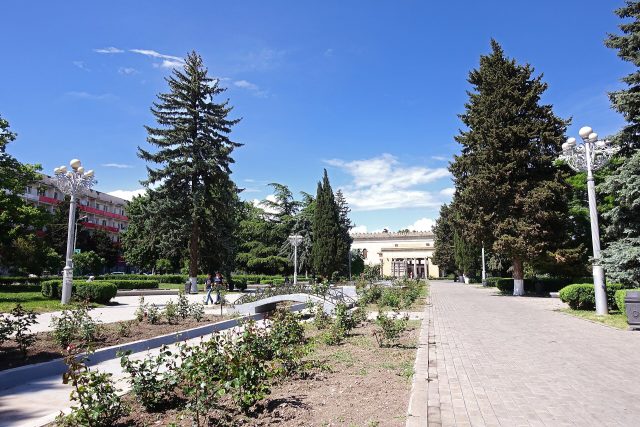
Gori’s Drama Theater is one of those quiet, unassuming places that slip into the rhythm of a city without fanfare, yet remain a steady presence in the lives of its people. Tucked in the heart of Gori, just steps from the Stalin monument, it carries a subtle weight—less for its architecture than for what it represents. Unlike the grand theaters of Tbilisi, with their marble columns and gilded details, this building is modest, almost understated. Its design reflects the Soviet-era pragmatism of the mid-20th century, when Gori was growing as an industrial and cultural hub. The facade is simple, with just enough neoclassical touches to give it a sense of occasion, while inside, the high ceilings, wide staircases, and spacious auditorium still feel like a relic of a time when theater was meant for everyone—not just the elite.
The theater was built when Gori was still finding its place in Soviet Georgia, and its architecture mirrors that era’s blend of functionality and restrained grandeur. The auditorium, with its comfortable seats and uncluttered design, was made for audiences who came after work or school, not for spectacle but for connection. There’s no pretension here, just a straightforward space where stories unfold. Over the decades, the building has seen minor changes, but its core remains the same—a place where the past lingers in the details, from the worn wooden doors to the way the light filters through the tall windows.
What makes Gori’s Drama Theater special isn’t its fame or its star-studded productions. It’s the way it has quietly endured, adapting without losing its essence. The repertoire leans toward Georgian classics, contemporary plays, and works by Russian and European writers, but the focus is always on intimacy. These aren’t blockbuster performances; they’re thoughtful, often understated, designed for an audience that comes to listen, not just to be entertained. The theater has never been a place for flashy premieres, and that’s precisely why it feels authentic. It’s a space where the stories of ordinary people take center stage, where the weight of history and emotion isn’t drowned out by special effects.
The 1990s were a difficult time for Georgia, and Gori’s theater wasn’t spared. Like many cultural institutions, it struggled—budgets shrank, audiences dwindled, and for a while, it seemed like it might not survive. But the actors and local supporters refused to let it fade. They kept performing, even when the seats were half-empty and paychecks came late. There’s something about that resilience that still lingers in the air today. The theater isn’t just a building; it’s a testament to the people who refused to let it die, who believed that culture mattered even when the world outside was falling apart.
Today, the theater remains a vital part of Gori’s cultural life, though it’s far from a tourist hotspot. Beyond plays, it hosts concerts, literary readings, and art exhibitions in its foyer. The small café in the lobby is a place where conversations spill over cups of coffee, where actors and audience members might find themselves chatting between acts. The auditorium itself is compact, which only adds to the sense of closeness. There’s no distance between the stage and the seats, no barrier between the performers and those watching. It’s the kind of theater where you can see the expressions on the actors’ faces, where the energy of the performance feels personal.
Gori is a city with a complicated past, and the theater has never shied away from reflecting that. Over the years, it has staged plays about war, about life under Soviet rule, about the struggles and triumphs of ordinary Georgians. Some productions have sparked debates, others have drawn quiet nods of recognition, but all of them have done what theater does best—made people think. In a way, the theater serves as a kind of living archive, a place where the city’s history isn’t just remembered but reimagined. It’s not about nostalgia; it’s about understanding where you come from and why it matters.
Visiting the theater isn’t about ticking off a sightseeing box. There are no crowds, no guided tours, no pressure to perform the role of a tourist. Instead, it’s a chance to step into the everyday life of Gori, to see the city as its residents do. The performances are in Georgian, but even if you don’t understand the language, the atmosphere speaks for itself. You might come for a concert, an exhibition, or just to sit in the café and watch the city flow by outside. Either way, the theater leaves an impression—not because it’s grand or famous, but because it feels real.
This isn’t a place that tries to impress. It doesn’t need to. The Gori Drama Theater has survived by staying true to itself, by being exactly what it was meant to be—a gathering place for stories, for people, for the quiet moments that make up a city’s life. It’s not a museum, not a monument, but something far more alive. And perhaps that’s why it endures. In a world where so much is designed to be seen and forgotten, this theater is content to be felt.