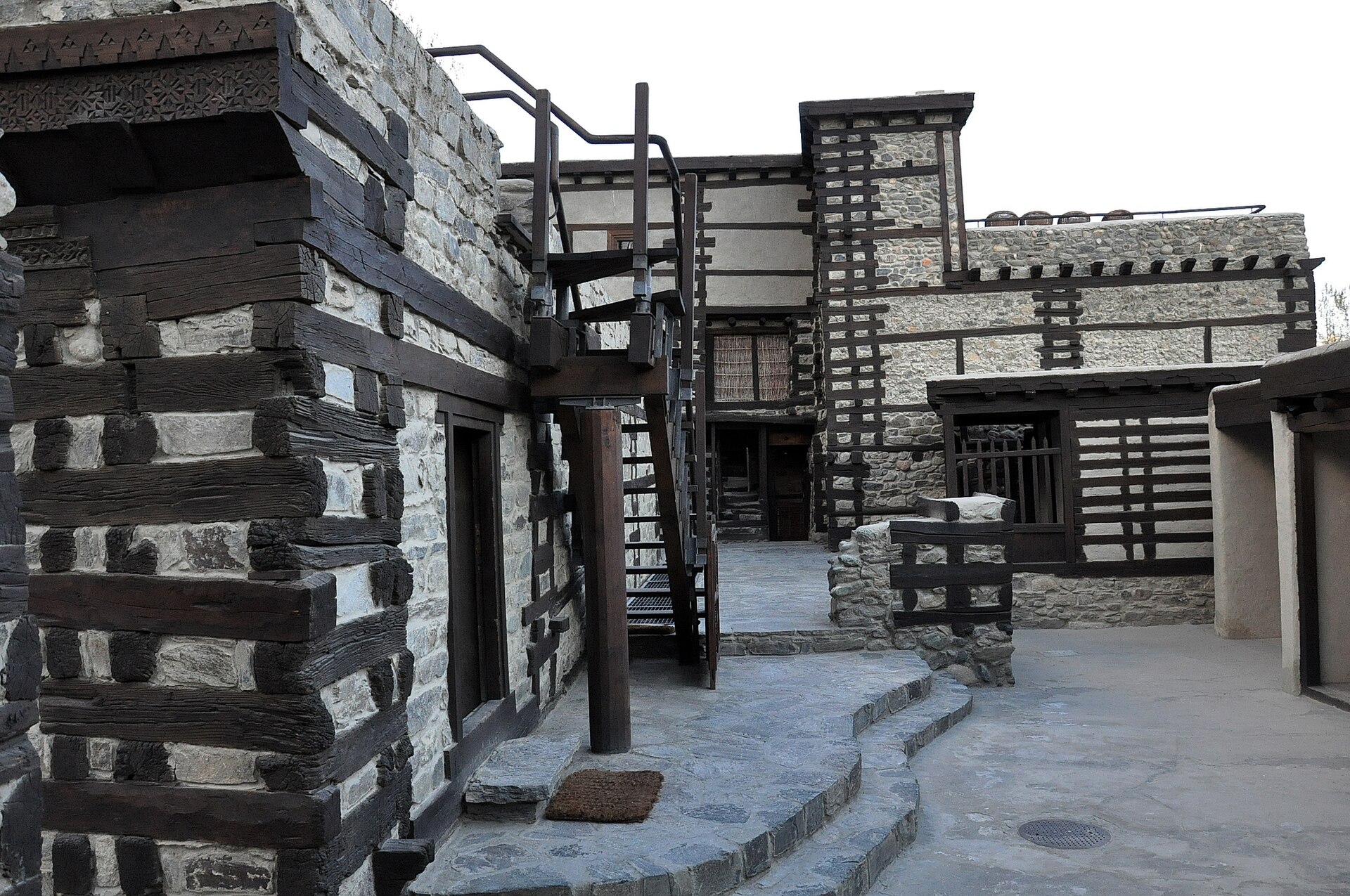
Shigar Fort, known locally as Kharphocho or the Palace on the Rock, sits on the edge of a quiet town in the heart of Baltistan, where the Karakoram Mountains rise like ancient sentinels. The journey here from Skardu takes a few hours along a winding road that follows the Indus River, passing through villages where flat-roofed houses cling to the hillsides and apricot orchards glow golden in the autumn light. The fort itself is built from the same stone and timber as the landscape around it, its walls weathered by centuries of wind and snow. There is no gilded opulence here, no grand marble halls—just the quiet strength of a structure designed to endure, where every beam and brick serves a purpose beyond mere decoration.
The history of Shigar Fort stretches back to the 17th century, when Raja Amir Khan, a local ruler, chose this spot for his stronghold. At the time, Shigar was a crucial stop on the old trade routes connecting Central Asia to the Indian subcontinent. Caravans laden with silk, spices, and gemstones would pause here before braving the high passes, and the fort became both a residence and a symbol of authority over this strategic crossroads. Later, in the 19th century, the building passed into the hands of the Aga Khan family, who preserved it as part of the region’s cultural heritage. Unlike many restored monuments, Shigar Fort has retained its authenticity, its walls whispering stories of the people who once walked its corridors.
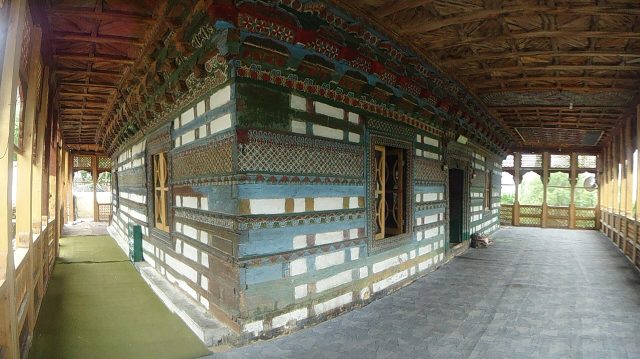
The architecture is a blend of Balti and Tibetan influences, adapted to the harsh climate of the high mountains. Thick stone walls, small windows with intricately carved wooden screens, and flat roofs designed to bear the weight of winter snow—all speak of a practical approach to building. Inside, the rooms are arranged around a central courtyard, a layout that helps retain heat during the cold months. The wooden ceilings are adorned with simple geometric carvings, and the walls bear traces of faded patterns, a subtle nod to the aesthetic sensibilities of the people who lived here. There is no excess, no unnecessary ornamentation, yet the craftsmanship is evident in every detail.
Today, the fort has been converted into a small museum and guesthouse, offering visitors a chance to step into the past. The rooms are furnished with antique pieces—handwoven carpets, low wooden tables, and brass utensils—that evoke the daily life of Balti nobility centuries ago. In the evenings, lanterns cast long shadows across the courtyard, and the scent of woodsmoke lingers in the air. Guests can wander through the narrow passageways, climb to the rooftop for a view of the Shigar Valley and the snow-capped peaks beyond, or simply sit in silence, listening to the wind rustling through the poplars outside. There is a sense of timelessness here, as if the fort is still inhabited, not by its original owners, but by the echoes of their lives.
What makes Shigar Fort unique is its lack of pretense. There are no polished exhibits or guided tours with rehearsed scripts. Instead, the building feels lived-in, its wooden floors creaking underfoot, its walls darkened by the soot of old lamps. The museum displays are modest—a collection of weapons, coins, and documents that offer glimpses into the region’s history—but the real story is told by the fort itself. It stands as a testament to the resilience of the people who built it, who traded, fought, and survived in a land where nature is both provider and adversary. Baltistan was never part of the great empires that shaped the subcontinent; it had its own rulers, its own traditions, and its own way of life, much of which remains unchanged.
Reaching Shigar Fort is not a journey for those in a hurry. The road from Skardu is rough in places, winding through landscapes that shift from barren rock to lush green valleys. The town of Shigar itself is a quiet place, with a handful of shops and teahouses where locals serve salted butter tea, a Balti staple. The fort sits on a slight rise, approached by a narrow, stone-paved lane. There are no crowds here, no souvenir stalls or tourist traps—just the quiet presence of the mountains and the river. For those who make the effort, the reward is a rare sense of connection to a place where time moves differently.
In an age where travel often feels like ticking off a list of must-see attractions, Shigar Fort offers something different. It is not a place to be photographed and forgotten but one to be experienced slowly. There is no grand narrative here, no dramatic legends—just the quiet dignity of a building that has stood for centuries, bearing witness to the lives of those who called it home. For a few days, guests can step into that rhythm, waking to the sound of the river, walking the same paths as traders and rulers of old, and falling asleep under the same wooden beams that have sheltered generations.
The fort is not for everyone. There are no luxury amenities, no modern comforts beyond the basics. But for those who seek something beyond the usual tourist trail, it offers a chance to see a side of Pakistan that few visitors encounter. Here, in the shadow of the Karakoram, history is not confined to textbooks or glass cases—it is alive in the stones, the wood, and the very air. Shigar Fort reminds us that some places are not meant to be merely seen but felt, their stories unfolding not in words but in the quiet moments between.